





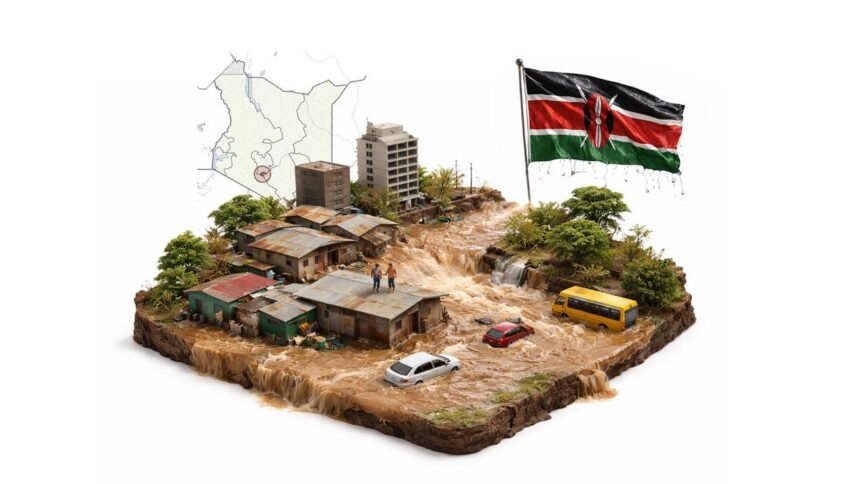
Overnight downpours exposed chronic failures in drainage, planning, and early warning in Kenya’s capital, and raised urgent questions about how a fast‑growing city can live with a wetter future.
Late on a Friday night in Nairobi, the rain did not sound unusual at first, a steady drumming on tin roofs, the kind residents have learned to sleep through. By dawn, entire streets had vanished.
Cars bobbed like wreckage in brown, fast‑moving water. In low‑income settlements along the Nairobi River, families scrambled onto rooftops, clutching children and plastic bags of belongings as the floodwaters rose.
By Monday, police said at least 45 people had drowned as flash floods tore through the Kenyan capital and several surrounding counties, displacing 2,224 people and leaving a trail of ruined homes, smashed roads, and gutted small businesses, according to figures shared with AFP.
What began as another night of heavy rain had become one of the deadliest urban flooding episodes Nairobi has seen in years, and a stark warning of how climate risks, poor planning, and inequality collide, analysts and residents say.
Background and Stakes
Torrential rains pounded Nairobi from 6 March, turning key arteries such as Mombasa Road and Uhuru Highway into churning channels. Initial police tallies on Saturday put the nationwide death toll at 23, most of them in the capital.
Still, the figure climbed steadily as rescue teams reached submerged vehicles, informal settlements, and riverbanks. By 9 March, the National Police Service and local media were citing at least 45 deaths and more than 2,200 people displaced.
Government situation reports and humanitarian briefings describe widespread damage: houses swept away or filled with mud, at least 172 vehicles damaged or destroyed, and major traffic disruption, including at Jomo Kenyatta International Airport, where several flights were diverted to Mombasa.
Meteorological agencies had warned days earlier of intense rainfall over Nairobi and a belt of central and eastern counties. Still, densely populated riparian zones and clogged drains left large parts of the city acutely exposed.
The numbers remain fluid. Some official updates as of 8 and 9 March mentioned 42 confirmed deaths before later police counts and media tallies pushed the toll higher. A Kenyan broadcast and social‑media tally, drawing on police data, suggested the number of displaced families may already exceed 2,600 as search operations continue.
What is clear, aid groups say, is that the flooding has deepened existing vulnerabilities in a city where tens of thousands live along riverbanks and in low‑lying, underserviced neighborhoods.
Human Stories on the Ground
From Nairobi’s informal settlements to its wealthier districts, the water did not discriminate in which streets it filled, but it did in who could escape.
In the city center, a car accessories seller, Frederick Wasonga, watched helplessly as the river burst its banks. “Cars were swept off, and water flowed into our shops, destroying property for many people,” he told reporters, standing amid twisted metal and mud.
In poorer neighborhoods, the damage went far beyond property. Emergency teams recovered bodies from submerged matatus and flooded homes. At the same time, residents described families wading through chest‑high water in the dark, unsure where the road ended and the river began.
Informal settlements along the Nairobi, Ngong, and Mathare rivers, zones the government itself has flagged as highly vulnerable, were among the hardest hit, with residents losing not only shelter but also documents, school materials, and the tools they need to earn a daily income.
Humanitarian and health officials warn that the crisis will not end when the waters recede. Floodwater contaminated with sewage and solid waste has pooled in crowded areas, heightening the risk of water‑borne diseases such as cholera and mosquito‑borne illnesses such as malaria.
For families sheltering in schools, churches, or with relatives on higher ground, the coming weeks could bring a second wave of consequences: lost wages, missed school, and the slow erosion of already thin financial buffers.
Policy, Responsibility, and Expert Views
The Kenyan government has moved to project a sense of urgency. President William Ruto announced the deployment of a multi‑agency emergency response team, including the Kenya Defence Forces, to assist with rescue operations, relocate those in imminent danger, and restore access to flooded roads.
He pledged that the state would cover hospital bills for those injured by the flooding and ordered the release of relief food from national reserves for affected families.
Officials say longer‑term solutions are underway. A Nairobi Rivers regeneration program, which the government estimates is about 30 percent complete, aims to restore river channels, improve drainage, and reclaim riparian land to reduce flood risk.
Meteorologists and regional disaster‑monitoring platforms note that early warnings were issued and link the intensity of the rains to a broader pattern of more frequent extreme events in a warming climate.
But residents, planners, and local media have been blunt in their criticism. Many point to years of unregulated construction along waterways, blocked drains, and slow progress on infrastructure upgrades as factors that turned a forecasted storm into a lethal disaster.
Nairobi’s governor campaigned on improving drainage and road systems in 2022; after this month’s floods, some of the loudest complaints came from constituents who say those promises to feel distant as they pick through the wreckage of their homes and shops.
Urban planners and climate experts see the floods as part of a wider pattern. In recent years, Nairobi and other Kenyan cities have faced recurring bouts of heavy rain that overwhelm stormwater systems never designed for today’s volumes.
Reports by Kenyan authorities and international agencies warn that without faster investment in resilient infrastructure, stricter enforcement of building codes, and relocation support for people living in high‑risk zones, similar tragedies are likely to recur.
What Comes Next
In the short term, the priority is still rescue and relief: locating the missing, restoring basic services, and helping thousands of displaced families find somewhere safe to sleep as the rainy season continues.
But the images from Nairobi, flooded highways, overturned vehicles, and children being carried through surging water, have already begun to sharpen a national conversation about how Kenya’s fast‑growing cities can adapt to a wetter, hotter climate.
For the families who lost loved ones, debates over drainage plans and climate resilience can feel painfully abstract. Their question is simpler: why, after clear weather warnings and decades of knowing which neighborhoods flood, were so many people still in the path of the water?
As Nairobi starts to dry out, the answer to that will help determine whether this disaster becomes a turning point, or just another entry in a long ledger of floods the city never truly learned from.