





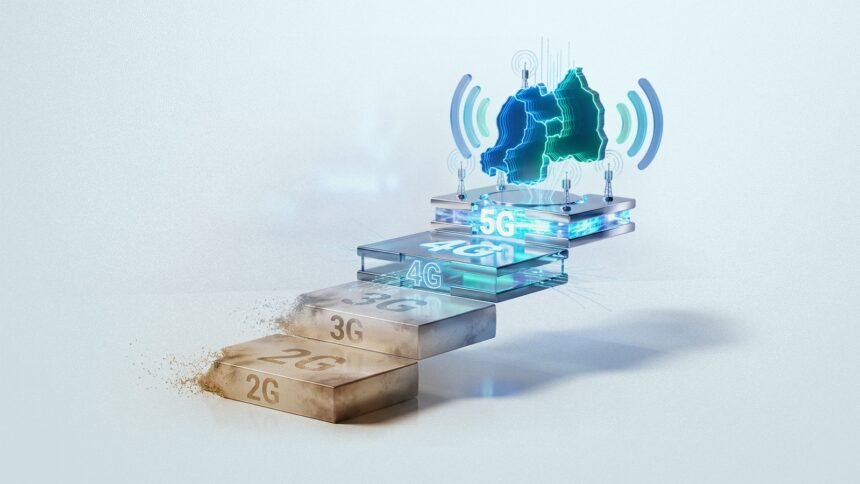
Rwanda is set to phase out older mobile network technologies as part of a nationwide shift towards faster, more advanced connectivity, with authorities announcing plans to retire 3G services by June 30, 2027, and to move towards 4G and 5G networks gradually.
The transition, led by the Ministry of ICT and Innovation (MINICT) in partnership with the Rwanda Utilities Regulatory Authority (RURA), is expected to free up spectrum capacity currently occupied by aging technologies and allow telecom operators to expand high-speed networks.
The move comes as African countries continue efforts to modernize telecommunications infrastructure, driven by growing demand for reliable internet access, digital payments, cloud services, artificial intelligence applications, and online public services.
MINICT said the shift will enable mobile operators to redirect investments towards strengthening 4G coverage while preparing the ground for wider adoption of 5G technology.
“This transition will free up network capacity currently used to run two generations of aging technology, allowing mobile operators to invest fully in expanding and strengthening 4G and, over time, 5G coverage across the country,” the ministry said in a statement issued on July 27.
The announcement follows a Cabinet meeting chaired by President Paul Kagame on July 24, during which the government received an update on its plan to modernize telecommunications infrastructure from 2G and 3G networks to newer technologies.
Rwanda’s decision reflects a broader trend across Africa, where governments and telecom operators are seeking to retire legacy networks to improve connectivity and support digital economies.
Older networks, particularly 2G, were initially designed primarily for voice calls and basic messaging. At the same time, newer generations provide greater capacity for data-intensive services, including mobile banking, digital identity systems, e-learning platforms, and telemedicine.
The government said the transition is expected to improve internet speeds, call quality, and the reliability of mobile money services, while supporting increased access to digital platforms in sectors such as education, healthcare, and public administration.
Before the full retirement of 2G services, authorities will conduct a readiness assessment focusing on network coverage, service continuity, availability of compatible devices, and customer migration.
Pilot shutdowns are expected to begin in 2026, with the nationwide switch-off of 3G services scheduled for June 2027.
Mobile operators and consumers will be supported throughout the transition, according to MINICT.
Customers have been advised to check whether their mobile phones and SIM cards are compatible with 4G technology and upgrade where necessary.
Businesses and institutions that depend on 2G or 3G-enabled systems, including devices used for connectivity and machine-to-machine services, have also been encouraged to begin migrating their operations.
The government said the process will be implemented gradually to minimize disruptions and ensure users can continue accessing essential communication services.
Across Africa, telecom markets are increasingly moving away from legacy networks as operators seek to reduce operational costs and improve spectrum efficiency.
Countries including South Africa, Kenya, and Tanzania have already begun discussions or implementation of plans to retire older mobile technologies. However, timelines differ depending on market readiness, device penetration, and regulatory frameworks.