




The Pan-African Paradigm of Grid Fragility and Executive Responsibility
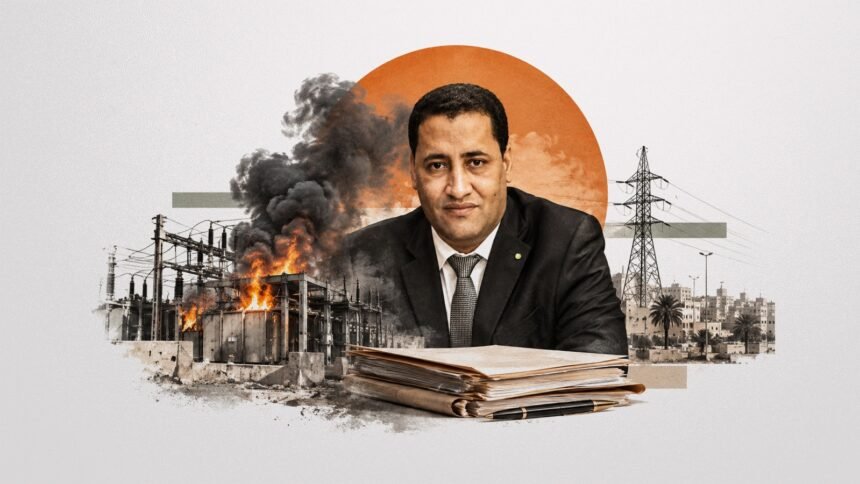
On Friday, 9 October 2026, Mauritania’s prime minister stepped down and kept his job. Mokhtar Ould Djay submitted his government’s resignation after President Mohamed Ould Cheikh El Ghazouani received a damning report on two fires that had crippled the capital’s electricity supply. Hours later, the two men met, the presidency announced a decree reappointing Ould Djay, and he was asked to form a new government. The paradox is the story: a government resigns to accept responsibility, and the same prime minister returns to oversee the response.
What Burned, and What Went Dark
The fires struck two transformer substations of the Mauritanian Electricity Company, Somelec, in Nouakchott and its suburbs, less than 24 hours apart. The dates differ between accounts. Several reports give 21 and 22 August, while a statement issued through the prime minister’s office gives 18 and 21 August and names the sites as the Nouakchott-North and Nouakchott-West substations. The independent report should settle the timeline. The outages covered large parts of the capital as well as the towns of Ouad Naga, Idini and Aouleigat, and lasted three to five days. Somelec announced full restoration at the two substations after about five days of repairs.
For a capital city, several days without power is not a passing inconvenience. It halts trade, spoils stock and disrupts every service that depends on electricity, and the burden falls hardest on small businesses and households that cannot afford backup power.
The Commission’s Findings
The independent commission of inquiry, chaired by former minister Ousmane Mamoudou Kane, submitted its final report on the evening of Tuesday, 6 October, after receiving a one-week extension at its own request. Its findings are blunt. It identified “serious shortcomings regarding prevention, electrical protection, work supervision and emergency management”. It found that the fires were caused by electrical connectors that did not meet required technical standards and had been imported by a private company, and it linked the problems to three newly installed power lines. Overheating was the most likely scenario. It found no evidence of sabotage or operational error, and it held the importing company and officials at the Energy Ministry responsible.
That conclusion matters for the politics of the outage. Sabotage would have pointed outward. Substandard imported components, weak supervision and poor emergency management point inward, to procurement, regulation and the institutions meant to enforce standards.
Accountability by Decree
According to the prime minister’s office, the president instructed the government to implement the commission’s recommendations “fully and rigorously”. These include strict administrative measures against those who failed in their duties, legal proceedings to protect the public interest, immediate rehabilitation of the damaged substations, preventive measures against a repeat, and an organizational and development plan to give Somelec the capacity to deliver quality service and manage its investment projects. The president also ordered the report to be made available to the public in the interest of transparency, and it has been posted online on the state news agency’s website.
Publishing the report is a real step towards transparency. The reappointment complicates the message. Ould Djay, appointed in August 2024 at the start of Ghazouani’s second term and his third prime minister, previously served as head of the presidential office and as economy and finance minister. His return suggests that the resignation was a procedural reset rather than a punishment, and that accountability is meant to fall on the company and ministry officials named in the report, not on the head of government.
The Grid as a Test of the State
Mauritania’s experience reflects a wider structural pattern. Power systems are expanding quickly, with new lines and new substations, while quality control, procurement integrity and technical supervision have not kept pace. Investment in transmission is meant to bring development. When the connectors joining that investment together fail basic standards, the expansion itself becomes the weak point. The commission’s link between the fires and newly installed lines shows how growth without enforced standards can build fragility into the grid.
Accountability will be judged in the coming months. Will the named officials face real administrative sanctions? Will the importing company face legal proceedings? Will Somelec’s restructuring plan be published with clear targets? Each answer will show whether the inquiry was a political pressure valve or the start of reform. The commission’s chairman said his team had worked independently and without interference from any party. The government’s credibility now depends on whether its follow-through matches the standard the commission set for itself.
Closing: Energy Sovereignty Is Built Into the Standards
Structural sovereignty in energy depends less on megawatts than on the quiet work of certifying components, supervising contractors and preparing for emergencies. Nouakchott’s August blackouts show that a state can own its utility and still lose control of its grid if it cannot enforce standards at the point of import. Ghazouani has chosen continuity at the top and accountability lower down. That choice will be credible only if the trajectory from here includes published sanctions, prosecutions where the law requires them, and a Somelec that can keep the lights on when the next connector fails.