




When a Five-Mile Promise No Longer Holds
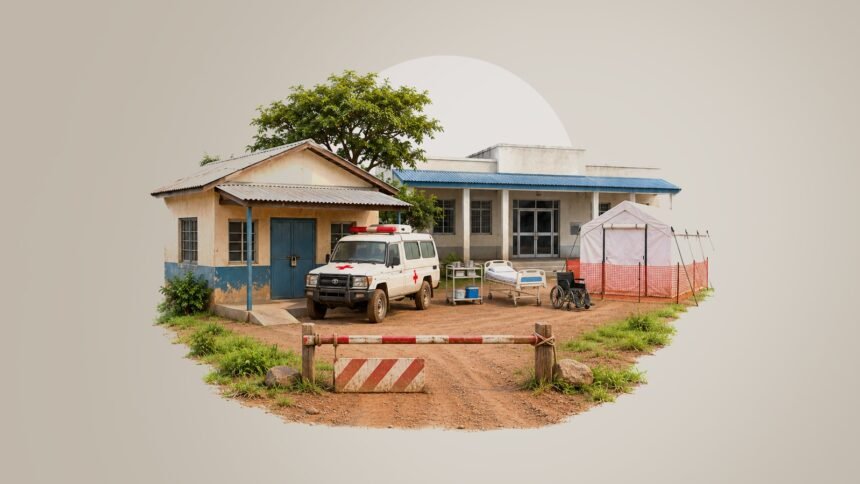
An ambulance was heading back to Jansuk from Yei Civil Hospital, in Central Equatoria State, after taking patients for referral. About 500 meters from the Jansuk primary healthcare facility, and some three miles from town, unknown armed assailants stopped it at gunpoint. They abducted the Médecins Sans Frontières driver and a midwife from South Sudan’s Ministry of Health. The date was Thursday 12 November. Both were released unharmed on Saturday 14 November. On Tuesday 17 November, MSF suspended all of its work in Yei River County for a minimum of three months.
The organization made the decision public this week. It denounced the abduction of humanitarian and medical workers as unacceptable, and called on the authorities and other actors to take responsibility and stop such incidents. The two staff members came home safely. The clinics did not reopen with them. That is the hard part of the story: in Yei, a successful release is no longer enough to keep a hospital, a clinic and an isolation ward running.
A Painful Decision, and an Isolation Ward Left Empty
“The suspension of services was a painful and uneasy decision, given the people’s needs in the area, particularly among vulnerable groups, such as pregnant and lactating women, children and the elderly,” said Dr Ferdinand Atte, MSF’s head of mission in South Sudan. The organization had been supporting Yei Civil Hospital and the Jansuk clinic, running community-based care for survivors of gender-based violence, and setting up a ten-bed Ebola isolation unit, the only facility of its kind in the county. That preparedness work has been suspended as well. “In addition, we had to suspend MSF’s support to the Ebola preparedness, in particular for the management of the isolation facility, which could have dramatic consequences in case of the outbreak in the area,” Atte said.
MSF said it would need a substantial, sustained and verifiable improvement in security, and concrete measures to prevent and combat abductions, before it could restart. Those conditions, it said, are not in place. “MSF cannot continue operating in the Yei area while abductions are now taking place even within the town. The safety and security of our staff comes first,” Atte added.
The Fifth Abduction Since 2024
This was not a first warning. In August 2025, MSF temporarily suspended all activities in the same county after two abductions in just over a week. “Following last year’s abductions, we received verbal assurances from authorities that medical staff and patients would be safe and protected within the 5-mile radius around Yei,” Atte said. The latest ambulance was stopped inside that radius, about three miles from town. The organization said this was the fifth abduction affecting MSF in Yei River County since 2024, coming after a period of bombardments, attacks, looting and vandalism of its facilities across South Sudan.
MSF’s own account of the dates is slightly awkward in one respect. It places the abduction of the driver and the midwife on 12 November, and also describes an ambulance being stopped on 17 November, the day the suspension began. Whether that is a second incident or a slip in the statement is not clear from the text itself. What is not in doubt is the sequence that matters for patients: the staff was taken, they were released two days later, and the organization still judged the country too dangerous to keep working.
A Country That Still Relies on These Teams
MSF has been present in what is now South Sudan since 1983 and remains one of the largest medical humanitarian agencies in the country. It provides care to people affected by conflict, displacement, and disease outbreaks across six states and two administrative areas, including places where hospitals are hard to reach. From January to October 2026, it carried out more than 719,349 outpatient consultations, including for children under five, provided inpatient care for more than 99,658 patients, including 8,771 surgeries, and screened 303,063 children for malnutrition.
Those national figures do not replace a midwife in Jansuk or an isolation bed in Yei. They do show what is at stake when a single county goes dark. Pregnant women, children and older patients who used Yei Civil Hospital and the Jansuk clinic now have to travel farther, or go without. Ebola preparedness in the county now lacks the only isolation unit MSF had been building there, at a time when outbreaks in the wider region have already stretched health systems.
Assurances That Cannot Be Cashed at a Roadblock
The five-mile promise of 2025 was verbal. It did not survive a gunpoint stop a few hundred meters from a clinic. MSF’s condition for return is more demanding than another reassurance: a change in the security environment that can be seen, sustained and verified, and practical steps against abduction. Until that exists, the organization has decided that keeping staff alive comes before keeping wards open. Governments and armed groups that want those wards open have a clear test in front of them.
Healthcare workers, the organization said, must never be targeted, and all parties have an obligation to protect civilians and civilian infrastructure, including patients and medical facilities. That is not a new rule. It has been broken often enough in South Sudan that a three-month minimum shutdown is now, in MSF’s judgment, the only responsible answer to a fifth abduction in two years.
Who Can Reopen Yei
A suspension can be reversed. The people who need Yei Civil Hospital and the Jansuk clinic cannot wait on a press statement. The choice now sits with the authorities MSF has asked to act, and with whoever stopped that ambulance. If medical staff can be taken inside a radius that was supposed to be safe, then the problem is not a lack of policy language. It is a lack of protection that patients can rely on. South Sudan will keep needing organizations that have been there since before independence. Whether they can stay in Yei, and whether an isolation ward is ready if disease arrives, will depend on whether abductions stop being treated as an occupational hazard of humanitarian work.