



Continental Canvas: Pan-African Investment Tides and Currents
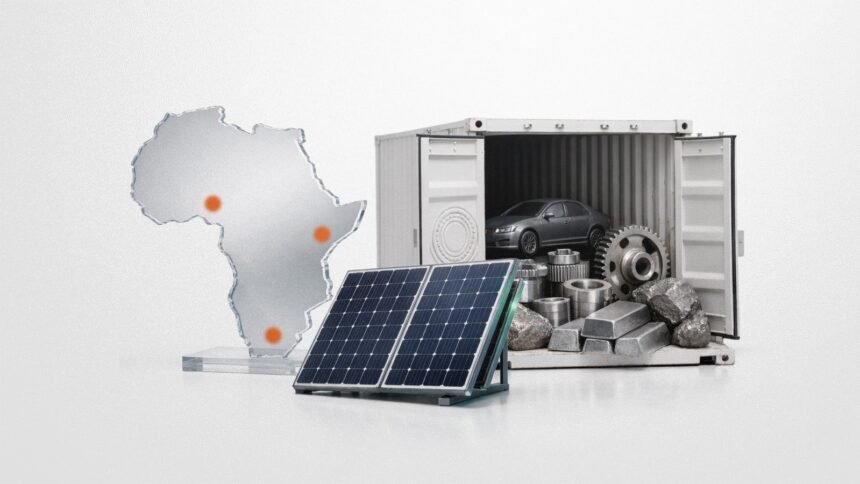
Africa’s investment tides surge with resilient currents: FDI inflows dipped to $59 billion in 2025 from $96 billion in 2024, yet intra-African flows swell, driven by South African, Kenyan, and Nigerian outflows into IT, finance, and manufacturing. This canvas, framed by 4.6% sub-Saharan growth in 2026, contrasts with 2016’s $45 billion inflows amid commodity slumps and 3.7% expansion. Continually, opportunities emerge in renewables, critical minerals, and digital, with AfCFTA unlocking $650 billion in GDP by 2043, while risks such as geopolitical tensions and $90 billion in debt burdens temper prospects. South Africa’s role has evolved: from 2016’s $2.4 billion FDI (5% continental share) amid Zuma-era volatility to 2026’s $8 billion Afreximbank pledge, bolstering mining and autos, countering U.S. tariffs, and addressing AGOA lapses. In this pan-African weave, investment shifts from external dependencies, declining 33% in 2025, to regional reciprocity, where tides of integration promise deeper currents of prosperity.
Rainbow Realm: South African Investment’s Evolving Ethos
South Africa’s investment ethos evolves from 2016’s stagnant realm, 0.3% GDP growth, $2.4 billion FDI amid governance woes and commodity crashes, to 2026’s cautious renaissance: 1.2-1.6% expansion, buoyed by energy reforms and coalition stability. A decade ago, blackouts and fiscal deficits deterred inflows, with unemployment at 26% and the Gini coefficient of inequality at 0.63, eroding confidence; now, Eskom’s 63% availability (up from 55%) and SARB’s 3.5% inflation enable easing, projecting 1.4% inflation in 2026. Yet, the realm’s ethos strains: 33% joblessness, 68% youth are idle, and violence like Atteridgeville’s massacre chills sentiment, while DA’s April leadership shift, Steenhuisen focusing on agriculture amid foot-and-mouth outbreaks, adds coalition uncertainty. Investment pivots: 2016’s mining focus yields to 2026’s renewables and infrastructure, with GNU’s reforms attracting $47 billion BRICS inflows, transforming ethos from stagnation to strategic resurgence.
Capital’s Counterbalance: Investment vs. Debt’s Delicate Dance
Investment’s counterbalance to debt’s delicate dance in South Africa reveals a decade’s pivot: 2016’s 40% GDP liabilities, manageable amid consuma 1.5% growth outlook, swell to 76% in 2026, devouring 21% of revenues amid 3.6% inflation. A decade ago, $2.4 billion in FDI offset modest burdens, with yields at 8%; now, $90 billion in continental walls amplify rollover risks, yet Afreximbank’s $8 billion counters U.S. 30% tariffs, channeling funds into mining and manufacturing. Dance’s delicacy: 2016’s commodity reliance crashed terms of trade, while 2026’s diversification, renewables easing blackouts, AfCFTA surges, and unlocking $50 billion in green bonds lighten debt’s drag. Investment inflows, projected at 3% of GDP, outpace 2016’s 2.5% level, with private consumption accounting for the 1.5% increase. Yet, the counterbalance teeters on coalition frictions and violence, requiring agile steps to harmonize capital’s lift with debt’s downward pull.
Lenders’ Legacy: Afreximbank vs. AfDB’s Divergent Drives
Afreximbank and AfDB’s divergent strategies shape South Africa’s investment legacy, contrasting 2016’s combined $1 billion inflows with 2026’s amplified roles. Afreximbank’s $8 billion for Pretoria, targeting mining, autos, and manufacturing, embodies trade-focused agility, countering Fitch’s junk downgrade with “solid” treasury claims, echoing 2016’s $500 million export credits amid commodity dips. Vs. AfDB’s $47 billion continental replenishments, ADF-17, focusing on infrastructure, emphasize concessional resilience, with a $25 billion 2023-2025 envelope bolstering climate swaps. In South Africa, Afreximbank’s Class A upgrade unlocks $20 billion callable capital, diverging from AfDB’s $5 billion resilience trusts; a decade ago, AfDB’s $2 billion dominated amid Zuma volatility. Legacy’s divergence: Afreximbank’s intra-African FDI push (79% low-income boost) vs. AfDB’s global parity, yet synergies forge $150 billion Compact unlocks, transforming drives from disparate to developmental duet.
Prosperity Pathways: Development’s Decade-Long Dawn
Development’s prosperity pathways in South Africa have unfolded over a decade, from 2016’s dim 0.3% growth, poverty at 55%, and unemployment at 26%, to 2026’s modest uplift: 1.2% growth, AI-driven 6% potential by 2035. Pathways pivot: 2016’s infrastructure bottlenecks and governance lapses led to stagnation, while 2026’s GNU reforms, energy opening, and logistics privatization mobilize $200 billion in five-year investments, countering violence and inequality (Gini 0.67). Dawn’s decade: AfCFTA’s 52% trade surge by 2032 diversifies from gold’s 95-tonne fade, with Afreximbank’s $8 billion seeding jobs in autos and mining. Development deepens: 2016’s 87% electricity access rate rises amid renewables, yet 68% poverty persists, requiring SRD extensions (R259 billion). Pathways promise: BRICS naval ties affirm autonomy, unlocking $50 billion in green investments, charting a dawn from the decade’s dusk to prosperous horizons.