




Africalix Exclusive Interview
Joy Ify Onyekwere, Founder, Climate Justice Africa Magazine
African climate stories have long been told through external lenses, often portraying the continent primarily as a victim of environmental degradation while overlooking its innovation, resilience, and leadership. Joy Ify Onyekwere, a journalist, media strategist, and climate communication advocate, founded Climate Justice Africa Magazine to challenge this narrative.
Through radio, digital media, and storytelling, she has spent years advancing sustainable development across Africa while building a platform that centers African voices and locally driven solutions within global climate conversations.
In this exclusive interview with Africalix, Joy discusses her journey into environmental journalism, the critical gaps in African climate storytelling, and her vision for a media ecosystem in which African journalists actively shape climate narratives rather than merely respond to decisions made elsewhere.
Centering African Voices in Climate Discourse
Climate Justice Africa Magazine emerged from a foundational belief that Africa should be portrayed not only as a victim of climate change but also as a continent of innovation, resilience, and leadership. Joy established the platform to amplify underreported climate stories from African communities, spotlight grassroots climate champions, and hold institutions accountable through ethical, people-centered journalism.
“Our mission is to amplify underreported climate stories from African communities, spotlight grassroots climate champions, and hold institutions accountable through ethical, people-centered journalism,” Joy explains. “We work across magazines and digital media storytelling to ensure African perspectives shape climate discourse both locally and globally.”
Her journey into environmental journalism was inspired by a deep desire to give voice to communities whose stories are often overlooked in mainstream narratives, and she pursued an MBA with a focus on sustainability. As she engaged more with development reporting, particularly on waste management, climate change, water, and environmental justice, she became increasingly aware of how African climate realities were misrepresented.
“I became increasingly aware of how African climate realities were misrepresented and needed to be clarified. A situation where Africans speak for Africa,” she notes. “Though we also cover global issues, we are proudly Africans who tell the African stories.”
Climate Justice Africa Magazine addresses critical gaps in climate storytelling by moving beyond event-based reporting to focus on context, systems, and people. This approach recognizes that compelling climate journalism requires understanding not just isolated disasters or conferences, but the underlying structures, power dynamics, and human experiences that shape environmental outcomes.

Africa’s Climate Challenges and Innovation
When asked about the most pressing climate challenges facing Africa, Joy identifies interconnected crises, including extreme weather events, food insecurity, water scarcity, desertification, and flooding. These challenges are particularly unjustified, given that Africa contributes the least to global emissions yet bears disproportionate impacts.
Crucially, she frames these challenges as deeply tied to inequality, governance, and development gaps rather than as purely environmental phenomena. This systemic analysis recognizes that climate vulnerability cannot be separated from broader questions of power, resources, and political economy.
“African journalists can more effectively showcase these realities by adopting solutions-oriented and data-informed storytelling, grounded in local contexts,” Joy argues. “Reporting should humanize climate impacts while also documenting innovation such as climate-smart agriculture, renewable energy adoption, and community resilience models.”
She emphasizes that cross-border collaborations, investigative reporting, and partnerships with researchers can help elevate African climate stories to global platforms with credibility and nuance. This collaborative approach acknowledges that individual journalists and outlets cannot overcome the structural barriers to comprehensive climate coverage alone.
Overcoming Media Ecosystem Constraints
African media organizations working on climate reporting face significant challenges. Joy identifies limited funding for in-depth climate reporting, inadequate access to data, safety concerns, and a lack of specialized training in environmental journalism as key barriers. Many media houses struggle to prioritize climate stories amid political and economic pressures.
To address these constraints, she advocates for effective capacity-building initiatives, including specialized fellowships, newsroom-based climate desks, data journalism training, and mentorship programs that combine editorial skills with climate science literacy. Beyond individual journalist training, she emphasizes the importance of supporting independent African media platforms and developing sustainable funding models to achieve long-term impact.
This emphasis on structural solutions over individual capacity development recognizes that skilled journalists cannot produce high-quality climate journalism without institutional support, adequate resources, and editorial freedom.
Youth as Climate Narrative Shapers
Joy identifies African youth as positioned at the forefront of climate advocacy, innovation, and community mobilization. They play critical roles as climate educators, digital storytellers, entrepreneurs, and policy advocates, often bridging gaps between science and grassroots action.
“Media platforms can amplify youth impact by intentionally featuring youth-led initiatives, investing in youth-produced content, and providing platforms for young people to shape narratives rather than simply react to them,” she explains. “At Climate Justice Africa Magazine, youth voices are not an add-on; they are central to our editorial vision.”
This approach positions young people not as subjects of stories or token representatives but as active contributors to editorial direction and content production. By centering youth voices rather than merely including them, the magazine models a generational engagement approach that goes beyond symbolic representation.
Digital Innovation with Editorial Integrity
Digital tools such as podcasts, short-form video, data visualization, and social media offer powerful opportunities to expand the reach and relevance of climate stories. Joy sees these tools as essential for making complex climate issues accessible to broader audiences.
However, she insists that professional standards must remain non-negotiable even as journalists embrace new formats and platforms.
“This means prioritizing fact-checking, consent, context, and ethical representation of vulnerable communities,” Joy emphasizes. “Digital innovation should enhance, not replace, journalistic integrity.”
This position addresses concerns that the pressure to produce viral content or achieve social media engagement might compromise the rigor and ethics that distinguish journalism from other forms of communication. Joy argues that African journalists can harness digital tools while maintaining the substance of their stories.
Advice for Emerging Climate Journalists
For emerging African journalists specializing in climate reporting, Joy offers practical advice grounded in both technical skill development and ethical commitment. She encourages journalists to invest in learning both climate science and storytelling techniques while remaining grounded in the communities they report on.
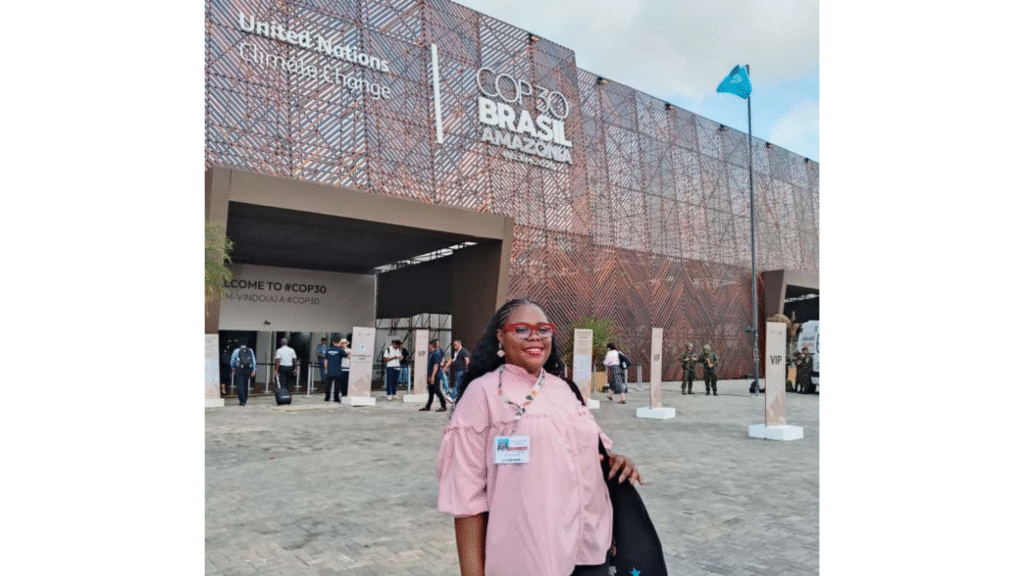
“Climate journalism is not only about reporting disasters; it is about interrogating systems, people, policies, and power,” she notes.
She recommends innovative methods, including audio storytelling, immersive radio, community-based reporting, and data-driven investigations, to help African journalists present compelling narratives to international audiences while staying rooted in African realities. This dual emphasis on global reach and local grounding addresses the challenge of making African climate stories visible internationally without distorting them to fit external expectations.
A Vision for Agenda-Setting Journalism
Looking ahead to the next decade, Joy envisions African climate journalism becoming more agenda-setting, collaborative, and globally influential. Rather than merely reporting on climate decisions made elsewhere, African journalists should actively shape climate narratives, policies, and solutions.
“For Climate Justice Africa Magazine, the goal is to grow into a leading pan-African climate media institution supporting investigative reporting, mentoring young journalists, and building a strong ecosystem where African stories drive global climate action, not the other way around,” Joy articulates.
This vision represents a fundamental shift from reactive to proactive journalism, from representation to leadership. It positions African media not as recipients of global climate discourse but as primary architects of narratives that reflect continental priorities, values, and solutions.
The ambition to build an ecosystem rather than merely an individual publication recognizes that sustainable change requires infrastructure. By supporting investigative reporting, mentoring emerging journalists, and creating collaborative networks, Climate Justice Africa Magazine aims to strengthen the broader field of African climate journalism rather than operating in isolation.
As climate impacts intensify across Africa and global climate governance processes increasingly claim to prioritize African voices, the work of journalists like Joy Ify Onyekwere becomes crucial. By insisting that African climate stories be told by Africans, grounded in African contexts, and shaped by African priorities, Climate Justice Africa Magazine models an approach to environmental journalism that centers agency, innovation, and self-determination. The digital renaissance Joy envisions is not about adopting new tools for their own sake, but about using all available platforms to ensure African realities, solutions, and leadership drive climate action both on the continent and globally.
- • •
Joy Ify Onyekwere is a journalist, media strategist, and climate communication advocate with years of experience using radio, digital media, and storytelling to advance sustainable development in Africa. She is the Founder and Editor of Climate Justice Africa Magazine, a platform that centers African voices, lived realities, and locally driven solutions in global climate conversations. Her work combines investigative reporting, capacity-building, and digital innovation to ensure African perspectives shape climate discourse both locally and globally.