


Africalix Exclusive Interview
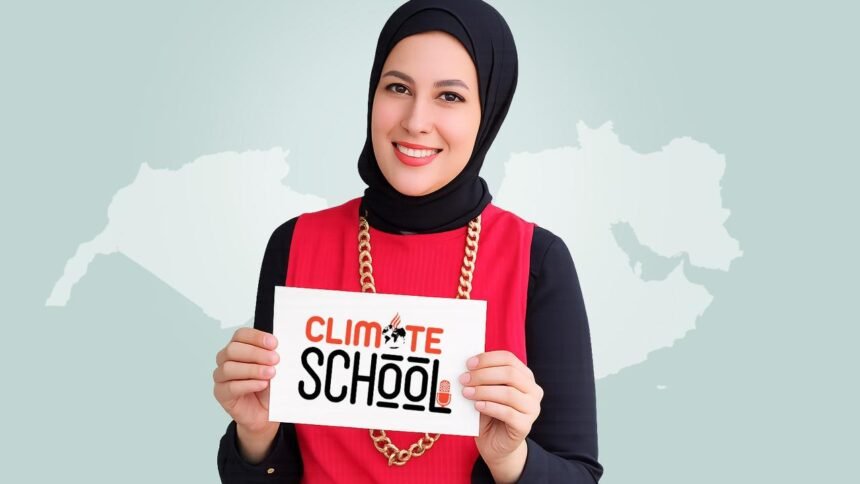
Rahma Diaa, Founder, Climate School
In a region where climate stories often struggle for visibility and impact, one Egyptian journalist is pioneering a new approach to environmental storytelling. Rahma Diaa, founder of Climate School and an award-winning freelance journalist, has dedicated her career to transforming how climate narratives reach Arabic-speaking audiences across the Middle East and North Africa.
Through investigative reporting, human-centered storytelling, and now through training the next generation of climate journalists, she is addressing critical gaps in environmental coverage while amplifying marginalized voices. In this exclusive interview with Africalix, Rahma discusses her journey from investigative journalism to founding Climate School, the challenges facing environmental journalists in the MENA region, and her vision for creating climate content that drives policy change.
From Investigative Journalism to Climate Advocacy
Rahma Diaa is a passionate freelance journalist and media trainer based in Egypt, where she focuses on pressing climate and sustainability issues, particularly in the MENA region and North Africa. Her work has appeared in a mix of Arab and international media outlets, including The Energy Pioneer, IJNET, Scientific American (Arabic version), Climate Tracker, VICE, CFI, and ARIJ. Her journalism has earned ten awards, including the prestigious Covering Climate Now Award in 2021.
Through Climate School, the platform she founded, Rahma offers training in climate journalism for Arabic-speaking journalists. The initiative recently won the 2025 ESCWA award, recognizing its contribution to strengthening environmental reporting capacity across the region.
Her transition to climate journalism began with an investigative report that would shape her career trajectory. “Black Breath,” produced with support from Arab Reporters for Investigative Journalism (ARIJ), documented the environmental and health impacts of coal-fired cement factories in Egypt, particularly on residents living near these facilities.
“We employed human storytelling, engaging visuals, and videos to present the data, which significantly contributed to delivering the message more powerfully,” Rahma explains. “Since then, I’ve worked on several environmental stories, ensuring that I present them in an accessible and humanized manner to reach the audience effectively.” The investigation garnered widespread attention after publication, demonstrating the power of combining rigorous data with compelling human narratives. This approach would become a hallmark of her subsequent environmental reporting.
Climate Justice Through Women’s Stories
Before specializing in environmental journalism, Rahma produced numerous stories on social justice, with a focus on women’s issues. When she delved into climate journalism, she recognized that many climate justice stories needed to be told, particularly those of women in her community and across MENA and Africa.
“I became highly committed to producing this type of narrative, particularly about women in my community and across the MENA region and Africa, where the struggles of women, girls, and marginalized groups are similar in the face of climate injustice,” she notes.
This focus on intersectionality recognizes that climate impacts are not gender-neutral. Women and marginalized communities often bear disproportionate burdens from environmental degradation while having less access to resources for adaptation and resilience. By centering these voices in her reporting, Rahma ensures that climate coverage reflects lived realities rather than abstract statistics.
Building Climate School: A Vision for Regional Impact
The decision to establish Climate School emerged from Rahma’s recognition that climate storytelling in the MENA region needed fundamental transformation. She believed there was a significant need for a narrative shift to make essential stories more engaging, relatable, and impactful for broader audiences.
“I was deeply driven by a desire to transform the way climate stories are conveyed in the MENA region,” she explains. “Through a variety of enriching learning opportunities I pursued, I gradually honed my storytelling skills, and now I feel compelled to share the valuable insights I’ve gained to inspire others to do the same.”
Her vision for Climate School extends beyond training individual journalists. The platform aims to create and disseminate captivating climate content that resonates with audiences across the MENA region, with the ultimate goal of producing content that not only raises awareness of climate issues but also promotes the adoption of sustainable policies that foster long-term environmental resilience.
Climate School provides training, resources, production grants, and professional opportunities that enable journalists to create high-quality content that reflects their communities. The Climate Journalism Diploma, launched in its first course in 2025 in collaboration with Greenpeace MENA, lasted six months and covered comprehensive tools for environmental reporting.
The curriculum focused on training participants to use artificial intelligence in their work, while ensuring information accuracy, handling data, producing multimedia stories, and covering investigative journalism and solutions journalism. This comprehensive approach reflects research indicating the importance of balance and presenting solutions, as a pessimistic tone and fear-based approach may yield counterproductive results.
Amplifying Youth Voices in Climate Action
When asked about the role of journalists in amplifying youth climate action across the Middle East and Africa, Rahma acknowledges both the evident passion and activity among young people and the reality that their representation falls short of expectations.
“Youth form alliances and launch initiatives independently, as well as engage in national negotiation committees and policy-setting bodies,” she observes. “Journalists can highlight the visible efforts made by young people and showcase the positive impact of their work to create more opportunities and empower them to harness that energy in advancing climate action.”
This perspective positions journalists not merely as observers but as active participants in creating space for youth leadership. By documenting and amplifying young people’s contributions to climate action, journalists can help shift perceptions and open doors to greater youth participation in decision-making processes.
Confronting Systemic Challenges
Despite progress in professional training compared to past years, Rahma identifies numerous challenges facing environmental and climate journalists in the MENA region. There remains a need for more in-depth workshops on data journalism, artificial intelligence techniques, investigative reporting, and the use of satellites to cover climate issues.
A significant gap exists in specialized platforms for covering climate issues, resulting in a scarcity of publication opportunities available for journalists. This drives many to seek publishing opportunities abroad in foreign languages, potentially disconnecting their work from local audiences who need these stories most.
“There is a shortage of production grants to create high-quality content and a deficit in competitions and supportive professional opportunities,” Rahma notes. “We work to bridge this gap at Climate School by providing training, grants, and professional opportunities through forming alliances with partners and supportive entities, and by sharing expertise voluntarily. However, there is still a pressing need for more.”
This frank assessment highlights the structural barriers that prevent environmental journalism from achieving its full potential in the region. While individual capacity-building is essential, systemic challenges require coordinated responses from media organizations, funders, and policymakers.
Pathways for Emerging Climate Journalists
For aspiring climate journalists facing resource constraints, Rahma offers pragmatic advice drawn from her experience in the field. She emphasizes the importance of actively seeking learning opportunities, whether online or in person, that equip journalists with the skills needed in the job market and open doors to more opportunities.
“They shouldn’t restrict themselves to publishing with local platforms but should join regional and international networks for climate journalism, collaborate and support one another, and translate their topics into English to compete in international competitions and reach a broader audience,” she advises.
She reframes resource scarcity not merely as a barrier but as a potential motivation for learning, development, and self-building. This perspective acknowledges real constraints while emphasizing agency and the potential for growth despite them.
Her recommendation to translate work into English reflects practical recognition that many funding opportunities, competitions, and platforms operate primarily in English. While this creates additional burdens for journalists working in Arabic and other languages, it also expands potential reach and impact.
From Narrative to Policy Impact
Rahma’s work demonstrates how journalism can bridge the lived experiences of climate impacts and policy responses. By combining rigorous investigation with human-centered storytelling, she creates narratives that resonate with diverse audiences while maintaining the analytical depth necessary to inform policy discussions.
The success of “Black Breath” and subsequent investigations shows that environmental journalism can drive public discourse and potentially influence regulatory responses. Climate School extends this impact by multiplying the number of journalists equipped to produce similar high-quality, evidence-based environmental reporting across the region.
As the MENA region faces escalating climate challenges from water scarcity to extreme heat to agricultural disruption, the role of environmental journalism becomes increasingly critical. Journalists like Rahma who can translate complex environmental science into compelling narratives, center marginalized voices, and propose solutions rather than merely documenting problems are essential to building the public understanding and political will necessary for meaningful climate action.
Through Climate School and her ongoing reporting, Rahma Diaa is not only documenting the climate crisis but actively building the infrastructure of knowledge, skills, and networks that will enable more comprehensive and impactful environmental coverage across Arabic-speaking regions. Her work represents a model for how individual journalists can scale their impact by investing in capacity-building and creating platforms that empower others to tell the stories their communities need to hear.
- • •
Rahma Diaa is an Egyptian freelance journalist, media trainer, and founder of Climate School, a platform providing climate journalism training for Arabic-speaking journalists. Her work has appeared in The Energy Pioneer, IJNET, Scientific American (Arabic version), Climate Tracker, VICE, CFI, and ARIJ. She has received 10 journalism awards, including the 2021 Covering Climate Now Award. Climate School won the ESCWA award for 2025, recognizing its contribution to strengthening environmental reporting capacity across the MENA region.