





Allegations by Rwandan DJ Sonia that she has spent the past three years seeking justice over alleged online harassment have reignited debate over an issue that extends far beyond Rwanda.
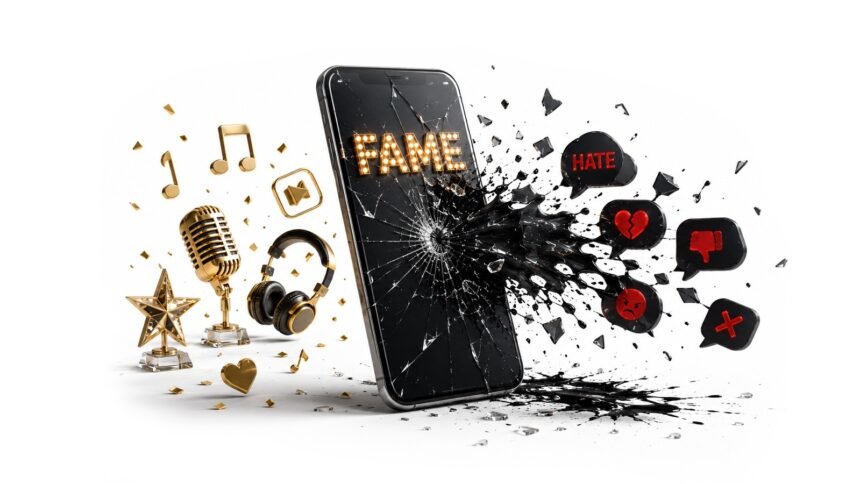
Across Africa, entertainers say cyberbullying, coordinated smear campaigns, and online defamation are increasingly threatening careers, mental well-being, and public trust, exposing the darker side of a rapidly growing digital entertainment economy.
Social media has transformed Africa’s creative industry, giving musicians, actors, comedians, and content creators direct access to millions of fans. But the same platforms that have fuelled careers have also become spaces where false allegations, manipulated content, and coordinated online attacks can spread within minutes, often outpacing the truth.
Industry players say the pursuit of online engagement and financial gain has created an environment where controversy frequently attracts more attention than creativity.
Music manager Alex Muyoboke believes online harassment and character assassination have reached alarming levels in Rwanda’s entertainment industry, leaving many creatives feeling exposed despite repeated efforts to seek assistance from authorities.
“We are crying out for help because the situation has become unbearable. What Sonia has been saying is true, and many of us have experienced the same thing,” he said.
According to Muyoboke, entertainers have reported cases to the Ministry of Youth and Arts, the Rwanda Investigation Bureau (RIB), the Rwanda National Police, and other relevant institutions, but many believe investigations take too long to conclude.
“People have destroyed our reputations on social media. They create false stories using our names to make money, turning us into outcasts and damaging our relationships with family, friends, and the public,” he said.
Muyoboke believes jealousy, competition, and the race for online attention are driving many of the attacks.
“Some people see others succeeding and immediately look for ways to bring them down. They fabricate stories knowing they will spread quickly online. Even after they are proven false, the damage often remains,” he said.
Rwanda’s experience mirrors concerns raised by creatives elsewhere on the continent.
In Nigeria, entertainers have repeatedly spoken out about coordinated online harassment, while celebrity disputes often escalate into digital campaigns that attract millions of interactions. Public figures have also pursued legal action against bloggers and online publishers for alleged defamation, seeking to protect their reputations.
Kenya has witnessed similar trends, with content creators and media personalities reporting sustained online abuse, particularly after expressing controversial opinions or achieving rapid public success. Female creators have frequently highlighted gender-based harassment, threats, and coordinated trolling that extend beyond criticism of their work.
In South Africa, musicians, actors, and influencers have also become regular targets of online rumors and misinformation. High-profile personalities have described the emotional toll of seeing false claims spread rapidly across multiple platforms, often forcing them to spend considerable time and resources responding to allegations instead of focusing on their careers.
Across these markets, digital platforms have become central to artists’ livelihoods. While they provide opportunities to build audiences and secure commercial partnerships, they have also made public figures increasingly vulnerable to reputational attacks that can quickly affect endorsements, performances, and business relationships.
Media personality Amen Rugemana, popularly known as Babu, believes the rise of online smear campaigns is closely linked to the economics of digital content.
“These things really happen. Some people do it because they are paid, while others do it on their own. In many cases, bloggers and influencers are used as tools to attack specific individuals,” he said.
According to Babu, some individuals deliberately commission negative campaigns against people with whom they have personal or professional disagreements.
“If someone has a problem with another person, they can pay bloggers to spread negative stories about them. Sometimes the stories are completely fabricated because those behind them believe there are no strong legal consequences,” he said.
The result, he argues, is an online environment where sensational allegations often generate more engagement than factual reporting or genuine artistic achievements.
For comedian, filmmaker, and poet Gratien Niyitegeka, popularly known as Papa Sava, unhealthy competition has become one of the biggest challenges facing the creative sector.
“I think the problem has reached a worrying level, although it affects different creative fields differently,” he said.
“Sometimes it is not just about bringing someone down. Some people want to rise by stepping on someone else’s name.”
He believes creatives should allow their work, not attacks on competitors, to define their success.
“People should work hard, demonstrate their abilities, and let others choose them on merit, rather than trying to succeed by destroying someone else’s reputation,” he said.
Niyitegeka also urged creatives to exercise restraint when confronted with online criticism.
“If someone says they are better than me, I congratulate them. If they say I have fallen behind, I encourage them to do even better. Not every criticism deserves a response,” he said.
Digital transformation specialist Sylvie Nsanga says persistent online harassment is becoming one of the most significant risks facing internet users, including public figures.
She argues that authorities should adopt a more proactive approach to addressing digital abuse rather than relying solely on victims to report incidents.
“We don’t wait for people to be robbed before deploying security. The same approach should apply online, where those responsible for abuse should be identified as part of routine monitoring,” she said.
Nsanga also stressed that freedom of expression should never be confused with the freedom to harass or defame others.
“Freedom of expression allows people to express opinions responsibly. It should never be interpreted as a license to abuse or humiliate others, whether they are ordinary citizens or public figures,” she said.
Experts say cyberbullying is no longer simply a celebrity issue. As Africa’s digital economy expands and more people build careers online, attacks that were once confined to entertainers increasingly affect entrepreneurs, journalists, activists, politicians, and ordinary social media users.
For the entertainment industry, however, the consequences can be particularly severe. Careers built over years can be damaged by misinformation that spreads within hours, while correcting false narratives often proves far more difficult than creating them.





