




The Pan-African Paradigm of Fractured Sovereignty and Institutional Collapse
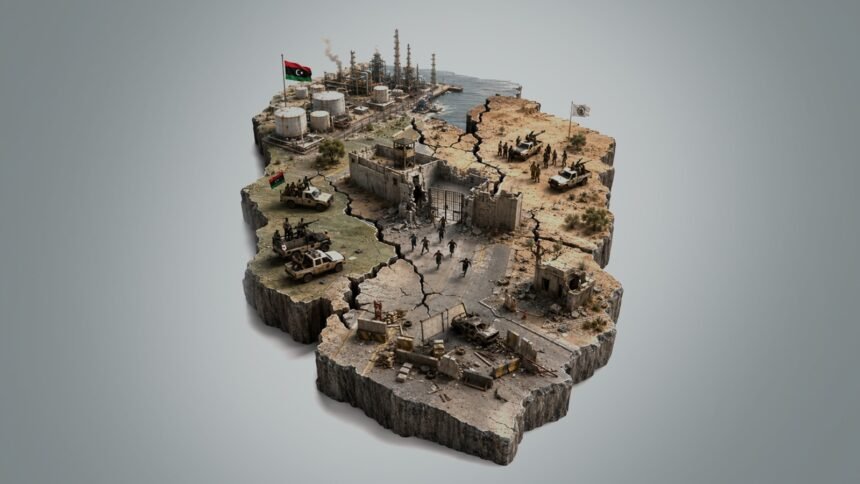
Across the African landscape, the machinery of the state is being tested not by singular catastrophes but by a slow accumulation of institutional fatigue, and nowhere is this more visible than in the smoke rising over Zawiya and Surman this week. The mass escape of inmates from Surman jail, staged as rival armed groups traded gunfire barely a few kilometers away, is not an isolated prison-management failure. It is a symptom of a deeper structural crisis that has defined Libya since the 2011 overthrow of Muammar Gaddafi: a state whose formal institutions exist on paper while actual coercive power has fragmented into a matrix of militias, tribal networks, and rival administrations. For the continent, Libya has become a cautionary architecture, illustrating how quickly the scaffolding of sovereignty can hollow out when external intervention dismantles a regime without building durable institutions in its place. The Pan-African response to this trajectory cannot be limited to diplomatic statements of concern; it demands a systemic reckoning with how the African Union and its member states support post-conflict states in reconstituting monopoly over legitimate force. As Libya’s jailers scramble to identify escapees and its oil towns brace for the next round of clashes, the continent is once again confronted with the unfinished business of reclaiming genuine self-determination over a nation whose fate was decided, in large part, by actors outside it.
The Surman Breach and the Matrix of Weak Custodial Institutions
The mass escape from Surman jail, confirmed by the Tripoli-based Judicial Police Authority on Tuesday, exposes the asymmetric relationship between Libya’s nominal justice architecture and the armed realities that actually govern its western towns. Police did not disclose the number of inmates who fled, only that a committee had been formed to “identify them and take necessary legal action,” a bureaucratic response that underscores how reactive rather than preventive the country’s custodial institutions have become. Surman and neighboring Zawiya, a town just 40 kilometers west of Tripoli, sit within a security vacuum where rival armed groups exercise de facto sovereignty over daily life, and where a correctional facility’s walls carry little more authority than the militias who happen to be in control of the surrounding streets on a given day. This is the structural sovereignty deficit at the heart of Libya’s post-2011 trajectory: formal state bodies retain the vocabulary of governance, issuing statements and forming investigative committees, while substantive control over territory, prisons, and security remains dispersed among non-state actors. For a continent seeking to model resilient institutions, Surman is a warning about the gap between legal architecture and the reality of enforcement.
Zawiya’s Oil Lifeline and the Precarity of Economic Infrastructure
The clashes that enabled the jailbreak did not occur in a strategic vacuum. Zawiya is home to Libya’s largest functioning refinery. This Azzawiya facility processes 120,000 barrels of crude per day and represents one of the last significant pillars of formal economic infrastructure in the country’s west. Azzawiya Oil Company’s public appeal for workers to “take maximum precautions and completely avoid areas of clashes” reveals how even critical economic assets now operate at the mercy of localized militia warfare rather than centralized state protection. This dynamic recurs across resource-rich African states where extractive infrastructure becomes both a prize fought over by competing factions and a source of chronic vulnerability, since the very wealth that could finance institutional recalibration is instead held hostage by the security failures those institutions are meant to prevent. The recurring pattern, from the Niger Delta to Libya’s coastal refineries, illustrates a continental paradox: African economies with abundant natural resource endowments frequently confront the steepest institutional deficits in protecting the very assets meant to underwrite their sovereignty and development trajectory.
Voices From the Ground: Bahr, Abu Snina, and the Human Toll of Institutional Vacuum
Local leader Salem Bahr’s appeal, delivered via the Turkey-based Libya Al-Ahrar TV channel, for an end to fighting because “everyone who wins in this situation loses,” captures the exhaustion of communities caught in a conflict whose combatants and motivations remain officially unidentified. Bahr said the clashes killed three civilians and injured several others, a toll compounded by the uncertainty of not knowing which armed faction bears responsibility or what political demand, if any, animates the violence. Surman’s mayor, Mohamed Abu Snina, described the humanitarian situation as “very bad,” noting serious damage before relative calm returned following the deployment of what he termed a neutral force. These are not abstractions in a geopolitical calculus; they represent the daily texture of life under a security architecture that has never fully recovered from regime collapse. The absence of clarity about who is fighting and why is itself diagnostic of the deeper problem: authority in western Libya has become so diffuse that violence can erupt and subside without a legible chain of accountability, leaving residents to rebuild without ever understanding what threatened them or whether it might return.
Fifteen Years of Fragmentation: Libya’s Unfinished Post-Gaddafi Recalibration
Libya’s unrest since 2011 has produced one of the continent’s longest-running experiments in state fragmentation, with successive governments in Tripoli and rival administrations in the east failing to consolidate a unified security apparatus. This week’s violence in Zawiya and Surman is not an aberration from that trajectory but its logical continuation, a demonstration that even areas nominally under the authority of the Tripoli-based government remain contested ground for armed factions operating outside any coherent command structure. The persistence of this fragmentation carries implications well beyond Libya’s borders, given the country’s role as a transit corridor for migration, arms, and illicit trade flows that ripple across the Sahel and the wider Mediterranean basin. For Pan-African institutions invested in regional stability, Libya represents an unresolved case study in the limits of externally imposed regime change and the long institutional shadow it casts. Rebuilding a credible monopoly on legitimate force in Libya is not merely a domestic Libyan concern; it is a continental imperative tied to the broader project of asserting African-led solutions to African security crises, rather than perpetuating a landscape shaped by the unfinished business of 2011’s intervention.
Toward Structural Sovereignty: Reclaiming Libya’s Institutional Trajectory
The events in Zawiya and Surman this week are a microcosm of the broader continental challenge of converting formal statehood into substantive, lived sovereignty. A jailbreak triggered by nearby militia clashes, an oil company forced to issue safety warnings to its own workforce, and a mayor describing “very bad” humanitarian conditions collectively sketch a portrait of institutions that exist in name but struggle to exercise the coercive and administrative authority that sovereignty requires. Genuine recalibration will not come from external military intervention, which precipitated much of the current fragmentation, but from sustained, African-led investment in judicial, security, and economic institutions capable of asserting durable control over Libyan territory. The African Union’s continued engagement with Libya’s rival administrations, alongside regional bodies invested in Sahel and Mediterranean stability, will be tested by whether it can move beyond statements of concern toward concrete institutional support. Until then, towns like Zawiya and Surman will remain emblematic of a continent-wide struggle: the distance between the architecture of sovereignty promised on paper and the self-determination that communities actually experience on the ground, a gap that reclaiming true African agency over its own security destiny must ultimately close.