



The Pan-African Paradigm of Constitutional Sovereignty and Military Custodianship
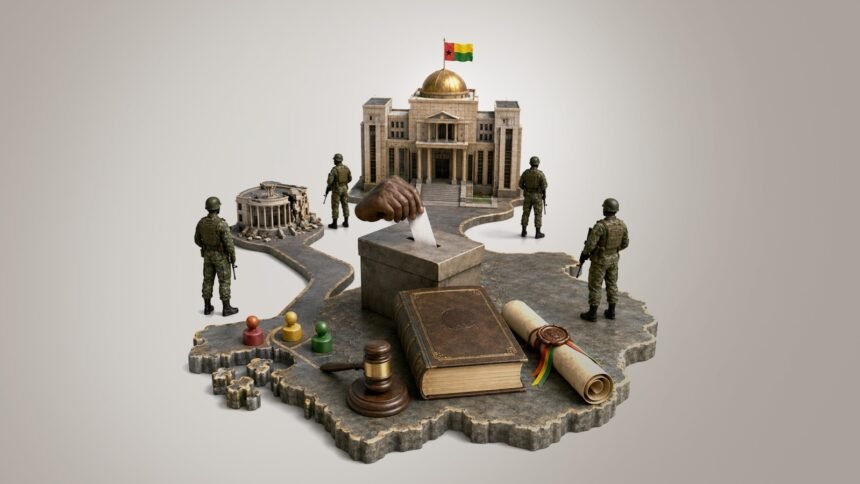
What does a constitution mean when the government that drafted it seized power at gunpoint less than a year earlier? Guinea-Bissau answered that question on 1 September, when provisional results showed voters approving a sweeping constitutional overhaul by a 70-to-30 margin, expanding the powers of the presidency and reshaping the country’s electoral architecture ahead of a December presidential vote. The referendum was engineered by a military administration that took power in a coup last November, the ninth coup or coup attempt recorded across West and Central Africa in five years, and it now hands that administration the legal authority to appoint and dismiss the prime minister and cabinet, create or dissolve ministries, and disband parliament during a declared political crisis. For a country long known internationally chiefly as a cocaine-trafficking transit hub and a case study in cyclical military intervention, the vote raises a foundational question that resonates well beyond Bissau’s borders: can constitutional processes confer legitimacy on outcomes that were substantially predetermined by the actors administering them? As West Africa’s coup belt continues to test the boundary between procedural democracy and military entrenchment, Guinea-Bissau’s newest charter will be read as a test case for whether the region can still distinguish sovereignty exercised by the people from sovereignty exercised in their name.
A Referendum With a Predetermined Shape
The mechanics of the vote itself are instructive. Under the outgoing constitution, Guinea-Bissau’s legislature names a prime minister who in turn appoints a cabinet, a structure that distributes executive authority between the presidency and parliament. The new charter inverts that balance, empowering the president to appoint and dismiss the prime minister and cabinet directly, to create or abolish ministries, and to dissolve parliament in the event of a grave political crisis, a term left undefined in the reporting on the reforms. Provisional results from the National Electoral Commission show roughly 544,060 people voted, about 60% of registered voters, with 70% backing the changes. Turnout in the capital told a different story: polling stations in Bissau were reported largely empty on voting day, with some residents telling local media they were unaware the referendum was even taking place, or did not understand its purpose. The gap between a comfortable margin of victory and a disengaged electorate is itself a data point about the vote’s real political weight.
A Boycott and a Warning
Guinea-Bissau’s main opposition party, PAIGC, urged its supporters to boycott the referendum altogether, arguing the process lacked adequate political and institutional safeguards to be considered credible. PAIGC leader Domingos Simoes Pereira went further, describing the referendum’s backers as seeking to kill the country’s freedom and bury its democracy. No spokesperson for the military government was reachable for comment on the criticism, leaving the boycott’s core allegation, that the process was designed to entrench incumbent power rather than distribute it, formally unanswered. The new constitution also narrows who may contest the presidency: candidates must now have lived continuously in Guinea-Bissau for the five years preceding an election, a residency requirement that in other contexts has excluded exiled or diaspora-based opposition figures from returning to contest power.
A Smaller Parliament, A Larger Executive
Beyond the presidency, the new charter restructures the legislature itself, cutting the number of parliamentary seats from 102 to 65 and reducing electoral constituencies from 29 to 12. Fewer seats and fewer constituencies typically translate into higher barriers to entry for smaller or regionally based parties, concentrating political representation among fewer, larger blocs, a structural change with consequences that will likely outlast the current military administration regardless of who wins December’s presidential vote. Combined with the expanded presidential authority to dissolve parliament outright during a declared crisis, the reforms shift the architecture of Guinea-Bissau’s state decisively toward executive concentration, embedding institutional advantages for whoever occupies the presidency well beyond the immediate transitional period the military government claims to be managing.
The Weight of a Fragile Precedent
Guinea-Bissau’s history offers little reassurance that concentrated executive power translates into stability; the country’s post-independence era has been defined by a cycle of coups, assassinations, and short-lived governments, with cocaine trafficking networks frequently cited as a destabilizing undercurrent running beneath formal politics. A constitution engineered by a coup government, ratified in a vote most of the capital seemingly ignored, and immediately followed by an opposition boycott is not, on its own, evidence of a durable settlement. What it does confirm is that Guinea-Bissau’s coming December election will be contested under rules written unilaterally by the very administration whose hold on power that election is meant to test, a circularity that African civil society groups and regional bodies will need to scrutinize closely if the vote is to carry any claim to structural legitimacy. Genuine constitutional sovereignty, the kind capable of anchoring lasting self-determination, cannot be manufactured through decree; it has to be built through processes the public actually recognizes as its own.