




The Pan-African Paradigm of Migratory Sovereignty and Structural Abandonment
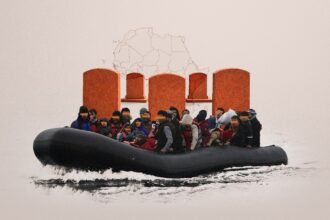
Across the African landscape, the migration corridor that runs through Libya’s southern desert has become one of the starkest illustrations of a continent-wide structural failure: the absence of any coherent, humane, and sovereign framework for governing the movement of people fleeing conflict and poverty toward Europe. The recovery of six migrant bodies in the desert roughly 200 kilometers northwest of Jalu, after a vehicle broke down and its passengers attempted to walk to safety, is a single incident within a route that has claimed uncounted lives since the fall of Muammar Gaddafi’s government in 2011 opened Libya to years of fragmented, competing authority. Within the Pan-African paradigm, this tragedy must be read not as a Libyan domestic matter but as a continental indictment of the institutional vacuum that allows human traffickers, armed groups, and porous borders to convert desperate migration into a lethal transit economy. Reclaiming migratory sovereignty, in this framing, means building the regional coordination, search-and-rescue infrastructure, and accountable governance capacity that could prevent the next vehicle from breaking down in a stretch of desert where survival depends entirely on chance.
A Vehicle Breaks Down: Reconstructing the Jalu Desert Tragedy
Libya’s Alwahat Security Directorate said its personnel recovered the bodies of at least six migrants in a desert area roughly 200 kilometers northwest of the town of Jalu, after the vehicle carrying them broke down. Two bodies were found inside the stranded vehicle itself; three more were located about four kilometers away; and a sixth was found some ten kilometers further, after security personnel tracked footprints across the sand. According to the vehicle’s registration documents, its owner was from Chad, situating the tragedy within a well-documented Sahelian migration corridor that funnels people from Chad, Sudan, and further afield through Libya’s south before attempting the Mediterranean crossing. Security forces, working alongside members of the Fifth Battalion of the 129th Brigade, photographed the grim recovery operation, images that the Directorate itself released publicly, an unusually transparent gesture from an authority operating in a fractured security landscape. In the same incident, nineteen other migrants were reported rescued two days earlier. However, the Directorate did not specify precisely where, underscoring how incomplete even official accounts of these desert crossings tend to be.
The Post-Gaddafi Vacuum: Fifteen Years Without a Functioning Border Regime
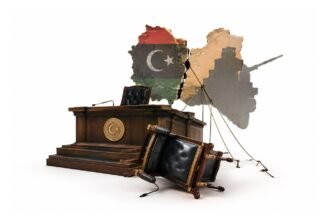
The structural roots of this tragedy trace back to 2011, when a NATO-backed uprising toppled Muammar Gaddafi’s government and left Libya without the centralized authority that had, however repressively, once controlled its vast southern frontier. In the fifteen years since, Libya has splintered into competing centers of power, each controlling fragments of territory and, by extension, fragments of responsibility for the migration routes crossing them. This fragmentation has made Libya simultaneously a magnet and a graveyard for migrants: a magnet because its chaos offers traffickers operating space unavailable in more governed states, and a graveyard. After all, that same chaos means no single authority bears consistent accountability for search-and-rescue capacity, medical response, or even basic tracking of how many people die attempting the crossing each year. The persistence of security directorates like Alwahat, operating with real but geographically limited authority, illustrates a broader continental pattern: institutional accountability that exists in fragments, unable to scale into the kind of coordinated regional response the crisis actually demands.
Left Behind: The Fuel, the Footprints, and a Second Vehicle’s Choice
Perhaps the most structurally revealing detail in the Directorate’s account is the report, relayed by the brother of the stranded vehicle’s owner, that a second vehicle traveling with them siphoned the fuel from the broken-down truck and continued on its journey, leaving its former companions to their fate in the desert. That decision, made under presumably desperate circumstances by fellow migrants or the traffickers guiding them, illustrates the brutal logic imposed by a transit system with no institutional safety net: when the state provides no rescue infrastructure, survival becomes a matter of individual triage rather than collective protection. It is a microcosm of the wider structural abandonment migrants face along this route, where the absence of any accountable authority transforms ordinary human solidarity into a luxury few can afford to extend, and where the eventual fate of the nineteen rescued migrants, and the family of the vehicle’s Chadian owner, remains only partially documented.
Reclaiming Migratory Sovereignty Across a Fractured Continent
The six bodies recovered outside Jalu will likely register, in the wider international news cycle, as a brief and quickly forgotten item. Read through a Pan-African lens, however, the incident demands a sustained reckoning with the structural abandonment that continues to define migration governance across the Sahel and North Africa. Reclaiming migratory sovereignty requires more than periodic condemnation of trafficking networks; it demands regional coordination between Libya’s fragmented authorities, its southern neighbors, and continental bodies capable of establishing genuine search-and-rescue capacity and accountable tracking of a route that has swallowed uncounted lives since 2011. Until that architecture exists, security directorates like Alwahat will continue to perform the grim, isolated work of recovering bodies from the sand, one broken-down vehicle at a time, in a system that has yet to build the institutional capacity to prevent the crossing from becoming a lethal gamble in the first place.