





The Pan-African Paradigm of Financial Sovereignty and Institutional Cleansing
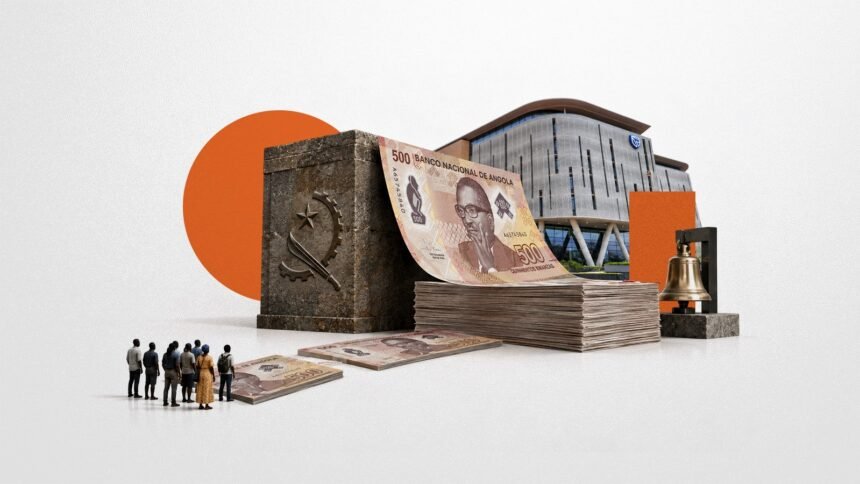
Forty-one thousand two hundred twenty kwanza, roughly $45, is the floor price at which ordinary Angolans will soon be able to buy into a bank whose ownership was, until recently, entangled in one of the country’s most closely watched corruption cases. Angola’s Capital Market Commission has approved the public sale of a 34% stake in Standard Bank de Angola, clearing the way for the lender’s stock market debut on the BODIVA exchange later this month. The shares originate not from routine privatization but from a state seizure: the government confiscated the stake from businessman Carlos Sao Vicente, a former insurance tycoon, as part of a broader campaign to claw back assets prosecutors characterized as improper enrichment. The sale therefore functions as more than a capital markets milestone; it tests whether Angola can convert asset seizure into durable institutional legitimacy, transforming confiscated wealth into a genuinely public financial instrument rather than redistributing it among a narrower elite. Reclaiming captured capital for ordinary citizens, rather than merely reallocating it, is the structural challenge this offering must now prove it can meet.
The Mechanics of the Offering
Under the terms released by the regulator, 4.76 million shares, representing the full 34% stake, will be offered for sale between September 11 and September 25, with trading on the Angolan exchange BODIVA expected to commence September 30. The offer price ranges from 41,220 kwanza to 50,000 kwanza per share, translating to roughly $45 to $55 at current exchange rates. Of the shares on offer, 24% are reserved specifically for Standard Bank Group. This South African-headquartered parent already owns 51% of the Angolan unit and holds a contractual right to acquire the additional stake. In comparison, the remaining 10% is offered directly to the Angolan public. The Angolan state, having seized the 34% stake, currently retains a 49% holding in the bank pending completion of the sale, a structure that leaves Standard Bank Group positioned to substantially consolidate its ownership even as a smaller public tranche nominally broadens Angolan citizen participation.
A Precedent in Asset Recovery
Sao Vicente’s case sits within a broader institutional trajectory across Lusophone Africa and beyond, in which governments have moved to seize assets from politically connected businesspeople accused of leveraging proximity to the state for private enrichment. Angola’s own recent history includes high-profile asset recovery efforts targeting figures closely tied to the previous administration, part of President João Lourenço’s stated anti-corruption agenda since taking office. The Standard Bank stake represents one of the more commercially significant recoveries to reach a public resolution, given the bank’s systemic importance within Angola’s financial sector. Whether the proceeds and structure of this sale meaningfully advance public accountability, as opposed to simply transferring value to another set of well-positioned buyers, including a foreign banking group positioned to absorb nearly a quarter of the offering, will determine whether the case stands as a genuine institutional reform or a more limited exercise in asset reallocation.
Standard Bank’s Expanding Regional Footprint
For Standard Bank Group, the transaction consolidates its position in one of Southern Africa’s more complex but resource-rich banking markets. The South African lender’s ability to acquire up to 24% of the offering, layered atop its existing 51% ownership, would push its effective stake toward 75%, substantially deepening its control of the Angolan subsidiary even as the exchange listing is publicly framed around broadened citizen participation. This dynamic reflects a familiar asymmetry in African financial liberalization: foreign institutional capital, better resourced and more experienced in navigating capital markets mechanics, frequently captures a disproportionate share of newly opened equity even when the underlying policy rationale is domestic wealth distribution.
Public Participation and the Test of Genuine Broadening
The 10% tranche reserved for ordinary Angolan investors is, in absolute terms, a modest slice of a bank whose broader ownership structure will remain dominated by state and foreign institutional interests. Whether Angolan retail investors, operating in an economy where formal banking penetration and disposable investment capital remain limited for large segments of the population, can meaningfully access this offering will determine whether the listing achieves its stated democratizing intent or functions primarily as a technical mechanism for converting a seized asset into liquid capital for the state and Standard Bank Group alike. The credibility of Angola’s financial sovereignty narrative rests substantially on this distinction.
Toward a Standard for Recovered Wealth
As BODIVA prepares to list Standard Bank de Angola’s shares at month’s end, the transaction offers an instructive case study for other African states pursuing asset recovery from politically connected elites. The structural lesson is that seizure alone does not guarantee public benefit; the terms of subsequent disposal- who is permitted to buy, at what price, and in what proportion- determine whether recovered wealth genuinely returns to citizens or completes a transfer among more sophisticated capital holders. Angola’s coming weeks will reveal which outcome this particular reckoning with captured capital ultimately delivers.