


The Pan-African Paradigm of Founder Politics and Institutional Succession
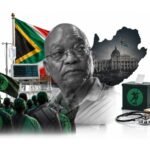
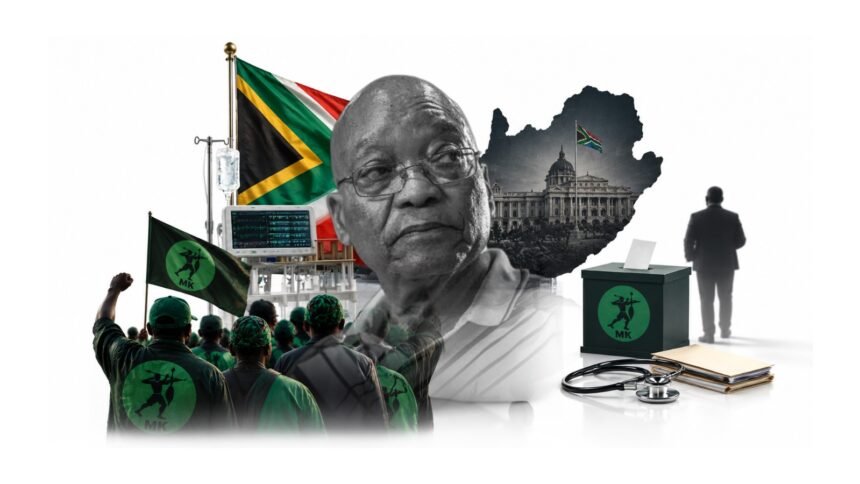
Jacob Zuma served as South Africa’s president from 2009 to 2018. Six years after leaving office, he was back at the center of national politics, having helped propel the newly formed uMkhonto weSizwe (MK) Party to third place in the 2024 national elections. It was a rapid return to the front line of politics, and the new party remains closely identified with its founder. That history explains why the 84-year-old’s admission to a private hospital in Pietermaritzburg this week has become a political question as well as a medical one.
Three Accounts of One Hospital Stay
What is known for certain is limited, and the public accounts conflict. The MK Party said Zuma had gone for a routine medical check-up, a procedure he has twice a year, and told supporters he was “healthy and in good spirits”. Party officials gave no further details about his condition. President Cyril Ramaphosa told reporters that Zuma had been unwell and was receiving medical treatment, and wished him a speedy recovery. Zuma’s brother, Khanya, said the former president was unwell and remained in hospital, that the situation was concerning and that the family was praying for his recovery.
Reports in South Africa said Zuma was taken by ambulance to a medical clinic in Pietermaritzburg on Wednesday. The party has not confirmed this. None of these accounts is necessarily false, since a routine check-up can reveal a condition that needs treatment, but together they leave the public without a clear picture. Until Zuma, his family or his doctors give a fuller account, the gap between “routine check-up” and “unwell and receiving treatment” remains open, and this brief does not try to close it.
A Campaign Built Around One Man
The timing is difficult for the party. South Africa holds local government elections on 4 November. Zuma was expected to play a prominent role in preparations for the party’s manifesto launch in Mbombela, and it is unclear whether he will attend a planned gathering in the Mtooba area on 18 October. He is also due to testify within two weeks before the inquiry into the Truth and Reconciliation Commission cases.
In a party organized around an institution, a leader’s illness is a scheduling problem. In a party organized around a person, it is a strategic one. The MK Party’s rise drew heavily on Zuma’s personal standing, and its message, mobilization, and identity have been tied to his presence on the campaign trail. Without him on the campaign trail, the party has to show, for the first time, whether it can stand on its own.
The Information Problem
The conflicting accounts also show an older habit in African politics, and not only African politics: treating a leader’s health as a matter of party security rather than public interest. Saying little can protect a patient’s privacy, which every person, including a former head of state, is entitled to. But when a party asks voters to support a movement built around one figure, uncertainty about that figure’s health becomes a matter of democratic interest. Supporters, rivals and election officials all plan around information the party controls.
The result is asymmetric. The party holds the facts, and the public receives competing statements from the party, the sitting president and the family. Rumor fills the gaps. A short, factual statement from Zuma’s doctors, issued with his consent, would serve both his dignity and the electorate’s right to know.
Succession Without a Successor
The deeper question is about institutions. Founder-led parties across the continent face the same structural test: can the movement outlive the founder’s presence? Leadership succession, candidate selection and internal dispute resolution all need rules that work without the founder’s personal authority. Whether the MK Party has built such an architecture, or has relied on Zuma’s charisma to cover its absence, will become clearer in the four weeks before the local elections.
For South Africa’s wider democracy, the stakes are significant. The MK Party is now an important player in the country’s fragmented politics, and its performance in municipalities will shape coalition-building at the local level. A sudden leadership vacuum in such a party could unsettle councils and alliances across the country. Voters deserve to know, before they cast their ballots, who will actually lead the movement they are being asked to support, and what program it will pursue if its founder can no longer campaign.
Closing: Structural Sovereignty Means Parties That Outlast Their Founders
Every citizen deserves to recover in peace, and Zuma’s health is first a matter for him and his family. Yet the political lesson of this week does not depend on his diagnosis. Structural sovereignty in a democracy rests on parties that function as institutions: with published leadership rules, credible deputies and the ability to tell the public the truth when it matters. The MK Party’s trajectory from here will show whether it has become such an institution or remains, in effect, an extension of one remarkable and polarising political career.