




In context: criminal law, public health and the right to a lawyer
In 1965, five years after independence, Senegal made same-sex sexual conduct a crime. In March 2026, Senegal’s parliament went much further. On 11 March, it amended article 319 of the penal code, doubling the maximum prison term for consensual same-sex conduct to 10 years and creating new offenses of “promotion” of homosexuality and of supporting or financing LGBT people and organizations. Seven months later, a Human Rights Watch report published on Monday describes what has followed: mass arrests, HIV testing without consent, lawyers afraid to take cases, and patients abandoning HIV treatment.
“LGBT people are being forced to curb their normal activities and to keep from exercising their rights for fear of arrest and increased stigma,” said Larissa Kojoué, the organization’s LGBT rights researcher. “Senegal’s government should call a halt to this crackdown, which threatens everyone’s rights.” Human Rights Watch interviewed 39 people in Senegal in May, including former detainees, lawyers, health workers, officials and members of the queer community. It wrote to the justice minister, the head of the gendarmerie, the director of military justice and the head of the national police on 29 September with its findings and questions, and says it has received no reply.
A Regional Tide
Senegal is one of more than 30 African countries that criminalize same-sex relations, and the report places its crackdown within a wider increase in punitive action against LGBT people in West Africa. The politics behind it are domestic and popular. During the 2024 presidential campaign, President Bassirou Diomaye Faye and Ousmane Sonko, who went on to serve as prime minister, pledged to strengthen the laws and framed the issue as a national priority, drawing broad public support. Across the region, similar measures are often presented as a defense of national values against outside pressure. The question the report raises is what such laws do in practice to due process and to public health.
How Many Arrests? Nobody Official Will Say
The scale of enforcement is itself contested. The arrests began before the amendment: at least five men were detained in the Thiès region in December 2025 and 12 in Dakar in February 2026, on charges that included “acts against nature” and “intentional transmission of HIV”. Police and gendarmes then widened arrests to Thiès, Rosso, Saint-Louis, Yeumbeul and Ziguinchor. According to data gathered by the Senegalese rights group RADDHO, at least 212 people were arrested between February and July. The HIV Justice Network has put the figure for the same period at more than 300. Neither number has been officially confirmed, and Human Rights Watch says it could not verify the total independently. Of those arrested, 82 were also charged with “voluntary HIV transmission”, charges a court dismissed in August.
Security officials have said publicly that they identified suspects through information taken from previously seized phones, through allegations by third parties and through raids on private homes. Mouhamadou Seck, secretary-general of RADDHO, said in May that “detentions, violence, and abuse against LGBT individuals have sharply increased across the country.”
The Lawyer’s Dilemma
The new offenses of “promotion” and “glorification” are broadly worded, and the report finds they have frightened the legal profession as well as LGBT people themselves. A lawyer in Dakar told researchers that colleagues and relatives had urged him not to represent people accused of “acts against nature”, because lawyers in Senegal tend to be identified with the causes of their clients. He said that everyone has the right to a fair trial, and that what mattered to him was whether their rights had been respected. The United Nations Basic Principles on the Role of Lawyers state that lawyers must not be identified with their clients or their clients’ causes because they represent them. When defense counsel becomes a risk, the right to a defense itself is weakened.
When the Police Read Your Test Results
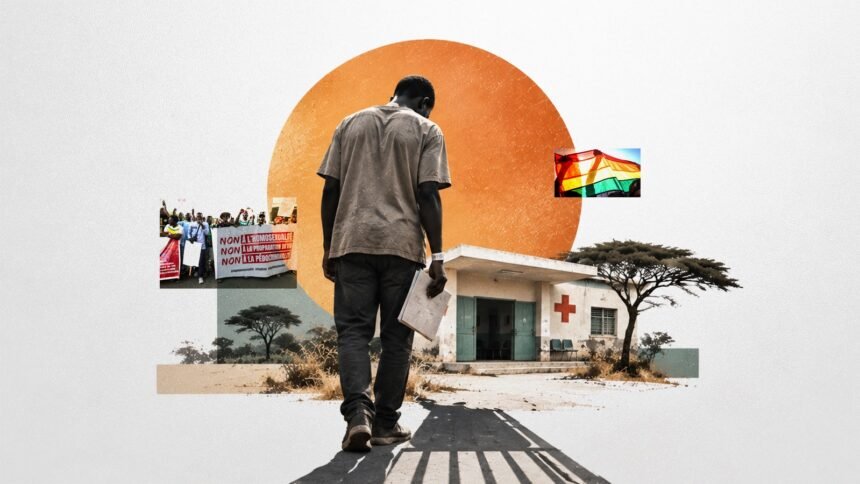
The public health findings may prove the most damaging. Interviewees said that since February detainees have been tested for HIV without informed consent, and that their results have been used to justify extra charges or longer detention. Health workers warned that this breaks medical confidentiality and teaches people that a test result can become evidence. A doctor in Dakar told researchers that some patients have fled and others are hiding, and that about a third no longer come to their HIV treatment appointments. When people living with HIV stop treatment, the consequences reach far beyond the people arrested.
The report also points to apparent leaks. Media coverage of two cases involving public figures included personal details closely matching investigative records, and local outlets published personal data about the 12 men arrested in February. Human Rights Watch reads this as evidence that confidential information was passed to journalists, exposing people to stigma and violence before any trial.
Whose Values, Whose Law
Senegal’s leaders present the law as an assertion of national self-determination, and the country’s sovereign right to write its own penal code is not in question. But sovereignty over the law also means responsibility for how it is enforced: for detainees’ access to counsel, for the privacy of medical records, for the confidentiality of investigations, and for the health of everyone who relies on HIV services. Those duties belong to Senegal’s own justice system, not to any foreign capital.
The government has not answered the questions put to it. A credible response would start with the basic facts that only the state holds: how many people have been arrested under article 319, on what evidence, and with what access to lawyers and doctors. Until those figures are published, the gap between the rights groups’ estimates of 212 and more than 300 will remain the most precise measure of a crackdown carried out largely out of public view.