



A Military Government Turns to Sport for Nation-Building, Days After A 7-0 Defeat
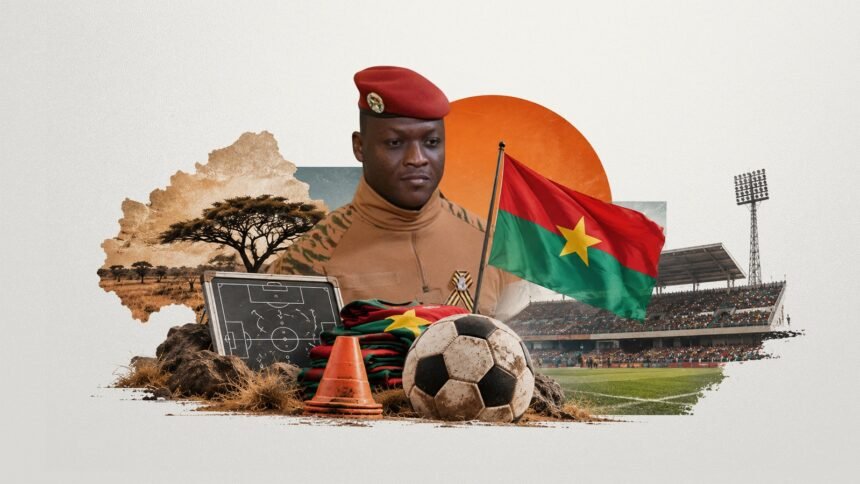
Here is the paradox. A national team humiliated 7-0 in a friendly against Argentina in Buenos Aires earlier this month has produced not a quiet rebuild but one of the boldest football projects on the continent. Burkina Faso’s military leader, Captain Ibrahim Traoré, has launched a new national championship, the Ligue de la Souveraineté, or Sovereignty League. It promises regular wages to players, teams in every region, and a role for the state that may test the rules of world football.
What the New League Looks Like
The Council of Ministers approved the league on Thursday, 8 October, and on Monday, 12 October, Traoré met regional governors and sports officials to set out how it would work. It will have 20 teams, in line with the country’s new administrative division into 17 regions: one team for each region, with three for Kadiogo, which includes Ouagadougou, and two for Guiriko, home to Bobo-Dioulasso. The league is meant to sit alongside the existing first division, Fasofoot League 1, not replace it.
The sports minister explained the logic. “At first-division level, Burkinabè football is highly concentrated in the two main cities, Ouagadougou and Bobo-Dioulasso. The Sovereignty League reflects the government’s desire to bring top-level competitions even closer to all the regions,” the minister said after the cabinet meeting.
Selected players are to receive a minimum of 200,000 CFA francs a month, put at about $300, plus other benefits. The presidency says the scheme should create about 1,000 jobs and open opportunities for young people across the country. Regional governors will coordinate the recruitment of coaches and organize regional championships to identify talent. Funding at the regional level is to rely partly on contributions from businesses, which have been asked to support the project, and a system is planned to secure media coverage. The government has also presented the league as part of efforts against drug and alcohol use among young people.
Nation-Building by Football
The ambition is easy to understand. Football is the most popular sport in Burkina Faso, and the national team, the Stallions, reached the Africa Cup of Nations final in 2013. Yet the domestic game has remained concentrated in two cities, and few local players can live on football alone. A guaranteed wage, even a modest one, could keep talent at home and give young people in insecure regions an alternative to unemployment.
There is also a political message, carried in the league’s name. Since taking power in 2022, Traoré’s government has placed national self-reliance at the center of its public language, and sport is a natural stage for it. A league with a team in every region is a way of showing the state’s presence across a country where armed groups have contested large areas of territory.
Where FIFA Comes In
The difficulty is governance. Analysts say it is not clear how the new league will fit with the Burkinabe Football Federation, whose independence is protected by FIFA’s rules. That matters because the announcement came days after Traoré threatened to take over the federation following the Argentina defeat. FIFA requires member associations to run their affairs without government interference, and it has suspended national federations for it before, including Kenya and Zimbabwe in 2022. A suspension would bar Burkina Faso’s national teams and clubs from international competition, the opposite of what the government says it wants.
The league itself need not trigger that. A state-funded regional competition, run alongside the federation’s own championship and coordinated with it, could be a legitimate development program. The risk lies in who controls it. If governors and the presidency pick players, set rules and run finances outside the federation, the project could become a parallel structure that FIFA treats as interference. Some reports say governors will play the central organizing role, which is exactly where clarity is needed.
Questions of Money and Sustainability
The wage promise also needs a budget that lasts. Twenty teams of salaried players, coaches and staff are a recurring cost, not a one-off launch. Asking regional businesses to contribute may work in good years, but it can feel less voluntary when the request comes from a military government. Clear public accounts for the league, published contracts, and an independent body to manage the money would protect players as well as the project’s credibility.
Ownership Without Isolation
There is a real case for Africans owning their domestic football rather than watching their best players leave young for leagues abroad. A Burkinabè league that pays players, reaches every region, and gives towns a team to support could become a model for other countries. But ownership is not the same as control by the state. The surest way to build something lasting is to keep the federation inside the project, keep FIFA informed, and let the football, not the politics, decide who plays. Otherwise, a league named for self-rule could end up cutting Burkina Faso off from the game it is trying to strengthen.