




The Pan-African Paradigm of Health Sovereignty and Structural Accountability
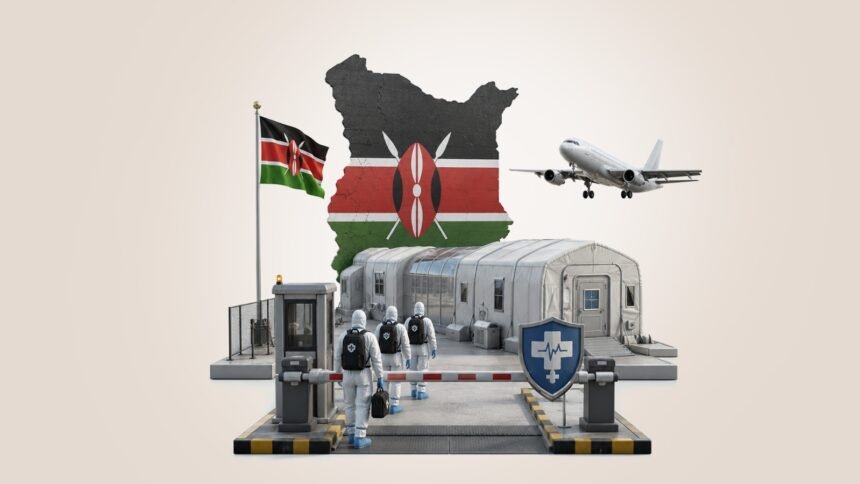
Across the African landscape, the burden of managing global health emergencies has long fallen disproportionately on nations least equipped to negotiate the terms of that burden, even as the risks being managed frequently originate in, or are exported to, other regions. This asymmetry is on stark display in central Kenya, where seven American aid workers are now quarantining at a newly constructed bio-isolation facility built by the US government on a Kenyan air force base, following Washington’s decision to impose a mandatory three-week third-country quarantine on citizens returning from Ebola-affected Democratic Republic of the Congo. The facility’s very existence has provoked sustained legal and popular opposition within Kenya, a nation asked to absorb the health risk of an outbreak it did not create, using land and sovereignty it did not fully consent to committing. This is the Pan-African paradigm of health sovereignty in its most literal form: the question of who bears the physical, legal, and reputational cost of managing a transnational crisis. As the region’s Ebola response continues, Kenya’s experience illustrates the broader continental imperative of reclaiming authority over how foreign partners deploy infrastructure, personnel, and risk within African borders.
The Architecture of an Imposed Isolation Facility
The US government constructed the 50-bed bio-isolation unit at the center of this controversy specifically to hold asymptomatic Americans exposed to Ebola in the Democratic Republic of Congo or Uganda, a purpose-built structure whose planning proceeded even as a Kenyan court ordered construction halted pending a final ruling. Satellite imagery and accounts from US officials confirm that building continued despite the injunction, a sequence of events that culminated last month in Kenya’s health minister being found in contempt of court for failing to enforce the halt order, prompting an abrupt, if belated, suspension announcement. This structural defiance of domestic judicial authority, construction proceeding in the shadow of an active legal challenge, crystallizes the deeper grievance animating Kenyan opposition: that a foreign government’s operational convenience was allowed to eclipse the country’s own legal architecture for months before any accountability mechanism took hold, revealing significant gaps in the enforcement capacity that ostensibly protects Kenyan sovereign prerogatives over land use and public health policy alike.
The Samaritan’s Purse Deployment and Its Human Dimension
The seven Americans now occupying the facility, all staff of the evangelical aid organization Samaritan’s Purse, represent the first confirmed occupants of a site that has existed largely as a symbol of contested policy until this week. According to the group’s president, Franklin Graham, none of the workers display symptoms. Yet, Kenyan authorities are holding them for a full 21-day period, sleeping on army cots in tents and barred from traveling elsewhere in the country. One individual is understood to represent a higher-risk exposure category, having had direct contact with Ebola patients at Samaritan’s Purse treatment centers in Congo. In contrast, others performed construction-related work without direct clinical contact. Samaritan’s Purse, which has received multimillion-dollar backing from the Trump administration for its Ebola response and fields the largest American contingent working alongside the World Health Organization in Congo, embodies the complex entanglement of humanitarian mission and geopolitical liability that now defines the region’s response to the outbreak.
Legal Resistance as a Vehicle for Structural Accountability
The Kenyan legal challenge to the facility’s construction represents more than a procedural skirmish; it is a proxy contest over the extent to which Kenyan institutions can constrain foreign-driven infrastructure projects justified by external public health imperatives. That the contempt finding against the health minister emerged only after sustained civil society and judicial pressure suggests the accountability architecture, while imperfect, retains meaningful teeth when domestic actors persist in exercising it. This dynamic offers a template, however incomplete, for how African judiciaries might assert oversight over externally funded projects that implicate questions of sovereignty, land use, and public consent. The unresolved tension between the court’s suspension order and the facility’s operational reality, now housing actual quarantined individuals, ensures that this legal contest will continue to unfold even as the immediate public health need it was built to address plays out on the ground.
Asymmetries of Global Health Governance
The broader context for Kenya’s predicament lies in the profoundly asymmetric distribution of risk and resource across the current Ebola response, centered on an outbreak that began in the Democratic Republic of Congo and has since drawn in American, Ugandan, and Kenyan institutional capacity in starkly unequal ways. Washington’s policy of mandatory offshore quarantine reflects a risk-management logic calibrated entirely to American domestic political sensitivities, with comparatively little apparent negotiation over where, and at whose institutional cost, that quarantine period would be served. A US state department official characterized the American workers’ relocation as “voluntary” and undertaken “out of an abundance of caution,” language that elides the extent to which Kenya’s own health ministry was left to field public anger, legal challenges, and reputational fallout for a facility whose necessity was determined almost entirely by external actors. This is the recurring architecture of global health governance: burden-shifting dressed in the vocabulary of caution and partnership.
Toward a Recalibrated Health Sovereignty
As the quarantine period for these seven Americans unfolds under the observation of US public health clinicians on Kenyan soil, the episode leaves unresolved structural questions that will outlast this particular cohort of patients. Kenya’s judiciary has demonstrated a willingness to challenge the terms under which foreign infrastructure is imposed within its borders, even if enforcement lagged behind the initial ruling. The deeper task now facing Kenyan authorities, and African governments navigating comparable transnational health emergencies more broadly, is to convert this moment of friction into durable frameworks that govern consent, cost-sharing, and institutional authority before the next outbreak forces the same negotiation under greater duress. Reclaiming health sovereignty is not simply a matter of resisting unwanted facilities; it requires building the legal and diplomatic architecture to ensure that when African nations do host the infrastructure of global health response, they do so on genuinely negotiated terms, rather than absorbing risk that originated, and was managed, according to priorities set entirely elsewhere.