

Small African States are Finding That Their Names and Legal Identities Can Be Borrowed by Offshore Operators, with the Reputational and Anti-Money-Laundering Costs Left at Home
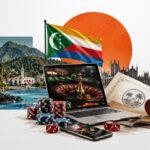
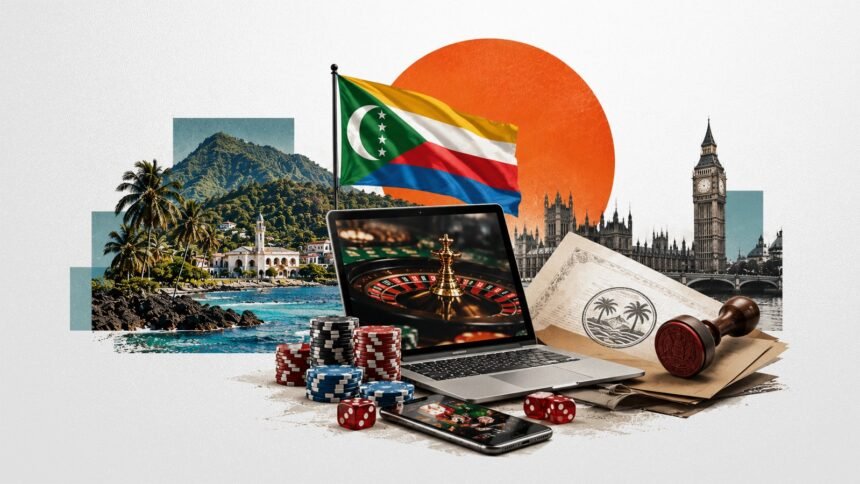
A country’s name is a form of collateral: lend it carelessly, or let others take it, and the debts come home. The Union of Comoros is learning that lesson through Anjouan, a small volcanic island between Mozambique and Madagascar known locally as Nzwani, whose chief exports include ylang-ylang oil and vanilla. Its name now sits on a register of nearly 1,500 online gaming license holders, many of them crypto casinos, and the Comoros government says the licensing regime behind them has no legal standing.
A spokesperson for the Central Bank of the Comoros described the regime as “illegal activities” by people “abusively using the name of the Comoros Islands to give themselves apparent legitimacy.” The bank called this a matter of serious concern that undermines the country’s efforts to strengthen its safeguards against money laundering and terrorist financing. The government is preparing judicial action at home and has turned for help to the United Kingdom.
The case connects two worlds that rarely meet in the news: a small island state working to build a credible financial system, and a global online gambling industry that moves quickly to wherever rules are weakest. For many small African economies, the trust of banks and regulators abroad is a hard-won national asset, and borrowed names put that asset at risk.
A Regulator That the State Does Not Recognize
The licenses are issued under the banner of Anjouan Gaming, whose website names the Anjouan Offshore Financial Authority as its governing body and says that authority was set up under Comoros law to oversee licenses for gaming, crypto, brokerage, banking and insurance. The national government rejects that account. In its view, the casinos holding these licenses are regulated by no lawful authority at all.
Industry analysts say the license is useful to operators even without real oversight. “It provides a degree of reassurance to players and an apparent regulatory framework, which can make banks, payment providers and other commercial partners more comfortable doing business with them,” said Alun Bowden, an analyst at Eilers & Krejcik Gaming. Cost is part of the appeal: one industry figure put an Anjouan license at about £20,000, against roughly £80,000 in Curaçao, the Caribbean island long favored by offshore casinos, whose regulator suffered a large data leak last month exposing ownership and financial details.
The Customers at Risk
Several Anjouan licensees are advertised online as “not on GamStop”, a reference to the United Kingdom’s national self-exclusion tool, which lets people lock themselves out of all licensed betting. Regulators and experts say such advertising is aimed at people struggling with gambling addiction. Some Anjouan-licensed sites can only be reached through a virtual private network; others appear willing to accept British players. In one test, an account opened with the casino SlotsCharm placed slot bets, and after the betting stopped, the site’s representatives phoned or emailed more than 100 times with incentives to play again. The site said its own internal rules regulated it.
The London Connection, and a Denial
Applicants for an Anjouan license are steered to a firm called Anjouan Corporate Services, which offers to get a business running for £19,000; the Anjouan Offshore Financial Authority says casinos “must submit” their applications through it. UK corporate records show that four members of the Sorsky family, Elliot, Harold, Richard and Michael, have held stakes in ACS Global Custodian, the British company behind that website, which is based at the north London offices of the family’s property business, Sherm Group. The company’s bank balance rose from £13,130 to £614,826 in 2025, a period that coincided with a rush of online casinos seeking Anjouan licenses.
The family rejects the suggestion that it sells gaming licenses. “ACS Global Custodian Ltd does not sell, issue, or otherwise provide gaming licenses and has not done so since we took over the company in 2023,” Harold Sorsky said, adding that any reference to the company supporting gaming license applications was outdated and that the function had been passed to another provider specializing in the industry. He said other providers were involved in Anjouan gaming licenses and that Sherm Group had no affiliation with ACS. The links described here rest on a single investigation and on public records; no court or regulator has made findings about the family’s role.
Comoros Turns to London
The Comoros government says that “British citizens have been identified” in connection with the unauthorized licensing regime and that “international cooperation efforts are under way, both in terms of financial intelligence and police collaboration,” including a direct request for help to the UK government and its law enforcement bodies. The UK Treasury declined to comment.
Taking Back a Name
Sovereignty for a small island state is not only about borders and flags; it is also the exclusive right to say who may regulate in its name. Comoros is now trying to reclaim that right from a licensing system run, by its own account, by outsiders. Its success will depend partly on Britain’s willingness to cooperate, and partly on Comoros building regulators credible enough that no one can plausibly sell a counterfeit version. Other African states with small financial sectors and attractive offshore branding would do well to watch closely.