




Rwanda is exploring the use of lakes and artificial water bodies to expand solar electricity generation without putting additional pressure on land needed for agriculture and other economic activities.
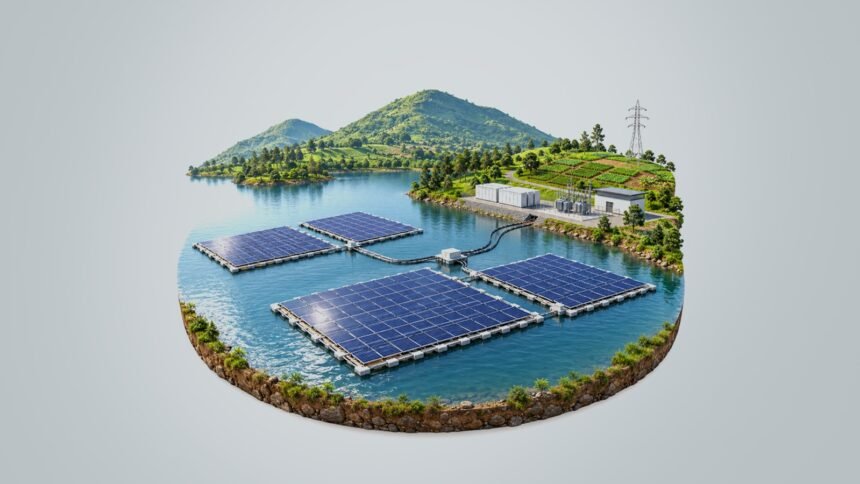
The plans include a proposed 200-megawatt floating solar power plant with battery storage on Lake Sake in Ngoma District, Eastern Province, as well as another installation being considered on an artificial lake planned along the Nyabarongo River.
If implemented, the projects would introduce floating solar technology to Rwanda, offering a potential alternative to conventional solar farms that require large areas of land.
The approach could also provide lessons for other African countries seeking to expand electricity generation while balancing competing demands for land. However, its viability will depend on investment, technical feasibility and environmental assessments.
Theoneste Higaniro, Director of Generation and Transmission at the Energy Development Corporation Limited (EDCL), said floating solar panels operate on the same principle as conventional solar systems, with the main difference being that they are installed on water rather than land.
“The main benefit is that we save cultivable land by installing solar panels on lakes. Solar panels require large areas of land, and opting for floating solar or combining floating and land-based installations offers greater flexibility while preserving land for other productive uses,” he said.
The panels are mounted on floating structures, such as rafts or pontoons, and secured using anchors and mooring systems to prevent them from drifting. The electricity generated is then processed through electrical equipment before being transmitted to the power grid.
Higaniro explained the technology during the Global Off-Grid Solar Forum and Expo, held in Kigali from October 27 to 29.
Beyond preserving land, floating solar installations could offer opportunities to diversify electricity generation. However, their performance and costs depend on the characteristics of each water body, the equipment used, and the infrastructure required to connect the electricity to the grid.
The projects would also require assessments of potential effects on aquatic ecosystems, water quality, fisheries and other activities that depend on the lakes.
Dimitris Mentis, who leads the Energy Access Explorer platform at the World Resources Institute, said countries considering floating solar should begin by identifying suitable locations rather than developing projects without preliminary assessments.
“Yes, it is feasible. Floating solar is already being used in other countries. For Rwanda, initial pre-screening is needed. This means identifying locations within a country where certain technologies, such as floating solar, could be deployed. You do not have to start from scratch,” he said.
Countries including China, Indonesia, Singapore, Japan and Thailand have already developed floating solar installations, demonstrating that the technology can be deployed in different settings, including reservoirs and artificial water bodies.
The immediate challenge for Rwanda is to turn the proposed projects into viable investments while ensuring that the installations deliver reliable electricity without undermining the environmental and economic functions of the lakes.