



Thirty Years of the Constitution, Measured in Children
South Africa has more children in formal housing, with piped water and electricity, than at any point in its democracy, and yet a growing share of them go hungry. That is the paradox at the center of the South African Child Gauge 2026, launched on Tuesday, 24 November, by the University of Cape Town’s Children’s Institute. Its message is that three decades of hard-won progress for children are now being eroded by fiscal austerity and a lack of support for the workers who deliver services.
This year’s edition marks the 30th anniversary of South Africa’s Constitution and the 25th anniversary of the Children’s Institute. It uses the Constitution’s promises to children as the yardstick for judging how far the state has realized their rights. Across 11 chapters, it records striking gains, then warns of stagnation and, in recent years, “worrying signs of regression across a range of services”.
South Africa’s experience speaks to a continental debate. Many African governments under debt pressure are cutting or freezing social spending, and children rarely have a voice in those decisions. The Child Gauge offers rare long-run evidence of what investment in children achieved, and what retreat may cost.
Three Decades of Progress
The gains are real. The share of children living below the food poverty line fell from 53 percent in 2003 to 33 percent in 2013. The under-five mortality rate dropped from 81 deaths per 1,000 births in 2004 to 35 in 2024. Since its introduction in 1998, the Child Support Grant has expanded to reach 13 million children as of 2025, and the report’s editor, Paula Proudlock, credits it as a key factor in reducing child food poverty.
Basic services expanded too. Between 1996 and 2025, the number of children with access to formal housing more than doubled, from 8.7 million to 18.2 million. Access to piped water rose from 49 percent to 73 percent, electricity from 48 percent to 93 percent, and adequate sanitation from 36 percent to 80 percent. Proudlock called the progress “considerable and remarkable” given the deeply unequal system democracy inherited from apartheid.
Old Inequalities That Persist
The inheritance has not gone away. In 2026, only 44 percent of children in former homelands lived in households with piped water on site or in the dwelling, compared with 93 percent in urban areas. Children continue to face “multiple forms of adversity”, with poverty, violence, neglect and malnutrition tending to occur together in the same households. The report argues that intervening as early as possible is essential both to improve outcomes and to break inequality.
Where the Decline Shows
After the early gains came a period of stagnation, with access and outcomes stalling in the third decade after the Constitution, the report links recent signs of regression to fiscal austerity and to “a culture of compliance and control rather than support for frontline workers”. The services where experts see decline include immunization, birth registration, social assistance and basic education.
Proudlock singled out young children. “We can see that for many years, 10% to 20% of babies, approximately 160,000 babies every year, are not registered in the first year of life, and this gap appears to be getting wider in recent years,” she said. Unregistered infants can wait years for birth certificates, and while they wait, they are excluded from early childhood development programs, social assistance and schools.
A Grant That No Longer Covers Food
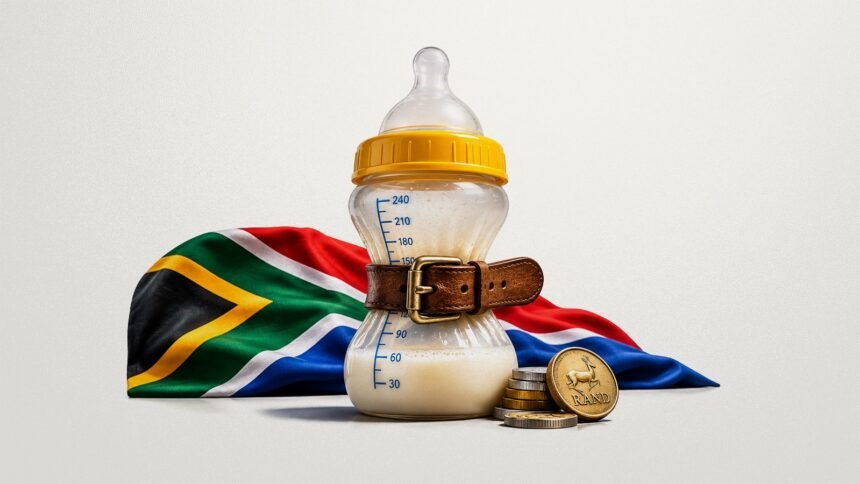
The report’s third chapter traces the rise, stagnation and decline of the Child Support Grant. Because annual increases have fallen below food inflation, the gap between the grant and the food poverty line keeps widening. In 2026, the food poverty threshold is R868 per person per month, while the grant is R580.
The sharpest fall is among the youngest. Between March 2020, before the Covid-19 lockdown, and March 2026, the number of infants under one year receiving the grant fell from 658,000 to 366,108, a 44 percent drop that takes uptake for this age group back to 2008 levels. Since the grant’s protective effect depends on early and continuous receipt, preferably from birth, the decline has serious implications. “We are seeing that the percentage of children living in food poverty has increased from 33% in 2019 to 37% in 2024,” Proudlock said, adding that the worry is not the dip after Covid but the absence of recovery since.
Five Recommendations and a Government Response
The Child Gauge makes five recommendations: strengthen existing platforms to reach children left behind; strengthen collaboration at local level across departments and NGOs; change institutional culture from control and compliance to support for frontline workers; protect children’s services in crises by including child experts in emergency planning; and invest early to multiply returns. Its policy brief points to the 2025 National Strategy to Accelerate Action for Children and the 2026 presidential commitment to end childhood stunting by 2030, and urges that this urgency shape the National Development Plan work in 2027.
At the launch, Maropene Ramokgopa, minister in the Presidency for planning, monitoring and evaluation, said the government was trying to approach development differently, using evidence-based interventions, and was beginning to look beyond 2030 in drafting the next plan. “Of course, the wellbeing of children remains one of the most reliable indicators of national health and socioeconomic progress,” she said.
Choosing Children in a Lean Budget
“We face a choice now that will have long-term impacts for the growth trajectory and life chances of children and the nation as a whole,” Proudlock said at the launch. South Africa built its post-apartheid social contract on promises to children written into its Constitution. The Child Gauge shows that keeping those promises is a budget decision made every year, not a settled achievement. A country that decides its own priorities under fiscal pressure is choosing, line by line, whether a baby born in a former homeland is registered, fed, and counted. That choice is a truer test of self-determination than any rating agency’s verdict.