



Sometimes, you have to leave home to appreciate what was built.
I arrived in Nairobi for a continental media workshop on health investment in Africa, organized by the United Nations Economic Commission for Africa (UNECA), expecting to learn about the challenges facing health systems across the continent, the financing gaps, and the search for sustainable solutions.
What I did not expect was to leave reflecting on something my own country has had for years, but which I had perhaps taken for granted: access to community-based health insurance.
During discussions with participants from different African countries, I was struck by how difficult it remains for many people to access affordable healthcare without paying directly from their pockets. The experiences shared were a reminder that what may appear ordinary in one country can still be an aspiration in another.
Kenya, for instance, is working to expand health coverage through its Social Health Authority (SHA), which replaced the National Hospital Insurance Fund in October 2024. The scheme had registered 30.7 million people by May 2026. However, only about 4.7 million were active contributors, comprising 3.2 million formal-sector workers and 1.5 million informal-sector contributors, according to figures reported by the Daily Nation.
The difference between registration and active contributions illustrates one of the difficulties facing countries trying to expand health insurance; enrolling people does not necessarily mean they can afford to maintain their cover or are protected from healthcare costs when they need treatment.
Another account shared during the discussions concerned Sierra Leone, where pregnant women can face difficulties accessing emergency transport when they need to reach health facilities for delivery. Participants described situations in which ambulance services could be affected by a lack of fuel and the patient has to pay for fuel, leaving families to find money to facilitate transport meant to provide quick help, sometimes first aid.
Sierra Leone’s wider healthcare financing challenges are also reflected in a 2025 Human Rights Watch report, which found that more than half of healthcare expenditure in the country in 2022 came directly from patients’ pockets.
The report documented cases of women facing informal payments and difficulties obtaining essential maternity services despite the government’s Free Health Care Initiative.
Tanzania, meanwhile, has taken steps towards universal health coverage through its Universal Health Insurance Act of 2023, with nationwide implementation beginning on January 26, 2026. The country is now working to extend coverage through the new framework, including government-supported contributions for vulnerable groups. Its experience illustrates the scale of institutional and financial work involved in moving from a policy commitment to a functioning system that protects people from healthcare costs.
These experiences raise questions about how health financing extends beyond insurance registration to the practical availability of essential services.
Listening to these experiences made me reflect on Rwanda.
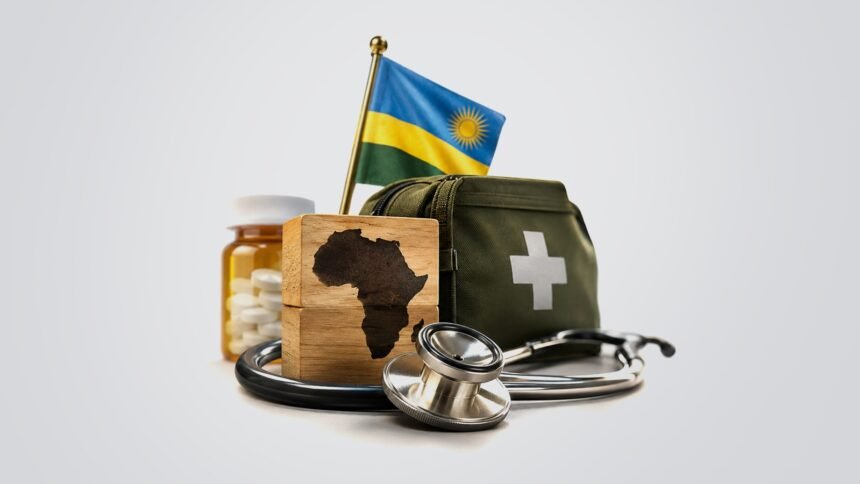
For years, Rwanda has operated Mutuelle de Santé, a community-based health insurance system designed to make healthcare more accessible, particularly for people with limited financial means.
Through contributions organized according to socioeconomic circumstances, alongside government subsidies and other financing arrangements, the system has helped extend health insurance beyond people who can afford private cover or formal employment-based schemes.
According to Rwanda’s National Institute of Statistics, health insurance coverage reached 85.3 percent of the population in the 2023/2024 Integrated Household Living Conditions Survey. Community-based health insurance accounted for 93 percent of those insured.
This is an important achievement, particularly considering the role that financial barriers can play in preventing people from seeking medical attention. It also offers an experience that other African countries could examine as they work towards expanding access to healthcare.
Building a health financing system requires more than announcing a policy. Governments must establish administrative structures, develop contribution and payment mechanisms, build institutional capacity, mobilize resources and earn public trust. These processes take time and money, and implementation inevitably involves challenges, adjustments and mistakes.
What if countries did not have to repeat the entire process from scratch, but could instead learn from the experiences of others? This would not eliminate the need for substantial investment. Still, it could help governments make better-informed decisions, avoid preventable mistakes, and direct limited resources towards approaches that have already been tested elsewhere.
The need for countries to learn from one another becomes even more pressing as development assistance for health comes under strain. For many African countries, external funding has supported essential services, from HIV/AIDS prevention and treatment to maternal healthcare and the fight against malaria and tuberculosis.
As this support becomes less predictable, governments need to strengthen their capacity to finance their own health systems rather than remain heavily dependent on external funding.
This might mean mobilizing more domestic resources, improving how health budgets are allocated and developing sustainable financing mechanisms that can keep essential services running. It does not mean that development partners no longer have a role, but that countries must build systems capable of sustaining progress even when external support declines.
There is also another lesson from the discussions in Nairobi: improving health outcomes is not simply about how much money governments spend on hospitals, medical equipment and health facilities.
Rispah Walumbe, the Head of Strategy and Policy at Amref Health Africa, explained during the workshop that people’s health is influenced by how they live, how they move and how they work. This means that governments must consider health in decisions made beyond the health sector.
For instance, schools can make physical activity part of children’s daily routines, and workplaces can improve the nutritional quality of food available to employees. At the same time, urban planning can create environments that encourage walking, working out and other forms of exercise.
Preventing some illnesses, especially Non-Communicable Diseases (NCDs), requires governments to look beyond treatment and consider the conditions that contribute to them, including unhealthy diets, physical inactivity, tobacco use and harmful alcohol consumption.
This does not mean that prevention should replace investment in hospitals, medicines, health workers and emergency services. Both are necessary. Rather, governments should ensure that their health investments address the causes of illness alongside the needs of people who already require treatment.
It also means that health should not be treated as the responsibility of health ministries alone. Education, agriculture, trade, transport, urban planning and environmental policies all influence people’s health.
Decisions about food production, access to nutritious meals, working conditions, public transport and air quality can have consequences for the burden placed on healthcare systems.
As many African governments are working with limited public resources, the question should therefore not only be how to raise more money for healthcare, but also how to spend it more effectively.
The discussions in Nairobi made me reflect on how much African countries could gain by sharing experiences, including the mistakes and challenges that come with implementing ambitious health reforms.
Continental cooperation should not be limited to identifying financing gaps or appealing for external support. It should also create opportunities for countries to learn from policies and systems that have already been developed within the continent.
As a Rwandan, I left the discussions with a renewed appreciation of the work that has gone into building a community-based health insurance system at home. More importantly, I was reminded that one country’s progress should not remain its own national achievement when others could learn from it.
Africa cannot afford to keep reinventing its health systems while overlooking experiences that could help it move forward. We should be sharing what works, learning from what does not, and investing not only in treating illness, but also in creating societies where fewer people become sick in the first place.