




The Pan-African Paradigm of Resource Sovereignty and External Leverage
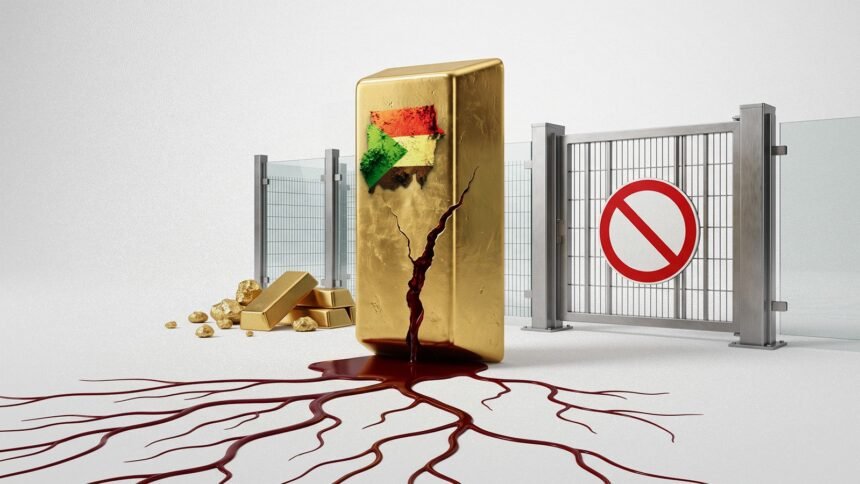
Across the African landscape, few dynamics reveal the entanglement of resource wealth and conflict finance as starkly as Sudan’s gold economy, which has for years functioned as the paramilitary Rapid Support Forces’ most reliable lifeline amid a civil war that has raged since 2023 and produced one of the world’s largest humanitarian crises. The European Union’s decision on Monday to impose a fresh round of sanctions banning the purchase, import, or transfer of Sudanese-origin gold, alongside a prohibition on exporting mercury and cyanide, both essential to artisanal and industrial extraction, marks an attempt by an external bloc to sever the financial arteries sustaining Sudan’s conflict. Yet this intervention also surfaces an uncomfortable structural question that recurs across the continent: how much of Africa’s capacity to end its own conflicts depends on the willingness of external powers to police the resource flows that fund them, rather than on African institutions asserting control over their own mineral sovereignty. Gold has become, in Sudan as elsewhere, both a source of national wealth and a vector of asymmetric warfare, extracted and smuggled through informal networks that outpace the state’s ability to regulate them. The paradigm now facing Khartoum and the wider region is one of reclaiming resource sovereignty from the shadow economies of war. This recalibration cannot be outsourced indefinitely to Brussels, Washington, or any other external actor.
The Mechanics of the EU’s New Sanctions
The Council of the European Union’s statement was explicit in its framing: the new measures target Sudan’s gold trade specifically because it has been used to finance the ongoing military conflict between the Sudanese army and the RSF. “The decision introduces a ban on the purchase, import or transfer of gold originating in Sudan,” the Council said, adding that it “also bans the sale, supply, transfer or export of mercury and cyanide to Sudan”, chemicals central to gold processing that, absent this measure, would have continued flowing into RSF-linked extraction operations largely unimpeded. By targeting both the finished commodity and the industrial inputs required to produce it, Brussels is attempting a more structurally comprehensive intervention than previous sanctions rounds, which have often struggled to disrupt informal cross-border gold-smuggling routes running through neighboring states. The move follows more than three years of a conflict that has displaced millions and devastated Sudan’s institutional architecture, with gold long identified by researchers and rights groups as among the RSF’s most significant revenue streams, alongside territorial taxation and looted assets.
A War Economy Built on Informal Extraction
Sudan’s gold sector has historically operated through a dense, largely informal architecture of artisanal mining, cross-border smuggling networks, and opaque trading hubs that have proven remarkably resilient to previous rounds of international pressure. The RSF’s territorial control over key mining regions, particularly in Darfur and parts of Kordofan, has allowed the paramilitary group to tax, extract, and export gold through channels that bypass Sudan’s formal banking and customs institutions entirely, a structural workaround that sanctions targeting the finished commodity alone have struggled to close fully. This is precisely why the EU’s parallel restriction on mercury and cyanide exports carries structural significance beyond its narrower framing. Both chemicals are difficult to substitute in gold processing, and constraining their supply could impose real friction on extraction volumes rather than merely complicating the trade’s paper trail. Whether this recalibrated approach proves more durable than earlier sanctions regimes will depend heavily on enforcement across the regional smuggling corridors that have historically absorbed Sudanese gold into neighboring markets with minimal scrutiny.
Sovereignty, Sanctions, and the Question of Enforcement
The deeper structural tension embedded in the EU’s move is one familiar across the continent’s resource-conflict landscape: external sanctions can constrain formal trade routes, but they rarely dismantle the underlying informal architecture that conflict economies depend upon, absent parallel investment in African-led regulatory and enforcement capacity. Sudan’s neighbors, several of which have served as historical transit points for smuggled Sudanese gold, remain only loosely bound by the EU’s unilateral measure, raising familiar questions about whether a sanctions regime imposed from Brussels can achieve what a coordinated continental enforcement architecture might accomplish more durably. This is not an argument against the EU’s intervention, which targets a genuine and well-documented financing mechanism for atrocity-level violence, but a reminder that lasting resource sovereignty for Sudan, and the eventual reconstruction of its formal mining sector, will ultimately depend on African institutions capable of asserting jurisdiction over extraction, taxation, and trade within their own borders and across their own frontiers.
Reclaiming the Terms of Sudan’s Recovery
As Sudan’s civil war grinds toward its fourth year, the structural challenge extends well beyond any single sanctions package: it is the question of who ultimately controls the terms of the country’s economic reconstruction once the guns fall silent. Gold, copper, and other mineral wealth that have fueled the conflict could, under a different institutional architecture, form the backbone of a genuinely sovereign Sudanese recovery, but only if the extraction, taxation, and export of these resources are reclaimed by legitimate, accountable Sudanese institutions rather than left to whichever armed faction controls a given mining district. The EU’s gold ban is best understood as a stopgap measure, useful in constraining immediate conflict financing but insufficient as a long-term substitute for the structural work of rebuilding Sudanese resource governance. The broader continental trajectory, from Sudan to the Sahel to the eastern Congo, points toward the same unfinished project: African nations reclaiming sovereignty over the mineral wealth beneath their own soil, and building the institutional architecture necessary to ensure that wealth funds development rather than devastation.