
A new joint statement sets 2021–2027 priorities for sustainable agriculture, renewable energy, skills, and governance under the EU’s Global Gateway strategy.
On February 26, the European Union and Angola quietly marked a new phase in a partnership that Brussels hopes will show what its Global Gateway strategy looks like in practice.
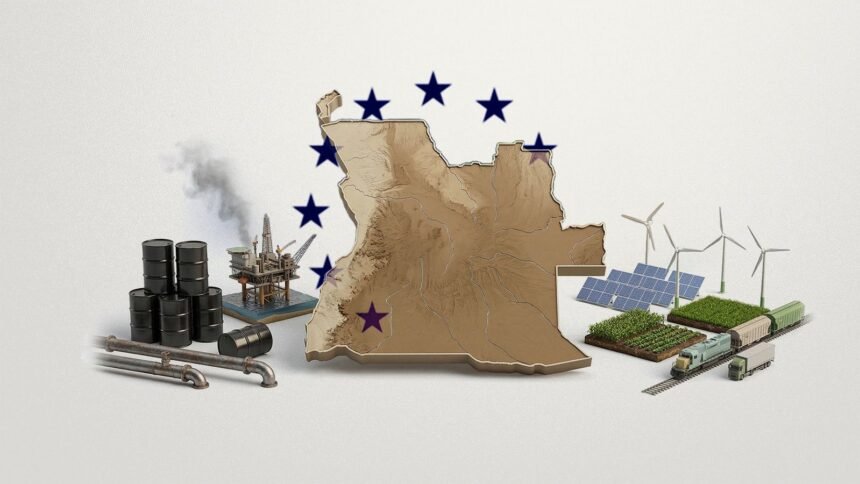
In a joint communiqué covering the 2021–2027 period, both sides set out a detailed agenda to help Angola move beyond oil dependence by investing in sustainable agriculture, renewable energy, trade, governance reforms, and human development.
The document builds on the EU–Angola Sustainable Investment Facilitation Agreement (SIFA) and a series of Global Gateway investment packages, positioning Angola as a test case for how Europe can support “sustainable economic diversification” while competing with China and other partners for influence and infrastructure deals.
Background and Stakes
According to the EU’s External Action Service and international partnerships directorate, the cooperation framework for 2021–2027 is organised around three priority axes: sustainable economic diversification (with a focus on agriculture and agro‑logistics), good governance and social inclusion, and human development centred on technical and higher education.
These lines mirror Angola’s own national development plan and climate strategy, which seek to turn the country’s oil‑era windfall into broader, greener growth.
Under the Global Gateway banner, the EU has already announced a €76.5 million assistance package linked to the Lobito Corridor, including €8.5 million to improve the business and trade environment, €43 million for vocational training under the PROSPERA programme, and €25 million for biodiversity and ecotourism.
Brussels says these initiatives, plus earlier agriculture‑value‑chain grants along the corridor, are early down payments on a wider EU pledge to mobilise up to €300 billion globally for sustainable infrastructure and human capital between 2021 and 2027.
Human Development and Green Focus
The February communiqué and related EU statements place particular emphasis on human development. Technical and vocational education, higher education, and science and technology are singled out as levers to prepare Angolan workers for jobs in renewable energy, agro‑processing, logistics, and digital services.
EU‑funded training programmes along the Lobito Corridor are intended to align classroom skills with the needs of new logistics hubs, farms, and processing plants.
On the green side, the partnership is explicitly tied to Angola’s National Climate Change Strategy (2022–2035) and biodiversity plans.
Both parties reaffirm commitments to the Paris Agreement, a just energy transition, and the Kunming‑Montreal Global Biodiversity Framework, including halting deforestation by 2030 and supporting conservation landscapes that involve local communities.
EU officials say this is not just climate diplomacy: renewable energy, sustainable fisheries, and ecotourism are framed as future export earners and job creators.
Trade, Governance, and the Global Gateway Angle
Trade and investment facilitation is the other backbone of the pact. Through SIFA and Global Gateway, the EU aims to modernise Angola’s investment regulations, increase transparency, promote e‑government tools, and support digital platforms for business to crowd in more sustainable European capital in sectors such as green energy, agri‑food value chains, critical raw materials, and logistics.
The joint communiqué also stresses the rule of law, institutional strengthening, digital governance, and social protection as conditions for inclusive growth.
Brussels has welcomed Luanda’s interest in a possible Sustainable Fisheries Partnership Agreement and broader “blue economy” cooperation, but notes that this will depend on scientific stock assessments and legal compatibility between EU rules and Angolan law.
For the EU, the Angola portfolio is part of a wider “Team Europe” initiative on diversification and public financial management that brings in member states and the European Investment Bank. For Angola, it is a chance to leverage European finance, technology, and market access to diversify away from hydrocarbons, while signalling that desire for a more balanced mix of partners.
Whether the partnership delivers will hinge on execution: how quickly grants and loans turn into completed projects, whether governance reforms stick, and if Angolan farmers, workers, and small firms see tangible benefits from a strategy built around sustainable diversification rather than oil.