




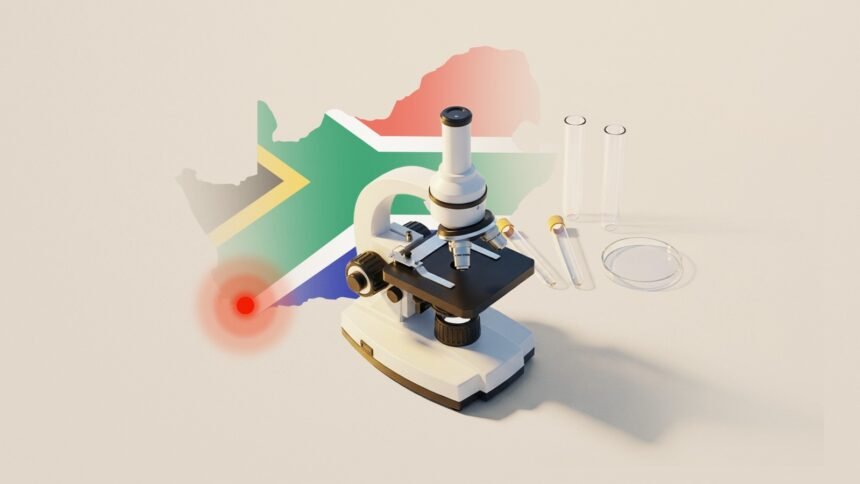
Africa has spent decades fighting epidemics with vaccines manufactured thousands of kilometres away. That era, while not over, may finally be bending toward a new trajectory. In Cape Town this week, Biovac opened a new state-of-the-art vaccine development lab, the kind of facility that signals not only scientific ambition but political intent. If Africa has struggled to secure vaccines in moments of desperation—from HIV treatment rollouts to the chaotic scramble of the COVID-19 pandemic—it now seeks something more permanent: sovereignty over its own health future. And this lab, small though it may seem, carries a weight far beyond its square footage.
The launch ceremony was a moment heavy with symbolism. Ministers spoke of independence, scientists spoke of possibility, and development partners—most notably the Bill & Melinda Gates Foundation—spoke of closing the gap between what Africa needs and what the global pharmaceutical system offers. And that gap is huge. The continent consumes roughly a quarter of the world’s vaccines but produces less than one percent of them. When a crisis hits, African nations often find themselves last in line, bargaining for doses that the wealthiest countries have already stockpiled like strategic assets.
Biovac’s new lab aims to chip away at that structural vulnerability. Unlike assembly-only sites that merely package or label imported products, this facility is built for early-stage development and process optimisation—the beating heart of vaccine innovation. It is the kind of capability that determines not only what vaccines a country can make, but how quickly it can respond to new pathogens. To put it cheekily: this is not Africa asking for a seat at the table, but Africa building its own laboratory and telling the world it can bring its own chair.
Yet the opening also highlights the uneasy politics of health sovereignty. Africa’s push for self-sufficiency has never been just a technical problem; it is an economic and geopolitical one. Multinational pharmaceutical companies have historically concentrated production in Europe, North America and parts of Asia, where supply chains, patents and profit margins align neatly. Africa’s late entry into the manufacturing game challenges that order. The continent is trying to rewrite its role from consumer to creator, a shift that inevitably unsettles established players.
For South Africa, the timing is strategic. The COVID-19 vaccine inequity that left African nations waiting months for doses remains a fresh political wound. Governments across the continent vowed not to repeat that humiliation. South Africa, with its relatively advanced scientific infrastructure, is positioned to lead. Biovac’s expansion is part of a broader push that includes mRNA technology-transfer hubs, regional manufacturing networks and public–private partnerships designed to reduce dependency on imports. It is an ambitious plan, but not an impossible one.
Still, the obstacles are substantial. Vaccine production is capital-intensive, highly regulated and vulnerable to global supply-chain disruptions. A single component shortage can cripple production lines for months. Markets, too, are fickle: once a pandemic ends, demand often collapses, leaving new facilities underused and financially strained. Critics argue that Africa risks building more manufacturing capacity than it can sustainably operate. Supporters counter that the alternative—perpetual vulnerability—is far more dangerous.
What makes Biovac’s new lab different is its emphasis on long-term viability. Rather than chasing short-term pandemic contracts, the facility is designed to develop products for Africa’s persistent health burdens: tuberculosis, HPV, meningitis, diarrhoeal diseases, malaria and emerging zoonotic threats. These illnesses may not dominate global headlines, but they shape daily life across the continent. A vaccine pipeline that reflects African realities could become the foundation of a sustainable industry rather than a fragile emergency response model.
There is also the matter of trust. For years, African scientists argued—sometimes quietly, sometimes forcefully—that the continent had been excluded from the high-value segments of global biomedical research. Their credibility was doubted, their institutions underfunded, and their laboratories treated as peripheral. The COVID-19 pandemic shattered that narrative. African scientists produced world-class genomic sequencing, sophisticated public-health analysis and innovations in community-based care that garnered global praise. Biovac’s new lab is, in many ways, an institutional recognition of that expertise.
Yet symbolism alone cannot inoculate against the hard politics of global health. For the lab to fulfil its promise, African governments will need to coordinate regulatory frameworks, harmonise standards and guarantee predictable demand. Without political alignment, even the most advanced laboratories risk becoming isolated islands of excellence. The African Union and Africa CDC are pushing for such coordination, but progress is uneven. Procurement patterns across the continent are fragmented, often determined more by donor preferences than local priorities.
Still, momentum is building. Regional blocs in West, East and Southern Africa are exploring pooled procurement systems that could stabilise demand for locally produced vaccines. International donors, under pressure to address structural inequities, are increasingly willing to support African manufacturing. The private sector, sensing new markets, is paying attention. And perhaps most importantly, public sentiment has shifted. Vaccine access is no longer perceived only as a health issue, but as a matter of dignity, agency and geopolitical relevance.
That is why Biovac’s new facility matters. It is a small move in the grand scheme of global health, but a decisive one in shifting Africa from the receiving end of biomedical generosity to the producing end of scientific agency. Even the cheeky critics—those who once dismissed Africa’s manufacturing ambitions as unrealistic—are beginning to concede that the landscape is changing faster than expected.
The road ahead is long. But with each new laboratory, training programme and regulatory reform, Africa edges closer to a future where pandemics will not cut it out of global supply chains, where scientific talent is retained rather than exported, and where health sovereignty is not a slogan but a lived reality. Biovac’s new lab, sitting on a quiet edge of Cape Town, may not look like a revolution. But in its hum of machines and its quiet confidence, you can hear the sound of a continent rewriting its scientific destiny.