



The Pan-African Paradigm of Migration and Economic Scapegoating
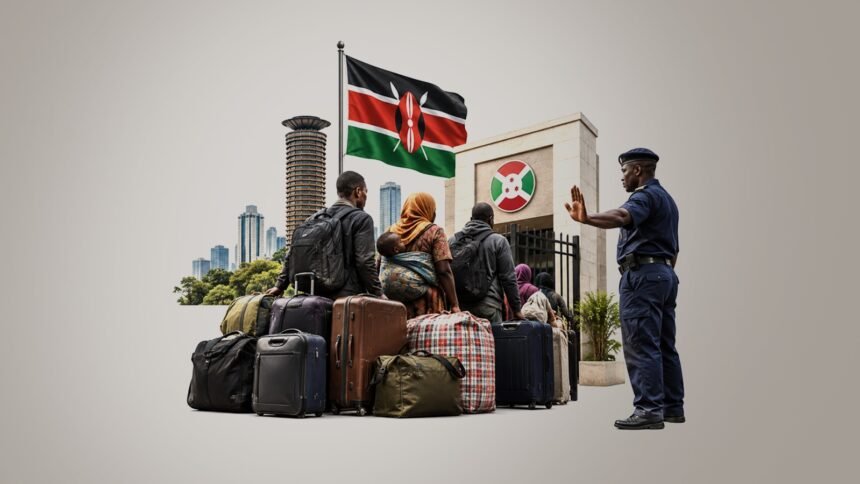
Suitcases and bundled belongings piled outside Burundi’s embassy in Nairobi on a Monday morning tell a story East Africa has told before: when a government runs short of economic answers, it goes looking for a border to police. Kenya’s abrupt order to shutter foreign-run small businesses, followed within days by a hastily announced amnesty, lays bare a recurring tension in the region’s structural architecture, the gap between the rhetoric of East African integration, embodied in free-movement protocols and a shared customs union, and the lived reality of traders who remain one presidential directive away from expulsion. For the roughly 16,000 Burundian refugees and asylum seekers who have built livelihoods selling coffee and secondhand clothing in Nairobi’s markets, citizenship of a regional bloc has offered little insulation against a domestic political calculus. The episode forces a reckoning with what Pan-African solidarity actually guarantees its most vulnerable constituents when a host economy falters. As Kenya’s government scrambles to reframe a crackdown as “regularization,” the continent’s longer project of reclaiming migration as a matter of shared sovereignty rather than scapegoat politics has been handed a fresh, urgent test case.
Ruto’s Directive and the Machinery of the Crackdown
President William Ruto’s order, issued after a meeting with Kenyan traders protesting tax reforms, called for the closure of all small-scale businesses operated by foreigners without work permits, effective this past Monday. The directive did not originate as an immigration measure; it emerged from a domestic dispute over taxation that was redirected outward. Kenya’s trade ministry confirmed the order targeted foreigners lacking proper documentation, a category broad enough to sweep in refugees who have lived in the country for years without formal status. The mechanism reveals a familiar structural pattern: economic grievance, unable to find traction against its actual source, recalibrated into a narrative about outsiders. In Nairobi’s markets, the order translated into panic rather than orderly enforcement; Burundian nationals, some of whom arrived as children, described being threatened by neighbors in the days after Ruto’s remarks, well before any formal action took effect.
Sixteen Thousand Lives in Administrative Limbo
The scale of what is at stake becomes clearer in the UN refugee agency’s figures: approximately 16,000 Burundian refugees and asylum seekers currently reside in Kenya, many sustaining themselves through the same small-scale trade Ruto’s order targeted. Munezero Farnke, 18, who has lived in Kenya without an ID for three years, told reporters he had been “forced to go” despite having built a life there. Peter Nakumujango, 62, described joining long queues outside the embassy with no clarity on timelines or support. Their testimonies illustrate the asymmetry embedded in East Africa’s migration architecture: formal protocols promise regional citizens dignity and mobility, but enforcement discretion remains entirely national, subject to reversal whenever domestic politics demands a visible target. The lack of adequate transition planning, a clear registration timeline, and coordinated support from Burundian consular authorities left individuals to interpret a sudden policy shift largely on their own.
The Amnesty as Damage Control
Facing chaotic scenes outside the Burundian embassy, Ruto’s administration pivoted within days to an amnesty framing, declaring a “zero tolerance” policy toward harassment and inviting undocumented East Africans to register rather than flee. Officials promised that individuals undergoing registration would be “presumed legally present,” gaining access to healthcare, banking, and legal protections during the window. Whether this recalibration reflects genuine institutional correction or reputational management timed to international scrutiny remains contested. Critics, including the activist Hanifa Adan, have characterized the entire sequence, crackdown followed swiftly by climbdown, as evidence that Ruto’s government reaches for foreigners as a release valve whenever it “runs out of answers for a collapsing economy,” particularly with elections looming next year.
Tata Chemicals and the Wider Pattern of Externalizing Blame
The Kenya-Burundi episode does not stand alone. Days before the crackdown order, Ruto directed India’s Tata Chemicals to cease Kenyan operations, arguing its presence had failed to benefit the country, a move Tata said it would respect while remaining open to “constructive engagement.” Together, the two directives outline a governing style that increasingly treats foreign presence, whether corporate or individual, as the variable most available for political recalibration when domestic economic pressure mounts. This pattern complicates the continent’s broader push toward intra-African investment and labor mobility, since predictability for both foreign capital and foreign labor depends on regulatory environments insulated from short-term political incentive.
Toward a Durable Architecture of Regional Belonging
What Kenya’s amnesty ultimately exposes is the fragility of migration protections that exist on paper but depend on executive goodwill in practice. A durable Pan-African framework for labor mobility cannot rest on directives issued and reversed within a single news cycle; it requires binding regional commitments that survive electoral pressure and economic downturns alike. For Burundian traders now queuing to “regularize” a presence they had built over years without incident, the amnesty offers temporary relief but no structural guarantee against the next crackdown. As East Africa continues negotiating the terms of its own integration, the Nairobi embassy queues stand as a reminder that reclaiming sovereignty over migration policy must mean protecting the region’s most vulnerable residents, not merely managing the optics of how they are treated.