





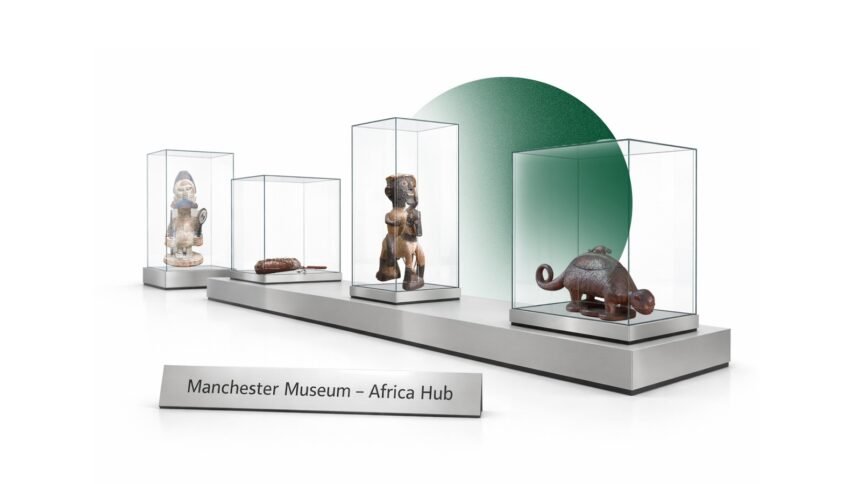
In the heart of Manchester’s university district, where Oxford Road hums with scholarly pursuit, the Manchester Museum stands as a quiet sentinel over one of Europe’s largest repositories of African heritage—over 40,000 objects whispering tales from the continent’s vast mosaic. Yet these artifacts, many shrouded in the mists of colonial acquisition, bear incomplete stories: makers unnamed, rituals obscured, provenances lost to archival voids. The newly unveiled Africa Hub, launched in December 2025, marks a pivotal shift toward radical openness, inviting global voices to illuminate these shadows. For Africans and their diaspora, this is more than an exhibition; it is a call to action. By engaging directly with the museum, communities can reclaim narrative authority, ensuring that cultural legacies are not merely displayed but authentically honored, fostering a Pan-African renaissance where history heals rather than haunts.
Pan-African Echoes: Continental Kinships in Distant Halls
The Manchester Museum’s African holdings resonate as echoes of the continent’s boundless ingenuity, spanning from Saharan rock art tools to Sahelian textiles and equatorial carvings. These pieces—beads etched with Yoruba cosmologies, Dogon masks embodying ancestral guardianship, or Akan gold weights symbolizing mercantile wisdom—form a sonic bridge across Africa’s regions, linking West African griot traditions to East African beadwork and Southern African pottery. Acquired amid the British Empire’s expansive grasp, they arrived in Manchester through traders, missionaries, and explorers, often stripped of context in the rush of imperial cataloging. The Africa Hub, perched on the museum’s second floor, now spotlights these kinships, displaying items long confined to storage: intricately woven baskets from the Congo Basin, bronze figures from Benin that echo Nok terracottas, and herbal amulets from the Ethiopian highlands. This curation underscores Africa’s interconnected pulse—the Nile’s flow mirroring the Niger’s bends, shared motifs in bead patterns from Maasai kraals to Zulu homesteads. For Pan-African unity, these halls offer a forum: by sharing oral histories and familial lore, Africans can weave these disparate threads into a cohesive tapestry, transforming a European vault into a continental conversation that affirms shared resilience against fragmentation.
Museum’s Revelations: Unveiling the Incomplete Archive
Founded in 1821 as part of the University of Manchester, the museum evolved from a natural history cabinet into a global repository, amassing its African collection through donations such as the Wellcome Trust’s anthropological dispersal in the mid-20th century. Today, its Living Cultures Collection—encompassing over 21,000 ethnographic objects—includes African artifacts alongside those from the Americas, Asia, and Oceania. Still, the Africa Hub zeroes in on the continent’s underrepresented narratives. Curators admit the archive’s frailties: many items bear only donor names, such as colonial officials or explorers, with no record of original stewards or ceremonial roles. A carved wooden stool from Ghana, perhaps once a chieftain’s seat of authority, sits labeled merely by acquisition date; a Maasai spear, symbol of warriorhood, lacks tales of its forging. This revelation, far from institutional embarrassment, is a deliberate pivot toward humility—the museum’s 2025 European Museum of the Year accolade celebrating this caring ethos. By digitizing collections for online access, the institution extends its reach, allowing virtual pilgrims from Lagos to Lusaka to contribute insights. Such openness not only enriches labels but empowers Africans to author their heritage, turning passive exhibits into active dialogues that honor the continent’s multifaceted genius.
Cultural Reclamation: Breathing Life into Silent Relics
At the core of the Africa Hub is a profound act of cultural reclamation, in which artifacts transcend glass cases to regain their vibrancy through community voices. The museum’s collaboration with Manchester’s Igbo diaspora exemplifies this: working with the Igbo Community Greater Manchester, curators have begun to decode objects such as ancestral masks and ceremonial pots, revealing their roles in festivals of renewal and rites of passage. One community leader reflects on this process as a unifying one: items taken through conquest or coercion now foster inclusivity, demonstrating strength in diversity. Beyond Igbo heritage, the hub displays “beautifully crafted” relics—Zulu bead collars that narrate marital bonds, Somali incense burners that evoke nomadic hospitality, and Moroccan lanterns that cast geometric patterns of harmony. These pieces, often looted or traded without consent, carry suppressed meanings: a Senegalese griot’s kora string might encode epics of resistance, yet remains mute without insider knowledge. Africans’ engagement here is essential—not merely to fill gaps, but to infuse relics with living essence, ensuring cultural practices are portrayed not as exotic curios but as enduring philosophies that shape global humanism.
Historical Shadows: Confronting the Colonial Veil
The museum’s African assemblage casts long historical shadows, rooted in the colonial veil that obscured origins while amplifying imperial narratives. From the Scramble for Africa in the late 19th century, British agents amassed these objects amid conquests in Nigeria, Sudan, and beyond, often as trophies of subjugation or scientific specimens devoid of human context. A Sudanese dervish sword, perhaps wielded in Mahdist uprisings, arrives cataloged solely by its collector; Ethiopian manuscripts, looted during the 1868 Magdala expedition, whisper of Axumite wisdom but lack provenance trails. The Africa Hub confronts these shadows head-on, acknowledging how archival silences perpetuate erasure: without makers’ names or communal significances, histories risk distortion into stereotypes of primitivism. This initiative builds on broader decolonization efforts, echoing repatriations such as the return of the Benin Bronzes. For Africans, communication with the museum pierces this veil—sharing genealogies, rituals, and oral archives can rewrite distorted timelines, transforming colonial plunder into platforms for truth-telling and reconciliation.
Colonialism’s Reckoning: Pathways to Restitution and Renewal
Colonialism’s reckoning demands more than acknowledgment; it calls for active renewal, and the Manchester Museum’s approach paves such pathways. Many artifacts entered the collection through coercive means—forced acquisitions during the atrocities of the Congo Free State or through Egyptian excavations under protectorate rule—leaving ethical gaps that the hub seeks to address. Curators envision public inputs leading to restitutions, as seen in partnerships with source communities: a returned Asante drum might echo in Kumasi festivals, restoring sonic heritage. This reckoning extends to minerals and plants in the collection, such as Congolese copper ores symbolizing extractive exploitation and South African medicinal herbs tied to indigenous healing. Africans’ involvement ensures these items are appropriately contextualized, countering colonial gazes that reduced them to resources. By emailing insights or visiting digitally, diaspora and continental voices can drive this renewal, fostering equitable partnerships that honor sovereignty and prevent future erasures.
Inclusive Horizons: Forging Shared Narratives Ahead
The Africa Hub heralds inclusive horizons, where museums evolve from monologic guardians to collaborative stewards. Manchester’s diverse populace—home to longstanding Nigerian, Somali, and Ethiopian communities—mirrors the continent’s plurality, making it an ideal crucible for shared narratives. Online portals invite global Africans to contribute photos, stories, or interpretations, potentially sparking exhibitions co-curated with Addis Ababa scholars or Dakar artists. This inclusion not only rectifies historical injustices but also empowers youth: a Kenyan student tracing a Kikuyu artifact might ignite pride in their heritage. Ultimately, Africans must seize this invitation—silence perpetuates misrepresentation, while dialogue ensures cultures are told with authenticity, weaving Pan-African solidarity into the fabric of global understanding. In Manchester’s halls, the future beckons: a world where Africa’s stories, once hidden, illuminate paths to collective flourishing.