



New instructions released by Rwanda’s Ministry of Environment on January 13 lay out, in detail, how much it costs to start and run a carbon credit project, and how the benefits must be shared, especially when community land is involved.
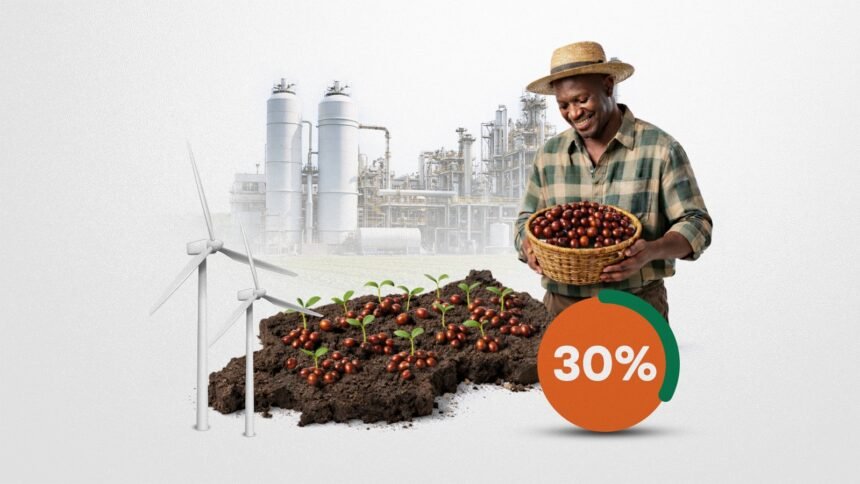
Climate finance should not bypass the people who live on and protect the land. For land-based carbon projects, at least 30 per cent of revenue generated from carbon credits must go directly to communities, landowners, and farmers whose land is used, according to the new principles.
Carbon credits are part of a global market established under Article 6 of the Paris Agreement.
The system allows countries and companies that emit greenhouse gases to finance emission reduction projects elsewhere and count those reductions towards their climate targets. Each carbon credit represents one tonne of greenhouse gas emissions avoided or removed.
While carbon trading has been criticised globally for benefiting intermediaries more than communities, the new rules aim to address that imbalance by making benefit-sharing mandatory.
Under the guidelines, carbon project developers must pay several administrative and transaction-related fees before earning revenue. Opening a carbon market account costs $1,000, while project registration and the issuance of a non-objection letter costs $1,500. To receive a formal letter of approval, required to trade credits, developers must pay $3,000.
Once credits are issued, additional fees apply. Under Article 6 of the Paris Agreement, an issuance confirmation fee of $0.2 per carbon credit is charged, while projects under the Voluntary Carbon Market pay $0.1 per credit. These fees cover the verification process that confirms the emission reductions are genuine and compliant with international standards.
Transaction fees are also applied when credits are sold. Developers must pay an authorisation fee equivalent to 2 per cent of total emission reductions. On top of this, up to 15 per cent of authorised emission reductions are allocated as a share of proceeds for national climate priorities, including adaptation and resilience programmes.
Another mandatory contribution supports global climate action. Through the Overall Mitigation of Global Emissions mechanism, 2 per cent of authorised emission reductions are set aside to ensure climate benefits extend beyond national borders.
To prevent double counting of emission reductions, corresponding adjustment fees of $2 per carbon credit apply to both Article 6 and voluntary market projects.
Land-based projects, those using farmers’ land, community land, or public land—carry additional social responsibility. While their administrative and transaction fees mirror those of general projects, they face stricter benefit-sharing requirements. At least 30 per cent of revenue or credits must be allocated to communities and landowners, recognising their role in protecting carbon-rich landscapes.
These projects must also contribute 1 per cent of authorised emission reductions to a National Buffer Account. This buffer acts as insurance. If a project later fails due to forest fires, natural disasters, data errors, or over-claimed reductions, credits from the buffer are used to compensate buyers and maintain market integrity.
For example, if a project generates 100 carbon credits, one credit is placed in the national buffer, while the remaining credits can be sold or transferred.
Projects that require extensions or changes face further costs. Renewing a crediting period costs $5,000, while resubmitting documents or requesting validity extensions costs $500 per request. Any document amendment also attracts an additional $500 fee.
All payments are made to the National Fund for Environment, commonly known as FONERWA, which manages climate finance and supports national and community-level climate programmes.
For communities, these rules mark a shift in how climate finance works on the ground. Carbon markets are no longer just about emissions and accounting, they are increasingly about who benefits, who bears the risks, and who gets paid for protecting the environment.