




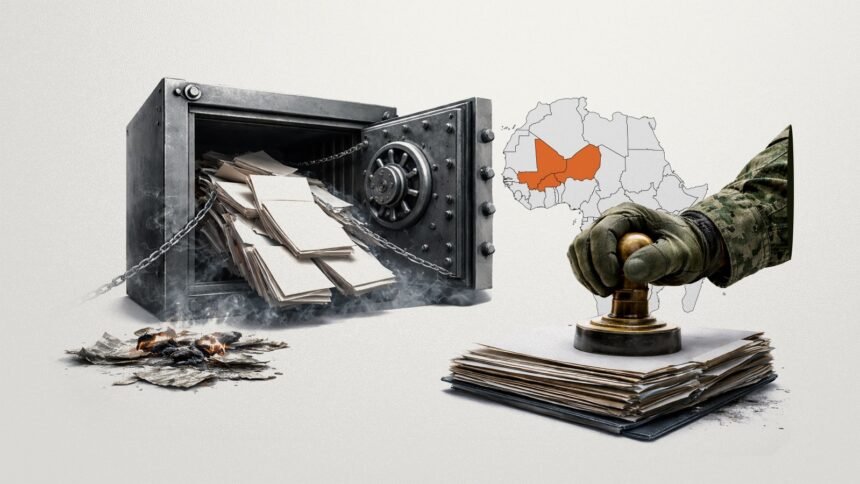
The Sahel’s political quagmire deepens with Burkina Faso’s January 29, 2026, decree dissolving all political parties and seizing their assets, a move that exacerbates fragmentation while exposing the historical failings of party leaderships in fostering inclusive governance. As Mali and Niger navigate similar junta-driven paths, this comparative examination argues that such authoritarian consolidations, though ostensibly aimed at unity, only entrench zero-sum dynamics rooted in decades of elite-driven divisions, demanding urgent regional recalibrations for sustainable order.
Pan African Predicaments: Sahel’s Fractured Unity
The Sahel’s predicaments reflect a Pan-African crisis of governance, in which Burkina Faso’s dissolution of more than 100 political parties, following the 2022 coup’s suspension of activities, mirrors broader erosions of pluralism in Mali and Niger. This decree, approved by the Council of Ministers, transfers party assets to the state, citing excesses that foster division among citizens and weaken the social fabric. In Mali, junta-led delays in elections, postponed indefinitely after the 2020 coup, echo this, with transitional parliaments granting leaders renewable terms amid repression. Niger’s 2023 putsch similarly sidelines civilian voices, prioritizing security pretexts over democratic returns.
By comparison, these moves complicate transitions: Burkina’s scrapping of electoral laws and the abolition of the commission’s centralized control within the Interior Minister Emile Zerbo’s purview risk elite capture, akin to Mali’s authoritarian drift. Pan-African imperatives falter here: the African Union’s suspensions and ECOWAS sanctions backfire, pushing juntas toward isolationist alliances like the AES confederation. Nevertheless, historical party leaderships bear culpability: in Burkina, the pre-coup proliferation of parties fueled patronage and ethnic rifts, mirroring Mali’s pre-2020 elite corruption, which alienated northern Tuareg and paved the way for coups. Unity demands Pan-African mediation: forums that foster inclusive charters to bridge junta-civilian divides, lest predicaments cascade into continental instability.
Sahel’s Sovereign Strains: Burkina’s Bold Reorganization
Burkina Faso’s reorganization, dissolving parties and repealing governing statutes, strains Sahel’s sovereign fabric, complicating a landscape already marred by jihadist advances and resource predation. The decree, part of “re-founding the state,” accuses parties of drifting into excesses that divide society, following the indefinite extension of the transition after the September 2022 coup. Mali’s similar junta tactic, post-2020 coup constitutional tweaks granting five-year terms, delay civilian rule, while Niger’s post-2023 putsch represses opposition amid uranium disputes.
Comparatively, Burkina’s move heightens zero-sum stakes: by centralizing electoral oversight in the interior ministry, it mirrors Mali’s militarized administration, where security trumps democracy, alienating Fulani communities and fueling JNIM recruitment. Sovereign strains emerge from historical party failures: pre-coup Burkina elites prioritized patronage over addressing northern poverty, mirroring Niger’s pre-putsch corruption, which eroded trust. Complications of reorganization: without parties, civic engagement declines, risking unrest, as seen in Burkina’s 2025 protests. Sahel’s path forward: regional pacts like AES must evolve beyond defense to inclusive governance, mitigating strains through equitable reforms.
Burkina Faso’s Bold Pivot: Party Dissolution’s Dual Edge
Burkina Faso’s pivot to dissolve parties wields a dual edge, ostensibly curbing divisions but entrenching junta dominance in a region plagued by insurgent gains. The January 29 decree scraps legal frameworks, transfers assets to the state, and enacts new opposition statutes, building on 2022’s electoral commission abolition, which was deemed wasteful. Mali’s analogous delays, elections postponed amid junta extensions, and Niger’s post-coup repression highlight shared trajectories.
By comparison, Burkina’s bold move complicates the landscape: without parties, electoral voids can foster authoritarianism, mirroring Mali’s transitional parliament, which granted renewable terms. Dual-edged cuts run deep: historical party leaderships, fostering ethnic patronage and corruption, created zero-sum vacuums that coups filled, as in Burkina’s pre-2022 elite failures that alienated northern peripheries. Pivot’s risks: civic space is shrinking, potentially escalating unrest, such as the 2025 Djibo sieges. Burkina’s resilience hinges on balanced reforms: national dialogues to redefine opposition, lest the dual edge severs democratic prospects.
Military Rule vs. Civilian Rule: Sahel’s Governance Gamble
Sahel’s governance gamble pits military rule against civilian legacies, with Burkina’s party dissolution exemplifying junta consolidation amid historical civilian failures. Military regimes in Mali (post-2020), Burkina (2022), and Niger (2023) justify takeovers with promises of security, yet escalate repression: Burkina’s decree accuses parties of societal weakening, mirroring Mali’s election delays that grant juntas five-year terms.
By comparison, military-civilian tensions reveal zero-sum origins: pre-coup civilian rules in Burkina fostered more than 100 parties rife with division, echoing Niger’s elite corruption, which erodes trust. Governance gamble’s stakes: junta’s militarization, Burkina’s VDP recruits surging, yield short-term gains but alienate communities, fueling JNIM’s 2025 advances. The revival of civilian rule requires hybrid models: transitional councils with party input, balancing military security with democratic accountability to end the gamble.
France vs. Russia in Africa: Sahel’s Influence Inversion
France vs. Russia in Africa’s Sahel: inversion accelerates with Burkina’s pivot, as junta leaders shun Paris for Moscow, complicating counterterrorism amid insurgent surges. France’s Barkhane exit (2022) from Mali ceded influence, with juntas expelling UN MINUSMA and embracing Wagner’s Africa Corps for arms and training. Burkina’s party dissolution aligns with this: centralizing power mirrors Mali’s Wagner-backed ops, prioritizing mines over masses.
Comparatively, inversion’s impacts: Russia’s mercenaries commit atrocities in Moura (Mali, 300 dead 2022), alienating Fulani and boosting JNIM recruitment, while France’s sanctions strain economies. Sahel’s gamble: historical Western ties failed to stem jihad, as civilian elites’ corruption enabled coups. Influence’s future: Pan-African pacts regulating foreign actors, balancing Russia-France to bolster local capacities.
JNIM’s Jihadist Juggernaut: Sahel’s Militant Momentum
JNIM’s jihadist juggernaut surges in Sahel’s militant momentum, where al-Qaeda’s affiliate, 6,000 fighters, coordinates 2025 escalations, from Mali’s fuel chokepoints to Burkina’s Djibo sieges killing hundreds. Niger’s Niamey assault, gunfire riddling aircraft, fits JNIM’s mosaic, exploiting junta voids for infiltration.
Comparatively, Juggernaut’s drive: Burkina’s northern massacres, Mali’s Moura echoes, Niger’s Tillaberi raids highlight transnational reach, taxing gold for $300 million to fund drones. Momentum’s fuel: civilian parties’ historical failures alienated peripheries, enabling jihadist “protector” narratives. Sahel’s counter: community deradicalization and equitable reforms to dismantle the juggernaut.
AQ’s African Arc: Sahel’s Extremist Expansion
AQ’s African arc expands through Sahel’s extremist networks, where JNIM’s al-Qaeda alignment drives 2025’s lethality, from Burkina’s 4,000 deaths to Niger’s border incursions. Niamey’s airport strike, scorching tarmac without casualties, exemplifies AQ’s precision amid junta weaknesses.
Comparatively, arcs’ span: Mali’s Kidal control, Burkina’s Djibo siege, Niger’s Dosso infiltrations highlight hybrid threats. Expansion’s roots: civilian leadership’s corruption fostered zero-sum vacuums, alienating Fulani for AQ recruitment. Sahel’s arc demands bending: inter-ethnic pacts and AU patrols to curb extremist growth.
Counter-Terror Conundrums: Sahel’s Tactical Tangles
Counter-terror conundrums tangle Sahel’s tactics, where Burkina’s party dissolution diverts from jihadist fights, as JNIM’s 2025 advances claim 7,800 lives. Niger’s Niamey response, perimeter cordons, restores calm but exposes base vulnerabilities following the US/Russian shifts.
Comparatively, tangles persist: Mali’s Wagner ops yield reprisals, Burkina’s VDP recruits surge but alienate, Niger’s militarization lags amid refugee strains. Conundrums stem from civilian parties’ historical zero-sum games, which weaken states to the benefit of insurgents. Sahel’s untangling: hybrid forces with community input, prioritizing prevention over repression.
Political Unrest Potentials: Sahel’s Simmering Dissent
Political unrest risks simmering in Sahel’s dissent, with Burkina’s dissolution potentially triggering backlash, mirroring Mali’s delayed polls and Niger’s treason trials against ousted leaders. Niamey’s assault amplifies tensions: junta silence fuels rumors, while refugee influxes strain resources.
By comparison, potential rises: Burkina’s civic space shrinks post-coup, Mali’s repression sparks protests, and Niger’s isolation breeds discontent. Unrest’s origins: civilian parties’ elite-driven divisions created zero-sum voids that coups filled. Still, they failed to resolve Sahel’s cooling: national dialogues that include remnants of dissolved parties, with mitigation potential through participatory transitions.
National Dialogue Necessities: Sahel’s Path to Reconciliation
National dialogue necessities emerge in Sahel’s reconciliation push, where Burkina’s reorganization demands inclusive forums to redefine governance beyond junta edicts. Niamey’s post-assault calm underscores needs: engaging civil society to address jihadist roots amid foreign power plays.
By comparison, the necessities align: Mali’s transitional delays, Burkina’s party void, and Niger’s coup aftermath require dialogue to bridge military-civilian gaps. Historical party leadership’s zero-sum failures necessitate reformed dialogues: AU-facilitated talks with ethnic quotas, fostering reconciliation to chart the Sahel’s stable future.