




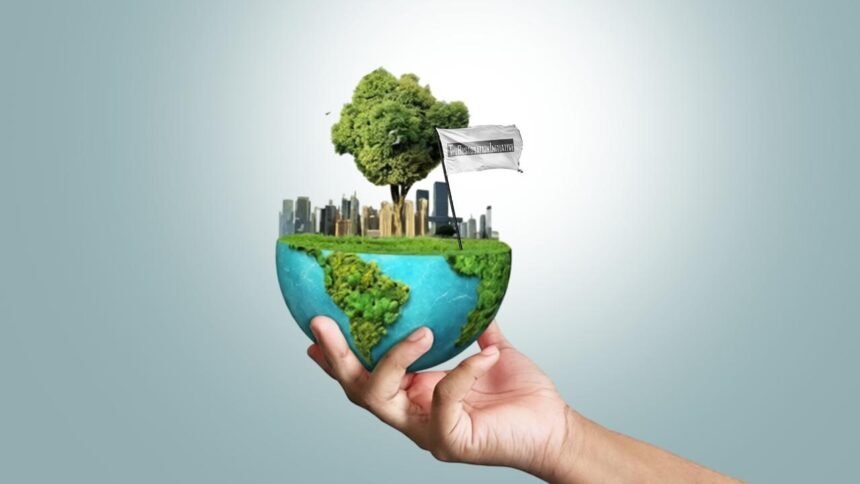
In a world racing to repair damaged land, a quiet experiment in community power has just been pushed onto the global stage. The United Nations has named The Restoration Initiative (TRI), a program that puts local people in charge of healing their forests, rangelands, and farms, a World Restoration Flagship under the UN Decade on Ecosystem Restoration.
Launched in 2018 by the International Union for Conservation of Nature (IUCN), the UN Food and Agriculture Organization (FAO) and the UN Environment Programme (UNEP), with funding from the Global Environment Facility, TRI now stretches across nine countries in Africa and Asia:
Cameroon, Central African Republic, Democratic Republic of Congo, Guinea-Bissau, Kenya, São Tomé and Príncipe, Tanzania, China and Pakistan.
The designation, announced on October 15, 2025, at a high‑level ceremony during the World Food Forum in Rome, signals that a model once treated as a niche “project” is now seen as a blueprint for restoring entire landscapes.
Turning Pledges Into Hectares and Jobs
The numbers behind TRI are substantial for a program that is only a few years old. Across ten tailored national projects, it has brought more than 960,000 hectares of land under active restoration or improved management, an area larger than Lebanon and roughly eight times the size of New York City.
More than 420,000 people have already benefited directly, through better harvests, new income streams, or more reliable water and grazing; that figure is expected to climb to over 810,000 as restoration sites mature.
The climate benefits are equally striking. TRI partners report that interventions to date have mitigated or prevented at least 22 million tonnes of carbon dioxide equivalent, with earlier program estimates suggesting the long‑term potential could exceed 30 million tonnes as tree cover and soil carbon continue to recover.
By 2030, the initiative aims to restore a further 160,000 hectares and help create more than 500,000 “green jobs” in tree nurseries, restoration-linked enterprises, and nature-based tourism.
For FAO and UNEP, which co‑lead the World Restoration Flagships, these figures matter less as abstractions and more as proof that restoration can move beyond pilot plots.
The awards were designed to highlight initiatives that support the global goal of bringing at least one billion hectares of degraded land and water under restoration by 2030, a target embedded in the UN Decade and the Kunming–Montreal Global Biodiversity Framework.
Restoration From the Ground Up
What sets TRI apart is not just scale, but who is in charge. Rather than pushing a single model from headquarters, the program is built around the idea that communities are the main decision‑makers.
Local governments, farmers, pastoralists, and Indigenous peoples work with IUCN, FAO, and UNEP teams to identify what stands in the way of restoration, insecure land rights, lack of markets for sustainable products, invasive species, weak enforcement, and then co‑design practical responses.
Those responses look very different from place to place. In Kenya’s Dr. Forest, for example, pastoralist communities facing longer droughts and shrinking pastures have agreed to rotate grazing, clear invasive cacti, reseed bare rangeland, and dig small “half‑moon” basins to catch scarce rainfall.
Alongside these changes in land use, TRI has helped introduce beekeeping as a new livelihood, supplying beehives and training so that women and youth can sell honey without cutting trees, and, crucially, with a direct stake in keeping the forest standing.
In Cameroon, the focus is on degraded hillsides where fast‑growing bamboo is being planted to stabilize soils, provide a renewable source of construction material and fuel, and create value chains that make restoration economically attractive.
On the islands of São Tomé and Príncipe, TRI-backed projects combine mangrove replanting with agroforestry training for small farmers, protecting low‑lying coasts from erosion while improving incomes from cocoa and other crops grown under shade trees.
Across the portfolio, common themes run through the work: sustainable land management, removal of invasive species, tree nurseries that supply both restoration sites and farm woodlots, and small businesses built around honey, bamboo products, non‑timber forest products, and, in some coastal areas, seaweed.
“By protecting their environment, these communities are strengthening their asset base and making their traditional way of life fit for the future,” said Jonathan Gheyssens of UNEP, describing the gains as “mutual” for people and nature.
IUCN Deputy Director General Stewart Maginnis called the flagship status “a testament to its positive impact on the well‑being of people, land, biodiversity, and climate.
” For Adriana Vidal, TRI’s global manager at IUCN, the award “honours the collective effort of hundreds of people across TRI countries who have turned forest and landscape restoration into a catalyst of change and a powerful local solution for socio‑economic challenges.”
Food, Water, and Climate on the Same Map
The TRI landscapes targeted by TRI are not chosen at random. Many sit at the fault lines where climate shocks, ecosystem breakdown, and food insecurity converge: drylands where overgrazed rangelands no longer hold rainwater, mountain slopes where deforestation has triggered landslides, and coastal zones where mangrove loss has exposed communities to storms.
In Africa’s arid and semi‑arid lands, restoring grass cover through improved grazing management is already improving livestock health and reducing erosion, while helping recharge groundwater in regions that are warming faster than the global average.
In parts of China and Pakistan, assisted natural regeneration and agroforestry on degraded slopes are reducing flood risks and improving soil fertility, making farms more resilient to extreme weather.
Program partners argue that this is where restoration moves from being a “nice‑to‑have” environmental add‑on to a core development strategy. TRI invests not only in planting trees, but also in the less visible work of training local technicians, reforming policies, clarifying community tenure, and building links between small producers and private buyers for restoration‑friendly products.
Without those enabling conditions, they say, tree-planting campaigns tend to fail once project funding runs out.
A Test Case for the Global South
For now, the World Restoration Flagship label does not come with a guaranteed pot of money. It offers visibility and, potentially, leverage. FAO and UNEP officials hope that by highlighting TRI among a handful of “exemplary” efforts, donors will route more of the climate and biodiversity finance they have promised toward landscapes where communities are already organized, and results can be measured.
If it succeeds, TRI could serve as a test of whether community‑led restoration can scale quickly enough to matter in a warming world. Its ten countries together have pledged many millions of hectares for restoration under the Bonn Challenge and related initiatives, but turning those commitments into thriving forests, grasslands, and wetlands will demand far more sustained, long‑term investment than has been mobilized so far.
For the people seeding nurseries in São Tomé, rotating cattle in Mukogodo, or cutting bamboo on Cameroonian hillsides, the new UN recognition does not change the daily work of coaxing life back into exhausted land.
What it may change is who is watching, and whether the rest of the world is willing to bet that the path out of the restoration crisis runs through communities like theirs.