


A five-year National Development Plan aims to rewrite the Sahel nation’s economic story by 2030. The hardest questions are about money, security, and who really benefits.
In Ouagadougou’s dusty outskirts, concrete pillars for a long-promised road flyover rise above traffic jams of motorbikes and yellow taxis. The project has inched forward for years, hostage to budget delays and insecurity on nearby routes that carry food and fuel into the capital.
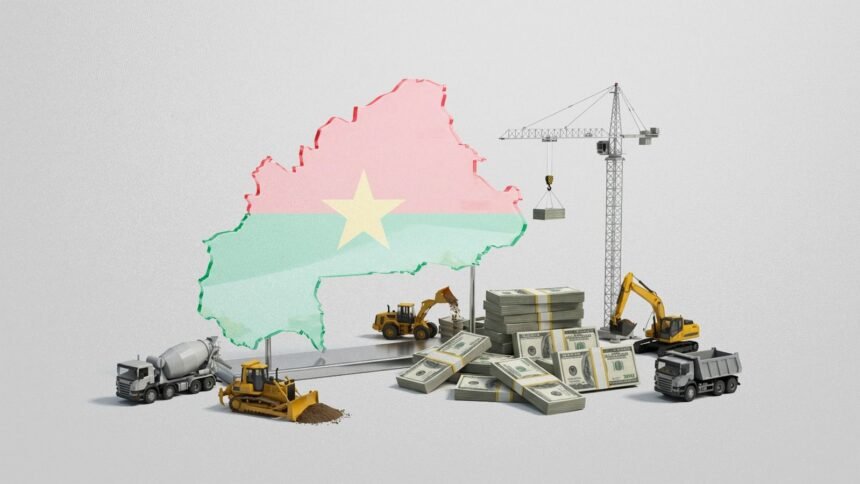
Now, Burkina Faso’s military-led government says it wants to turn such half-finished works into symbols of a very different future. In early March, authorities unveiled an ambitious National Development Plan for 2026 to 2030, a homegrown blueprint with a price tag of about 64 billion dollars to “reshape the economy” and deliver more inclusive growth.
On paper, the plan is sweeping: more roads and dams, better schools and hospitals, new industrial projects, and a stronger social safety net, all underpinned by a promise to restore security in a country battered by years of jihadist violence. The stakes are unusually high for one of the world’s poorest and most fragile countries.
This story is about whether a government fighting for its own survival can also pull off a massive economic reset, and whether a 64 billion‑dollar roadmap is bold planning, wishful thinking, or something in between.
Background and Stakes
Officially titled the Plan national de développement (PND) 2026–2030, the new strategy outlines a total budget of 36,190.7 billion CFA francs, roughly 64 billion dollars at current exchange rates, or about 7,238.1 billion CFA per year. That is nearly double the cost of the previous 2021–2025 plan, which was set at 19,030.7 billion CFA francs.
According to official planning documents and coverage by Ecofin Agency and regional outlets, investment spending and capital transfers account for about 34.5 percent of the plan’s total cost, or roughly 12,494.9 billion CFA francs. Additional financing needs are estimated at 10,955.3 billion CFA francs, around 30.3 percent of the overall envelope.
Authorities say they aim to cover the remainder through domestic revenues, external partners, and innovative tools such as citizen shareholding schemes and voluntary contributions.
The government has grouped its ambitions into four main pillars:
- Strengthening security and social cohesion.
- Reforming the state and improving governance.
- Developing human capital.
- Expanding economic and social infrastructure to support long‑term transformation.
The context is unforgiving. Burkina Faso has endured years of conflict that have displaced approximately 2.7 million people, undermined agricultural production, and strained public finances. Growth has slowed, poverty remains widespread, and much of the countryside is caught between armed groups and state forces. Against that backdrop, a 64 billion‑dollar development plan is as much a political signal as an economic one.
Human Stories and Real-world Examples
In the northern town of Kaya, aid groups say repeated attacks have cut off farmers from their fields and markets. A development plan that promises new irrigation schemes, feeder roads, and storage facilities matters little if basic security is absent. Yet those are exactly the regions where Burkina Faso needs development most urgently.
Urban residents see different needs. In Ouagadougou and Bobo‑Dioulasso, young graduates crowd into informal jobs in delivery services, street vending, and moto‑taxi driving. The PND talks about boosting “value‑adding sectors”, from agro‑processing to mining and digital services, and improving vocational training so that the fast‑growing youth population can find work beyond the informal economy.
Civil society groups quoted in regional coverage have cautiously welcomed the focus on human capital and social protection but questioned how quickly funds will reach communities rather than being absorbed by central ministries.
For many Burkinabè, the plan will be judged not by its glossy launch documents but by whether schools reopen in insecure areas, health centres can function with medicine and staff, and basic infrastructure actually gets built.
Policy, Debate, and Expert Views
Officials frame the PND 2026–2030 as a break with externally driven models of the past. The government’s messaging stresses national sovereignty, “homegrown” priorities, and better use of the country’s own resources, especially in mining, where Burkina Faso is a major gold producer.
The goal, they say, is to channel more mining revenue into roads, energy, education, and social services, and to reduce dependence on volatile aid flows.
Analysts see both promise and risk. On the one hand, the plan’s emphasis on security, governance reforms, and human capital aligns with long‑standing recommendations from development economists.
On the other hand, the sheer size of the financial envelope raises questions about feasibility in a country with limited fiscal space and strained relations with some traditional donors.
Ecofin Agency notes that roughly a third of the plan’s financing gap will need to be filled by external partners or innovative instruments that are not yet fully defined. Regional observers point out that attracting large‑scale private or concessional finance will depend on improved security conditions and predictable rules for investors, both of which remain uncertain.
There is also debate about sequencing. Some security experts argue that without first stabilizing key regions, major infrastructure outlays risk becoming stranded assets or targets for sabotage.
Others counter that visible development gains, roads, clinics, and irrigation are essential to winning back public trust and undercutting the appeal of armed groups. The PND attempts to do both at once, promising stepped‑up military operations while rolling out community‑level projects in parallel.
For now, outside scrutiny is largely focused on numbers and intentions. African business media highlight the jump from a 19,000‑billion‑CFA plan to a 36,000‑billion‑CFA one, and the government’s insistence that “inclusive growth” and reduced regional inequalities are central goals.
What is less clear is how citizens will participate in setting priorities and monitoring delivery. Official summaries mention stronger decentralization and community involvement, but offer few hard details on how local voices will shape which projects rise to the top.
What Comes Next
The PND 2026–2030 will not be judged on launch speeches or budget tables, but on what changes in daily life between now and the end of the decade.
For Burkina Faso, success would mean more than new roads and industrial zones. It would look like displaced families returning home, young people finding work outside the grey economy, and a state with enough fiscal breathing room to invest beyond crisis response.
The 64 billion‑dollar question is whether a government under intense security and political pressure can keep that long view in focus, and whether the partners it needs will be willing to bet on a country trying to rebuild itself in the middle of a storm.