




Africalix Exclusive Interview
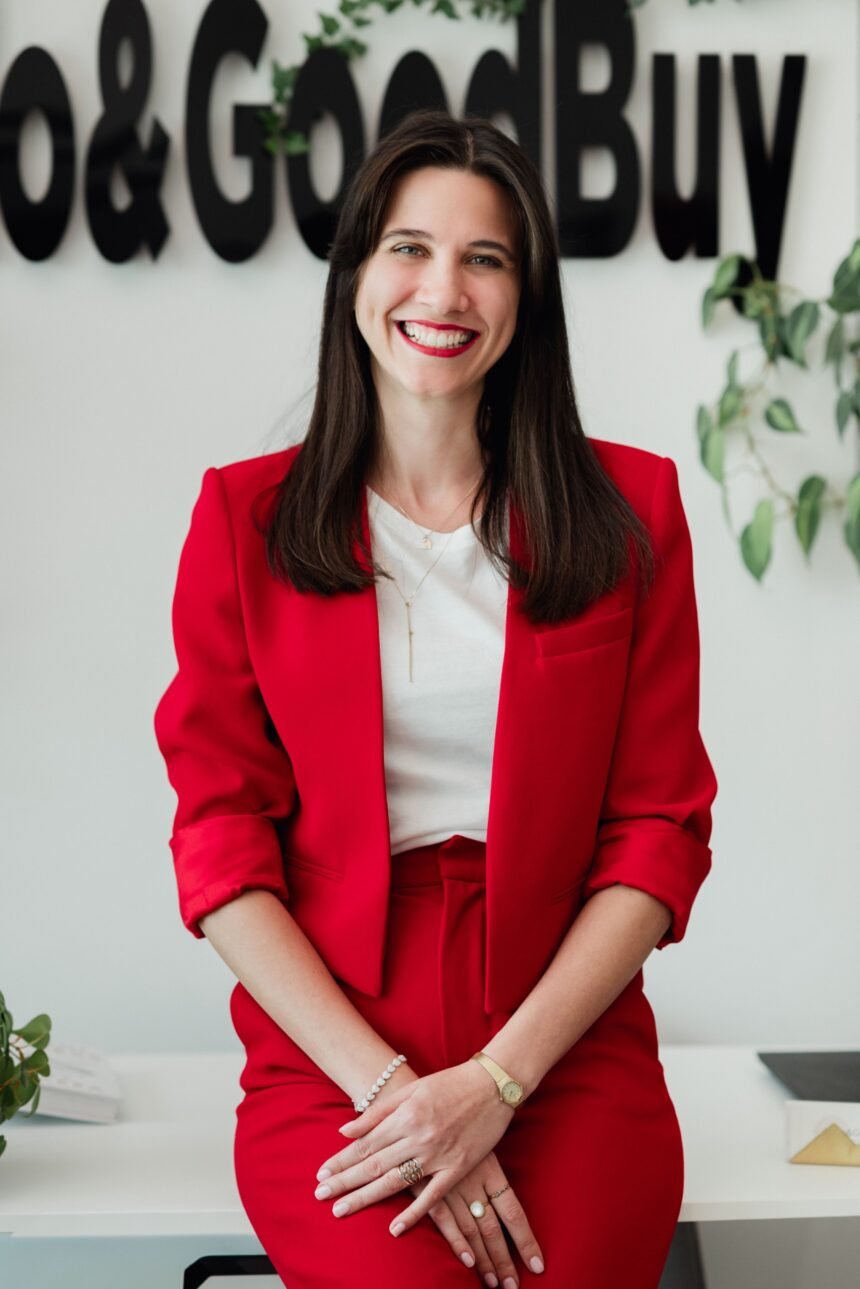
Nadia Al Shimmari, CEO and Founder of Hello&GoodBuy
In a city synonymous with luxury retail and consumption, where fast-fashion giants release thousands of items daily, and the average woman wears only 20-30% of her wardrobe, one Danish entrepreneur saw not a saturated market but a critical gap. Nadia Al Shimmari moved to Abu Dhabi eight years ago.
She quickly realized the city lacked what she had taken for granted in Denmark: flea markets, vintage shops, and preloved fashion options that made sustainable consumption commonplace.
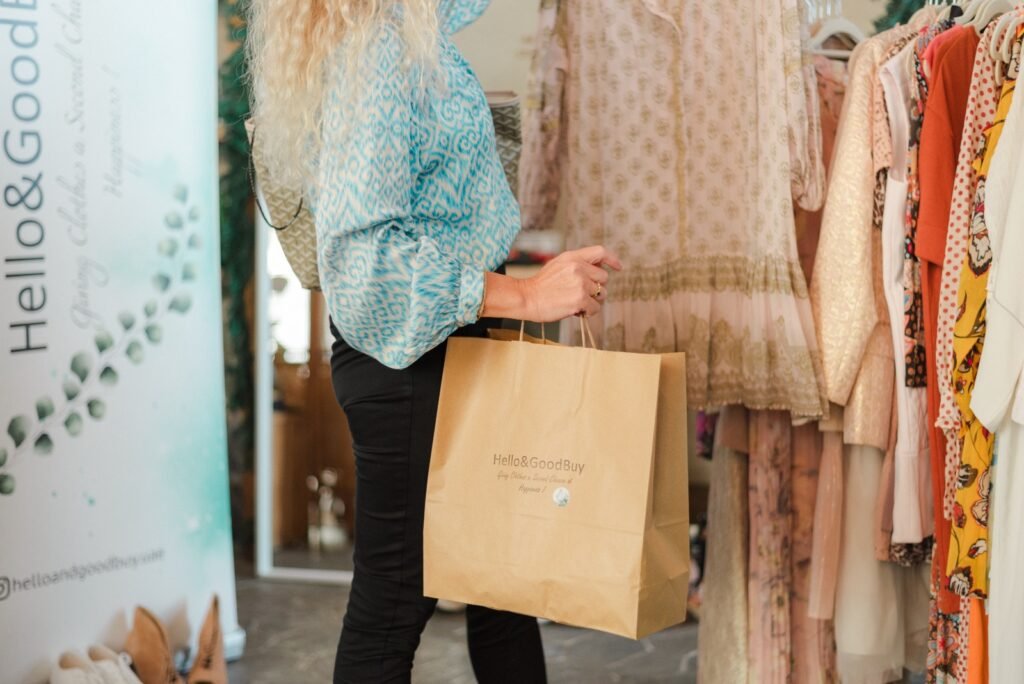
Born after COVID-19 when mindsets appeared to shift toward more sustainable lifestyles, Hello&GoodBuy emerged as Abu Dhabi’s answer to circular fashion—a social enterprise that plants a tree with every sale, funds girls’ education in Uganda through donated item proceeds, and organizes beach cleanups where 120+ participants regularly collect over 500 kilograms of waste in two hours.
In this exclusive interview with Africalix, Nadia discusses why extending a garment’s life by just nine months reduces water waste, carbon emissions, and waste footprint by up to 30%, how every polyester wash releases 600,000-700,000 microplastic fibers into oceans, and her vision for redefining luxury as consumption with a clear conscience rather than consumption at the planet’s expense.
Normalizing Preloved in a Luxury Capital
Hello&GoodBuy describes itself as a social enterprise promoting a more sustainable approach to wardrobes, aiming to change how people—mainly women—think about shopping by normalizing wearing preloved clothes. The company has made a pledge to the environment by planting a tree with every sale, which represents just one of several corporate social responsibility projects.
“Being from Denmark, a very sustainable country, it came very natural to me that of course the greatest capital in the world also needed a preloved boutique,” Nadia explains. “I moved to Abu Dhabi 8 years ago and quickly realized that there weren’t any preloved options.
Hello&GoodBuy was born after COVID, when it seemed that people’s mindsets had shifted toward a more sustainable lifestyle. I believe people saw a direct correlation between our consumption habits and nature flourishing.”
The timing proved strategic. The pandemic created a rare moment when global human activity slowed, allowing many to witness firsthand how reduced consumption pressure enabled ecosystems to show signs of recovery. This collective experience created openings for businesses like Hello&GoodBuy to position sustainable consumption not as a sacrifice but as a conscious choice.
The Hidden Cost of 7 Wears
Nadia built Hello&GoodBuy in Abu Dhabi precisely because the city is better known for luxury retail than preloved fashion. As a Danish expatriate, she missed the flea markets, vintage shops, and preloved markets where finding truly unique pieces was normalized rather than stigmatized.
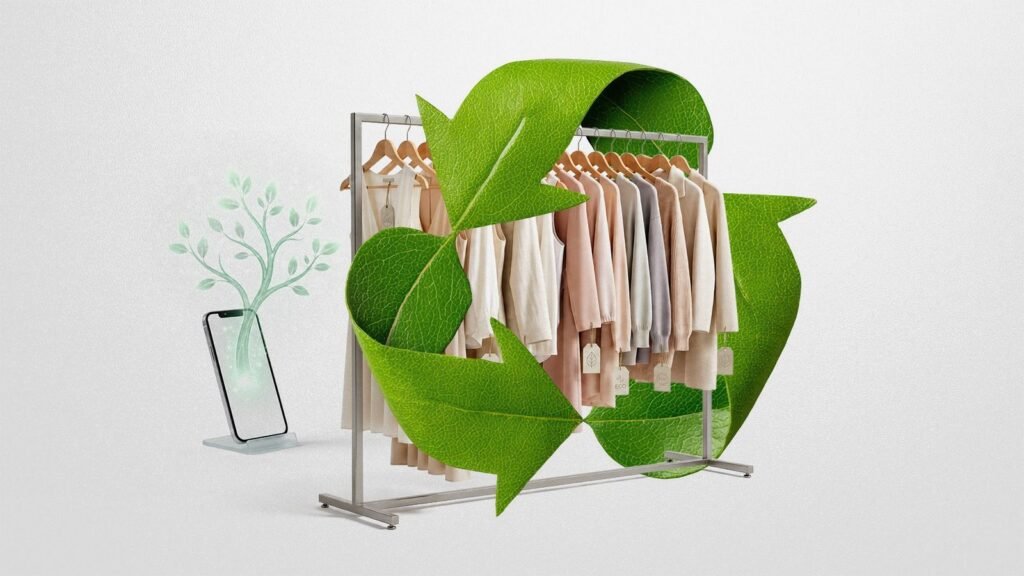
“We wanted and are still working very hard on changing mindsets about preloved fashion,” she notes. “Did you know that the average woman only wears around 20-30% of her wardrobe, and that she only wears her items 7 times before discarding them? This is exactly what we wanted to change and challenge.”
Over the last 20 years, how societies view the clothing industry has changed significantly. The shift from four seasonal collections annually to monthly, biweekly, weekly, and now daily releases by ultra-fast fashion giants like Shein and Temu has fundamentally altered consumption patterns. There are not enough natural resources to sustain this pace of production and disposal.
Nadia emphasizes that initiatives like Hello&GoodBuy are incredibly important because extending the life of a garment by just 9 months reduces water use, carbon emissions, and the waste footprint by up to 30%. While Hello&GoodBuy has existed for 4 years, the team continues to work hard every day to raise awareness of the impact of small eco-conscious changes on the environment.
A Circular Model Built on Store Credit
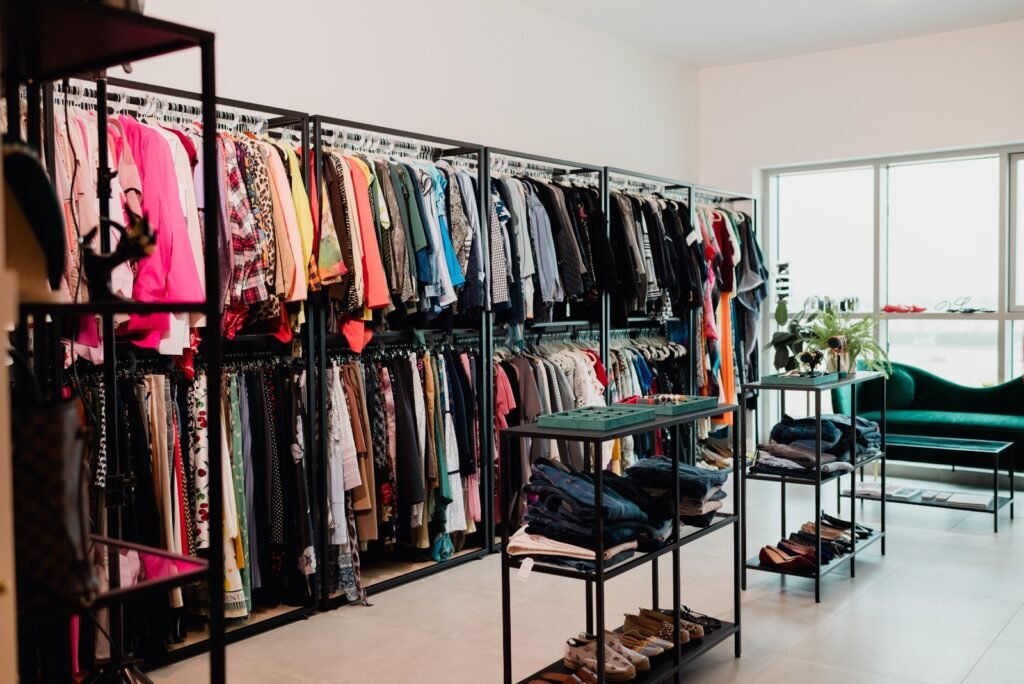
Hello&GoodBuy’s circular model operates through several distinctive mechanisms. First, all inventory is sourced from within the UAE, recognizing that there are already enough clothes in circulation locally. Purchasing garments from abroad would create a staggering carbon footprint, undermining the sustainability mission.
Second, the company only offers store credit as a purchasing form. This ensures that when clients need a new item, instead of purchasing from traditional shops, they return to Hello&GoodBuy. By purchasing preloved items already in circulation, CO2 emissions are lowered. The company also plants a tree with every purchase, meaning customers not only save money, preloved is much cheaper than new, but also actively contribute to environmental restoration.
A large portion of clothes is donated to Hello&GoodBuy. When a donated item sells, the proceeds fund girls’ education in low- and middle-income countries. Currently, the company supports a project in Uganda called Girls Not Brides, providing education for 6,000 girls.
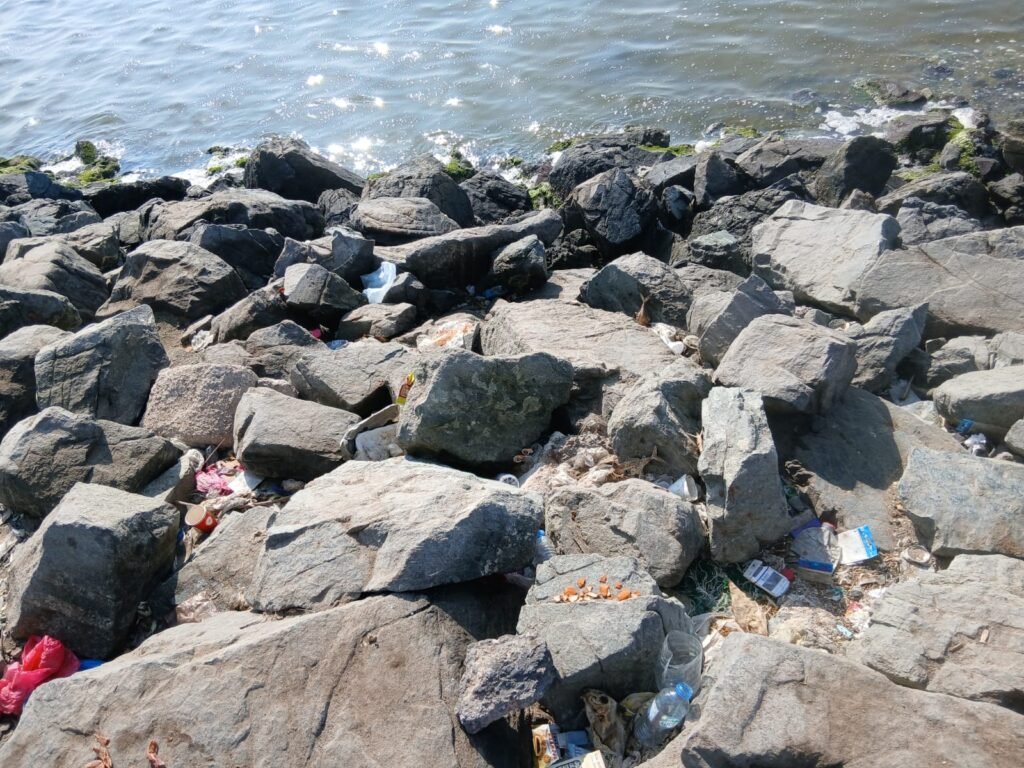
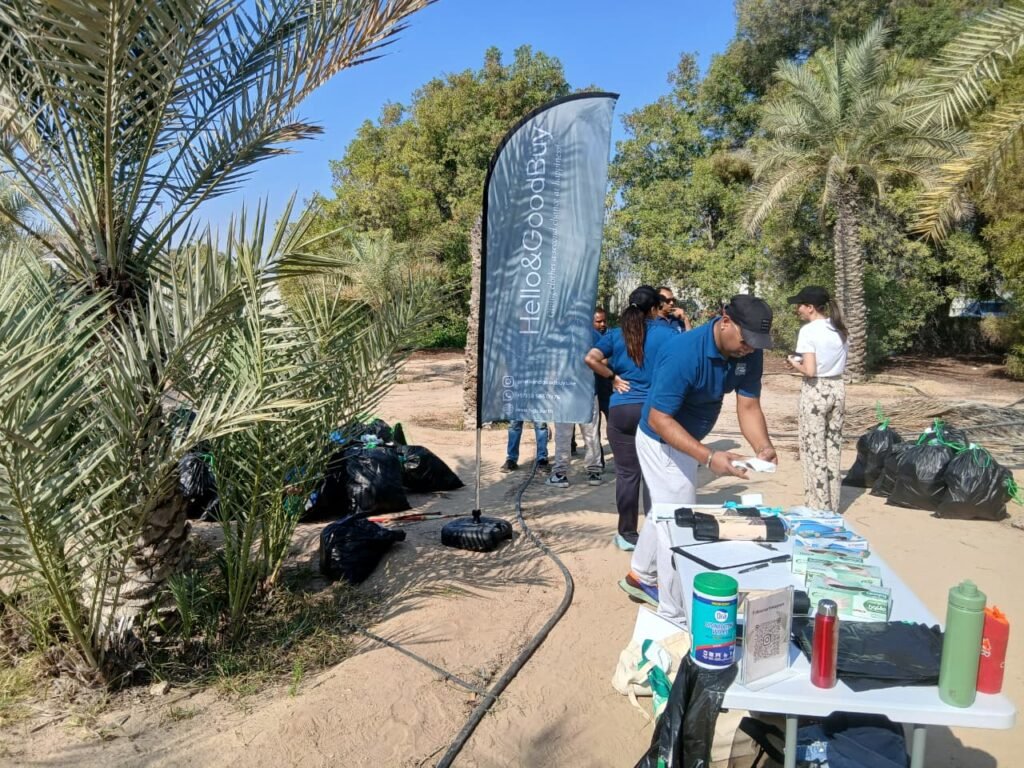
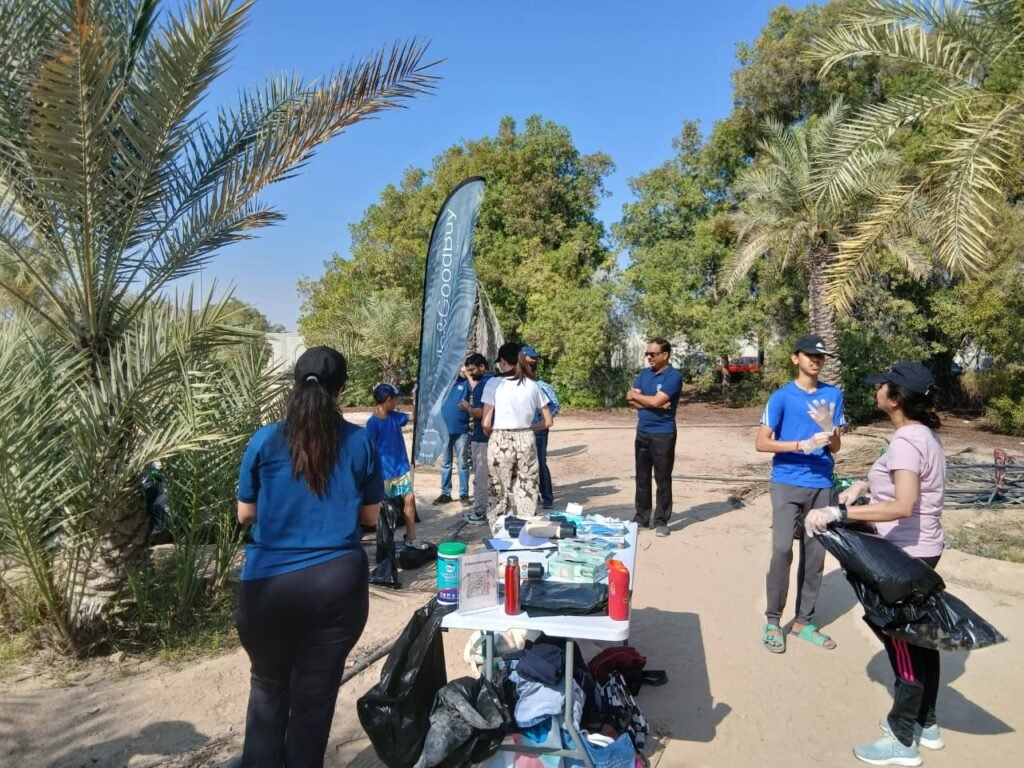
Another corporate social responsibility project focuses on giving back to Abu Dhabi through beach cleanups and mangrove planting initiatives. At recent cleanups, over 120 participants have gathered more than 500 kilograms of waste in just two hours.
“We’ve been cleaning the same area 5 times now, and every time I’m shocked to see just how many plastic bottles are still being thrown in nature, and of course, cigarette butts,” Nadia observes.
From Wardrobe to Ocean: The Microplastic Connection
The connection between fashion consumption and ocean pollution operates through multiple pathways. With the fast fashion transformation beginning in the late 1990s and accelerating in the early 2000s, global giants like H&M and Zara changed the game. Instead of releasing four collections annually, they moved to monthly, then biweekly, and now ultra-fast fashion companies like Shein and Temu release thousands of items daily.
With this significant increase in collections and general demand, clothing quality has dropped dramatically. Where clothes were once made to last in natural fabrics like cotton and linen, most are now made in polyester and are not meant to last. Ultimately, all these clothes will end up in landfills or nature.
“Currently, there’s enough clothes in existence for the next 8 generations on Earth,” Nadia emphasizes. “We could stop producing clothes right now, and there would still be enough clothes for the next 300 years!”
The microplastic dimension is particularly insidious. Every time an item made of polyester, nylon, spandex, or acrylic, essentially all different names for plastic, is washed, it releases 600,000-700,000 microplastic fibers that end up in the ocean. These microplastics ultimately enter human bodies when people consume fish and seafood, creating a direct pathway from the wardrobe to the ocean to the dinner plate.
From 20 Participants to Family Movement
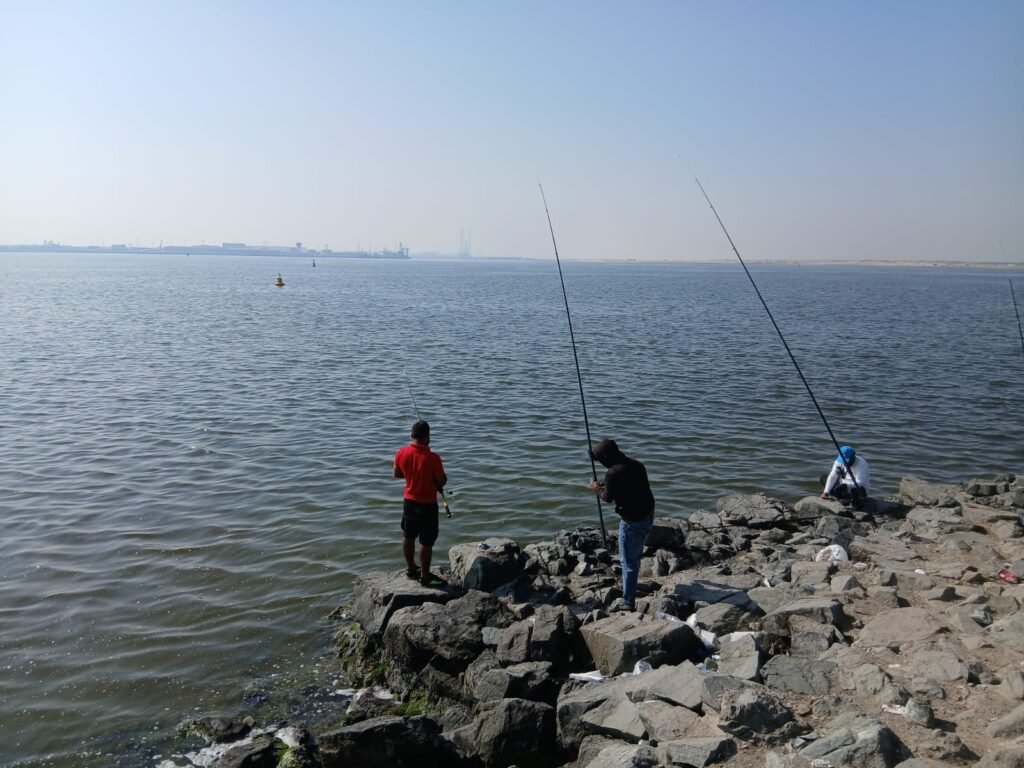
Over time, Hello&GoodBuy’s beach cleanups have revealed shifting patterns in both waste types and participant demographics. The first cleanup four years ago struggled to attract participants, with fewer than 20 people attending, most of them friends Nadia had almost forced to join. Now, people sign up proactively, ask about the next event, and bring their children. The youngest participant was 37 days old.
More families are joining as a family activity and as a way to teach children about their responsibility to nature. Unfortunately, the waste types remain consistent: single-use plastic bottles, fishing equipment, and cigarette butts dominate collections.
“We’ve noticed an increase in young Emiratis joining our cleanups, which is amazing!” Nadia notes. “In general, we are seeing a lot more of the youth joining. We also have many schools and organizations asking us to organize private cleanups for them. Something we are always happy to do!
This evolution from struggling to attract 20 participants to regularly hosting over 120 demonstrates how environmental action can shift from fringe activity to normalized community practice when consistently maintained and made accessible.
A Business for Change, Not Profit
Nadia sees the beach cleanups as an important part of Hello&GoodBuy’s DNA, representing environmental action, community education, and brand storytelling simultaneously.
“Hello&GoodBuy isn’t a business for profit. We are a business for change,” she explains. “That change starts right outside our front door. Since both our educational and tree-planting projects are outside the UAE, it was very important for us to have an initiative within the UAE.
We are an Abu Dhabi-born-and-bred initiative, after all. It’s also a very important part of our storytelling. Wearing preloved might not be for everyone—yet. But protecting our environment is!
This framing positions the cleanups not as marketing exercises but as authentic expressions of the company’s core identity. By acknowledging that preloved fashion might not yet appeal to everyone while insisting that environmental protection should, Hello&GoodBuy creates multiple entry points for engagement beyond purchasing secondhand clothes.

Education, Environment, and Fashion: An Unlikely Harmony
Hello&GoodBuy’s connection to tree planting, mangrove restoration, and girls’ education reflects Nadia’s desire to combine her passions when launching the company: education, the environment, and fashion; topics that do not necessarily harmonize in obvious ways but did to her.
“As a former teacher, education is extremely important to me, and by securing a girl’s education in low- and middle-income countries, she can change the outcome of her and her family’s future,” Nadia explains.
“Living in Denmark, sustainability is my second nature. And well, fashion is such a powerful tool in expressing who we are. But I needed an environmentally friendly way of doing so, which is why Hello&GoodBuy exists today. It is also my way of giving back to a country that has given me so much.”
The company works with entities specifically in Africa because one of the world’s largest preloved markets exists there. Ghana receives over 48 tons, more than 15 million pieces of clothing, every single day. This staggering volume represents both an enormous waste management challenge and a potential resource if circular systems can be strengthened.
Measuring the impact of Hello&GoodBuy is not always easy. The company cannot measure the environmental footprint of clothes before they reach the boutique since it does not know the origin of all items. What can be measured is how many clothes have been saved from ending up in landfills, how many trees and mangroves have been planted, how much waste has been collected, and how many girls have received secure education.
“The numbers don’t have to be big to have an impact,” Nadia notes. “One tree planted is better than zero! We are on a mission this year to plant 400 trees as we celebrated our 4th anniversary in March.”
Redefining Luxury as Conscious Consumption
Looking ahead, the hardest part of building a purpose-driven circular fashion business in Abu Dhabi has been the region’s strong focus on luxury, which, for most people, does not harmonize with preloved fashion. Hello&GoodBuy is working to show Abu Dhabi that it does.
“For me, luxury means I can make a purchase that doesn’t cost the environment its resources,” Nadia argues. “It means I can find unique vintage pieces, it means I can consume with a good conscience.”
This reframing of luxury from expensive and new to sustainable and unique challenges fundamental assumptions in fashion retail. By positioning preloved consumption not as a downmarket necessity but as an aspirational choice, one that demonstrates sophistication, environmental awareness, and individuality, Hello&GoodBuy attempts to shift the cultural associations that have historically stigmatized secondhand clothing.
The Five Rs and the Future of Fashion
For Africalix readers thinking about the future of fashion, waste, and the ocean, Nadia offers straightforward guidance.
“In general, try to live after the 5 Rs: Refuse, Reduce, Reuse, Repurpose, and Recycle,” she advises. “And then of course visit Hello&GoodBuy next time your wardrobe needs an upgrade.”
As Hello&GoodBuy continues expanding its model, combining circular fashion retail with tree planting, girls’ education, and community environmental action, Nadia’s work demonstrates how social enterprises can address multiple sustainability challenges simultaneously without diluting focus or impact.
By grounding the business in measurable outcomes (trees planted, waste collected, girls educated, garments circulated) while maintaining flexibility about how impact is achieved, Hello&GoodBuy navigates the tension between comprehensive environmental thinking and practical operational constraints.
Whether this model can successfully shift cultural perceptions of preloved fashion in luxury-focused markets beyond Abu Dhabi, or whether similar approaches could be adapted for African contexts where 15 million clothing pieces arrive daily in Ghana alone, remains to be tested.
But the fundamental insight, that fashion waste, ocean pollution, education inequality, and climate change are interconnected challenges requiring integrated rather than siloed responses, positions Hello&GoodBuy as more than a boutique.
It represents an argument for how businesses can function as vehicles for systemic change when profit is deliberately subordinated to purpose, and when luxury is redefined not by what consumption costs the planet but by what it preserves.
• • •
Nadia Al Shimmari is the CEO and Founder of Hello&GoodBuy, an Abu Dhabi-based social enterprise promoting circular fashion through preloved clothing retail, environmental restoration, and girls’ education.
A former teacher from Denmark, she established Hello&GoodBuy after COVID-19, when consumption mindsets appeared to shift toward sustainability. The company plants a tree with every sale, funds education for 6,000 girls in Uganda through Girls Not Brides, using proceeds from donated items.
It organizes regular beach cleanups in Abu Dhabi that attract over 120 participants and collect more than 500 kilograms of waste in two hours. Hello&GoodBuy sources all inventory from within the UAE and operates on a store credit model to promote circular consumption.
Contact:
Nadia Al Shimmari, Founder and CEO, Hello&GoodBuy
Phone: +971 58 586 8947
Email: nadia@hgb.earth
Website: hgb.earth
LinkedIn: linkedin.com/company/helloandgoodbuy
Instagram: instagram.com/helloandgoodbuy.uae