



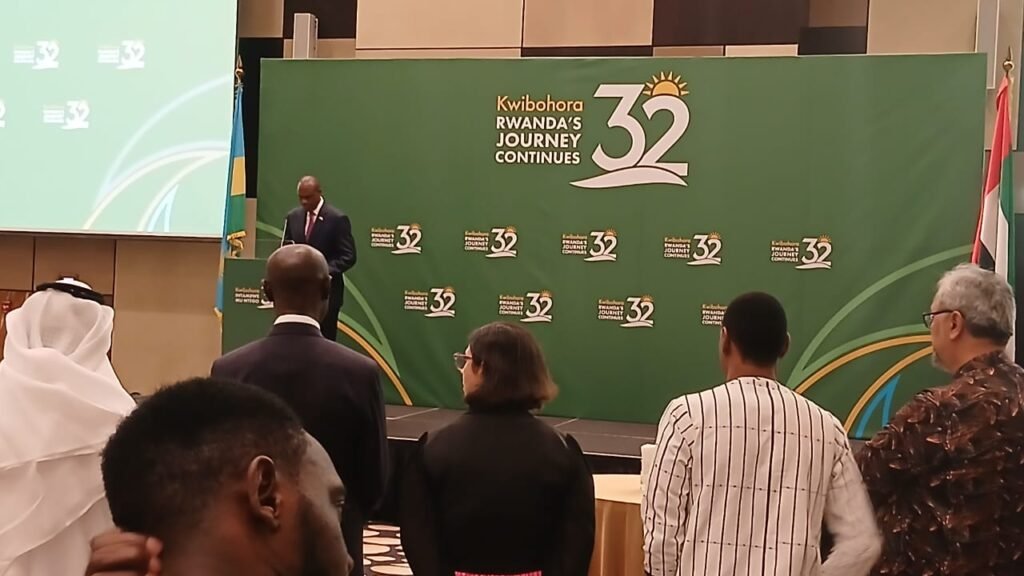
On the evening of 4 July 2026, a humid summer night in Abu Dhabi, the Rwandan national anthem rose over a hotel ballroom thousands of miles from Kigali. Rwandans in bright traditional dress stood alongside guests in suits, while diplomats lined the front of the hall in attentive silence as the ceremony for Kwibohora32 began.
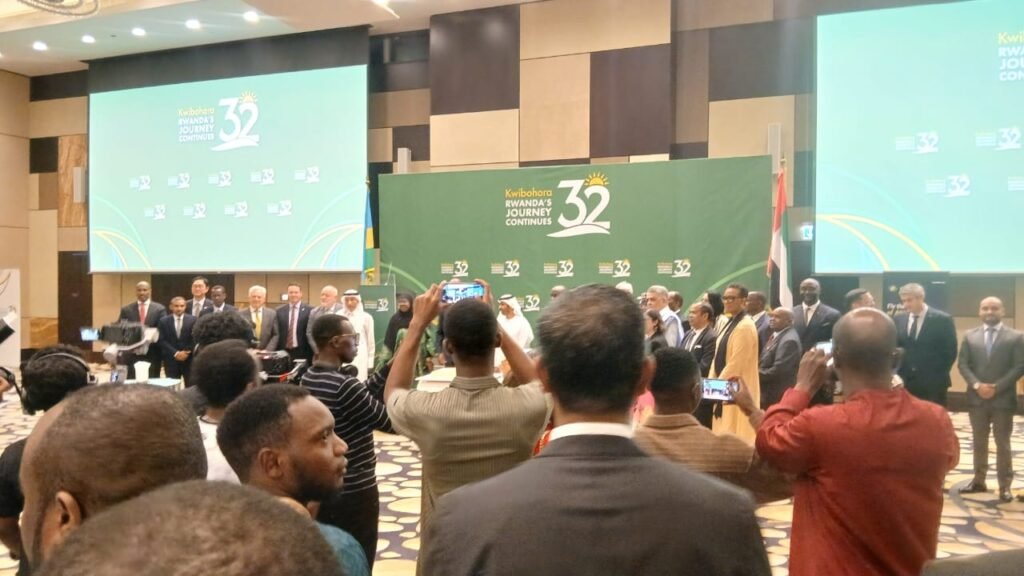
The Embassy of Rwanda in the United Arab Emirates had brought together more than 300 guests, Rwandans, diplomats, professionals, and friends of Rwanda, to mark the 32nd anniversary of the country’s Liberation Day.
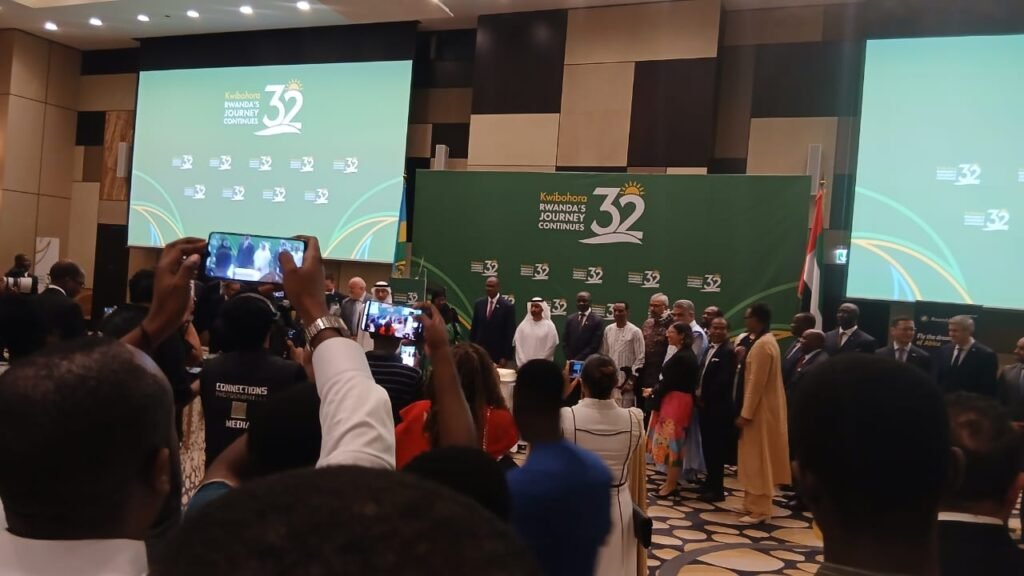
At one level, it was a national celebration in the diaspora. At another, it felt like something larger: a public statement that liberation in Africa can no longer be understood only as the end of occupation or mass violence. It must also be judged by what comes after, by whether a country can build institutions, social trust, and a viable economic future from the ruins of history.
This story matters now because Rwanda’s Liberation Day has quietly evolved into a working argument about what post‑conflict statehood can look like in Africa, at a moment when many governments across the continent are under pressure from debt, climate stress, fractured politics, and an impatient young population.
I argue that Kwibohora now matters beyond Rwanda because it shows how liberation can be redefined not as a memory of victory, but as a disciplined, unfinished project of rebuilding.
Liberation as a Political Method
Rwanda’s official story of liberation begins with a clear historical fact: on July 4, 1994, the Rwanda Patriotic Front ended the Genocide against the Tutsi and opened the way for a new political order. What has made Kwibohora politically significant, however, is not only the event itself.
It is the way the state has steadily reworked that moment into a governing philosophy: unity over fragmentation, order over collapse, planning over drift.
At the Abu Dhabi reception, His Excellency Ambassador John Mirenge captured this idea in terms that stayed with me. Liberation, he said, was not simply a military victory; it was the beginning of rebuilding a nation on the foundations of unity, resilience, and shared prosperity. That distinction is more important than it sounds.
It shifts the meaning of national power away from armed success and toward institutional endurance. It says, in effect, that the legitimacy of liberation must eventually be earned in schools, ministries, hospitals, clean streets, and stable public systems.
I have seen many African states struggle with that transition. Liberation movements and independence parties are often revered for how they fought, but less convincing in how they govern decades later. Rwanda’s case is different because it has attempted to turn memory into method.
The annual commemoration is not only backward‑looking. It is also a reminder that the right to lead has to be renewed through visible competence.
That is the quietly revealing feature of Rwanda’s post‑1994 trajectory: the state did not stop at restoring order. It turned discipline itself into a form of political language.
Diaspora Living the Liberation Story
What struck me most in Abu Dhabi was how naturally this national narrative lived in ordinary conversation. I spoke with Rwandans who had traveled from Dubai and other emirates simply to be present. Their commitment to the day did not feel ceremonial. It felt personal, as if attendance itself was part of a civic ethic carried abroad.
One conversation in particular stayed with me. A Rwandan guest I met in the hall spoke less about politics than about values: dignity, responsibility, and the refusal to let the country be permanently defined by 1994.
That instinct helps explain why Kwibohora resonates so strongly in the diaspora. For many Rwandans abroad, the day is not just an anniversary of survival. It is an annual test of whether the country is still moving in the direction that liberation promised.
A traditional dance performance by young Rwandan girls underscored that point more powerfully than any speech. Their synchronized movement and bright attire did more than showcase heritage.
They suggested continuity, the persistence of a national culture that genocide tried to shatter, and that reconstruction has tried to carry forward without denying the trauma in between. Liberation, in that sense, is not amnesia. It is the ability to preserve cultural confidence without being imprisoned by grief.
I also found that discussions about Rwanda’s future quickly moved toward sustainability and statecraft. That was not accidental. Rwanda banned plastic bags nationwide in 2008, years before many more developed countries took the issue seriously, and later moved to phase out other single‑use plastics as part of a broader environmental agenda.
Kigali’s car‑free days have become a visible expression of that policy culture, linking public health, urban order, and environmental behavior in one recurring civic practice. The government has also made electric mobility part of its wider Vision 2050 strategy, which frames Rwanda’s future as both climate‑resilient and increasingly low‑carbon.
Rwanda’s Example and Africa’s Uneasy Questions
This is where the Rwandan story becomes useful, and challenging, for the rest of Africa. It is useful because it demonstrates that African states can still make long‑range choices and carry them through with some consistency. It is challenging because it raises difficult questions about the trade‑offs through which that consistency is achieved.
Rwanda’s methane‑to‑power projects at Lake Kivu illustrate both sides of this story. The lake contains significant methane reserves that Rwanda is extracting to generate electricity, reduce energy costs, and manage environmental risks associated with gas accumulation.
Estimates suggest the viable methane resource could support 350 megawatts of electricity on Rwanda’s side alone over several decades, making it one of the most distinctive energy projects on the continent. That is not merely a technical success. It is a statement that a country once synonymous with catastrophe is now building its future through complicated, long‑term infrastructure choices.
It would be too simple, though, to present this as an uncomplicated triumph. Observers inside and outside Rwanda continue to discuss and debate questions around political openness, media space, and how best to balance strong state capacity with inclusive governance.
Those conversations are important and deserve to be heard in good faith. But they coexist with another reality that many African officials, at least privately, recognize: Rwanda has managed to implement difficult policies that other governments spend years discussing without ever implementing.
That tension is part of what makes the country so politically interesting. It embodies a broader African dilemma: how to build capable institutions without allowing state discipline to harden into permanent political closure. That is not Rwanda’s question alone. Other African countries, for instance, have shown how quickly ambitious “beyond aid” rhetoric can collide with fiscal crisis and debt restructuring.
Southward, in a different register, has shown how natural‑resource ambition can be destabilized by insecurity, local exclusion, and unresolved questions about who benefits from development. Across the continent, the deeper argument is the same: can African governments still convert national narratives into functioning systems that people actually trust?
In Rwanda, Kwibohora has become one answer to that question. It is not a perfect answer, nor one that every African state would choose to replicate in full. But it is one of the clearest examples of a government treating liberation not as sentimental history, but as an annual audit of whether the state is still worthy of the sacrifice that made it possible.
That is why I think Rwanda’s Liberation Day now has significance beyond Rwanda itself. In an era shaped by climate risk, geopolitical fragmentation, and rising demands from young Africans for competent governance, Kwibohora has become more than a commemoration.
It is a lens through which to ask what liberation should mean now: not simply freedom from violence or domination, but the hard, disciplined work of making a country function.
Rwanda has made one version of that answer visible. The larger continental question is whether other African states are prepared to treat their own national days not as ceremonial rituals, but as serious tests of whether they are truly moving from survival to shaping the future.