


The Pan-African Paradigm of Resource Sovereignty and Strategic Partnership
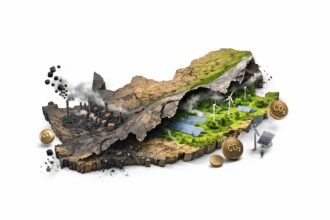
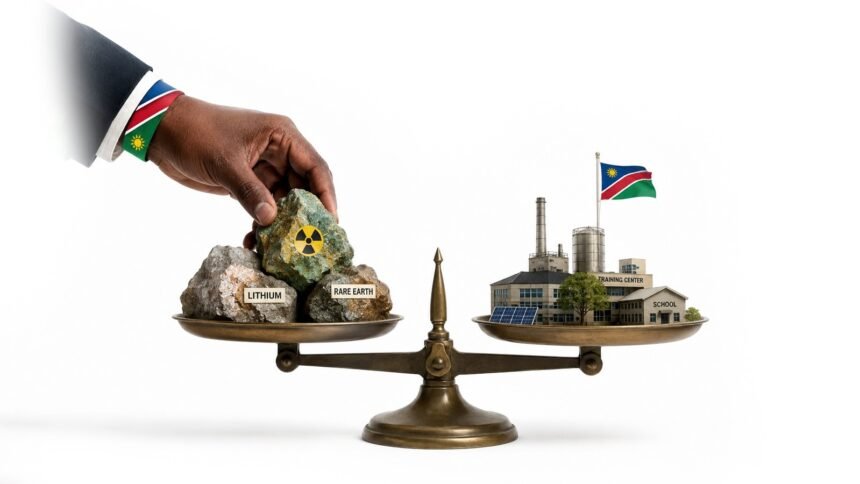
Across the African landscape, the question of who benefits from the continent’s mineral wealth, and on whose terms, remains the defining structural test of post-independence economic self-determination. Namibian President Netumbo Nandi-Ndaitwah’s seven-day state visit to Beijing, culminating in eight signed agreements spanning infrastructure, mining, and energy, sits squarely within this continental paradigm. As the country’s first female head of state and inheritor of a 34-year continuum of SWAPO governance since independence from apartheid South Africa in 1990, Nandi-Ndaitwah’s choice to make China her first state visit beyond Africa signals a deliberate recalibration of Namibia’s institutional posture toward its most significant external investor. This is not merely a bilateral courtesy call. It is a structural wager on whether deepened Chinese engagement in uranium, lithium, and rare earths can be architected to serve Namibia’s own developmental trajectory, job creation, economic diversification, and local processing capacity, rather than replicating the extractive asymmetries that have historically defined the continent’s resource relationships. The path forward will test whether Namibia can convert mineral wealth into a genuine instrument of reclaiming economic sovereignty.
The Architecture of the Beijing Agreements
The eight documents signed in Beijing include a framework agreement on economic partnership and a dedicated accord on cooperation in green minerals, alongside a joint statement in which both governments pledged to deepen collaboration on uranium, lithium, and rare earths, the triad of critical minerals increasingly central to global energy transition supply chains. Notably, the statement emphasized local processing, technological transfer, and skills development, themes that have become a recurring institutional demand among African commodity producers seeking to move beyond raw-material export dependency. Xinhua’s readout of the meeting quoted China’s commitment to deepen cooperation “in infrastructure construction, energy, minerals, agriculture, education, youth, and science and technology,” a broad institutional architecture that, if implemented with genuine reciprocity, could mark a meaningful departure from the extraction-only relationships that have historically characterized foreign mining investment on the continent. Whether this rhetorical commitment to local processing translates into actual value-chain relocation onto Namibian soil remains the structural question that will determine whether this partnership represents genuine developmental recalibration or another iteration of externally controlled resource extraction.
Namibia’s Emerging Oil Trajectory and Regional Positioning
Namibia’s mineral diplomacy with China unfolds against the backdrop of a parallel and equally consequential trajectory: the country’s emergence as a potential top-tier oil producer. Following Shell and TotalEnergies’ discovery of an estimated 2.6 billion barrels of crude, Namibia could become the continent’s fourth-largest oil producer by 2030, a prospect that positions it alongside neighboring Angola, which currently produces roughly 1.1 million barrels per day and has used its own oil wealth to help finance a China-backed structural overhaul of its economy away from fossil-fuel dependency. This regional matrix, in which Southern African states leverage both mineral and hydrocarbon wealth toward China-financed diversification, suggests an emerging institutional model: resource revenue as bridge capital toward economic recalibration, rather than an end in itself. For Namibia, the challenge will be replicating Angola’s financing strategy while avoiding its pitfalls, ensuring that new oil and uranium revenues fund genuine structural transformation rather than entrenching a fresh cycle of commodity dependency under a different creditor.
The Weight of Chinese Capital in Namibia’s Metals Sector
China’s economic footprint in Namibia is already substantial and structurally concentrated: Chinese firms have invested $4.2 billion in the country, according to data from the American Enterprise Institute, with all but $100 million directed to the metals sector. China absorbs roughly a quarter of Namibia’s total exports, and of the $1.3 billion in Namibian goods purchased by China last year, uranium alone accounted for 85 percent. This concentration illustrates both the depth of the bilateral relationship and its inherent asymmetry, a dependency structure in which a single mineral, sold predominantly to a single buyer, constitutes the overwhelming share of an entire bilateral trade relationship. Diversifying this trajectory, both in terms of the mineral basket and the buyer base, will be essential if Namibia hopes to avoid replicating the single-commodity vulnerability that has historically constrained the self-determination of other African resource exporters, whose institutional and fiscal architecture have become overly dependent on one trading partner’s demand cycles.
Domestic Reform Pressures and the IMF’s Structural Prescription
Nandi-Ndaitwah’s China courtship comes as her government navigates considerable domestic pressure, having taken office in 2025 amid persistent unemployment and inequality concerns that analysts warned could undermine SWAPO’s electoral durability. Her inauguration pledge to pursue a “green revolution,” anchored in monetizing the country’s agricultural sector and water resources, dovetails with the International Monetary Fund’s own structural prescription, which has highlighted agriculture, fisheries, emerging oil and gas, and green hydrogen as the sectors most likely to generate the institutional reforms needed to create jobs. This alignment between domestic policy ambition and international financial institution guidance suggests a coherent, if still nascent, developmental architecture, one in which Chinese capital for minerals and infrastructure is meant to complement, rather than substitute for, the deeper structural reforms Namibia’s own economy requires to translate resource wealth into broad-based employment and diversified growth.
Reclaiming Resource Wealth as Genuine Sovereignty
Namibia’s Beijing agreements represent an inflection point in the country’s long-term trajectory toward economic self-determination. Still, the true test lies not in the signing of documents, but in their implementation. If the promised local processing and technology transfer materialize, Namibia could emerge as a rare example of a Southern African state successfully converting foreign mineral demand into durable domestic institutional capacity. If they do not, the country risks reinforcing the same extractive asymmetries that have historically defined the continent’s relationship with external capital, whether that capital originates in the Global North or in Beijing. For Namibia, and for the broader Pan-African project of reclaiming sovereign control over the continent’s mineral future, the coming years of implementation, not the ceremonial handshakes in Beijing, will determine whether this partnership marks a genuine structural recalibration toward self-determination.