




The Pan-African Paradigm of Arid Conservation and Ecological Sovereignty
Across the African landscape, the contemporary configuration of biodiversity conservation operates at a volatile intersection with geopolitical instability, territorial fragmentation, and changing research funding lines. The Pan-African vision for a self-determining, ecologically intact continent relies on establishing transparent, community-supported wildlife surveillance networks capable of tracking elusive species across peripheral desert corridors. Historically, the hyper-arid zones of the Sahara have been ignored by global conservation bodies due to logistical barriers posed by post-colonial conflicts and border instability. Reclaiming the continent’s collective biodiversity future requires moving beyond legacy Western-led expeditions toward supporting domestic African scientists and indigenous communities. By standardizing local data collection, mapping unrecorded habitats, and countering illegal wildlife markets, African sovereign states are transforming baseline field biology into a powerful tool for environmental conservation and regional pride.
Wildlife in Africa: Deep Vulnerabilities in Uncharted Desert Ecosystems
The contemporary conservation landscape of North Africa is defined by significant research deficits and severe structural pressures operating across the vast Saharan ecosystem. While sub-Saharan savannas receive substantial global funding and constant ecotourism monitoring, the hyper-arid terrains of the North African interior remain among the least studied environments on Earth. These desert biomes host specialized, highly sensitive wildlife networks that function under intense ecological stress. Because these regions lack formal protected status, baseline research infrastructure, and comprehensive government oversight, local wildlife populations are exceptionally vulnerable to rapid habitat loss and unmonitored human encroachment. Preserving these fragile desert webs requires specialized, continuous bio-surveillance, as the collapse of primary desert predators can trigger unpredictable, cascading damage across the sparse vegetation that stabilizes fragile arid soils.
The Silent Decline of Cryptic Desert Mammals
The long-term survival of specialized desert mammals remains highly threatened by localized human activities, systemic data deficiencies, and unregulated wildlife markets across North Africa. Small, cryptic carnivores, including the Saharan striped polecat and various rare desert felids, undergo severe population pressures that are frequently masked by their nocturnal habits and natural camouflage.
Recent field audits have documented worrying cases of these rare mammals being captured and sold openly as pets or utilized in traditional medicine practices across regional marketplaces. Furthermore, because these elusive animals lack formal protection frameworks, many are accidentally killed by local hunters or pushed out of their historical ranges by expanding commercial trade routes. This ongoing decline underscores a dangerous conservation blind spot, demonstrating that programmatic protections cannot be effectively designed if global databases misestimate the actual geographic distribution and population health of endangered desert species.
The Breakthrough Discovery of Felis Margarita
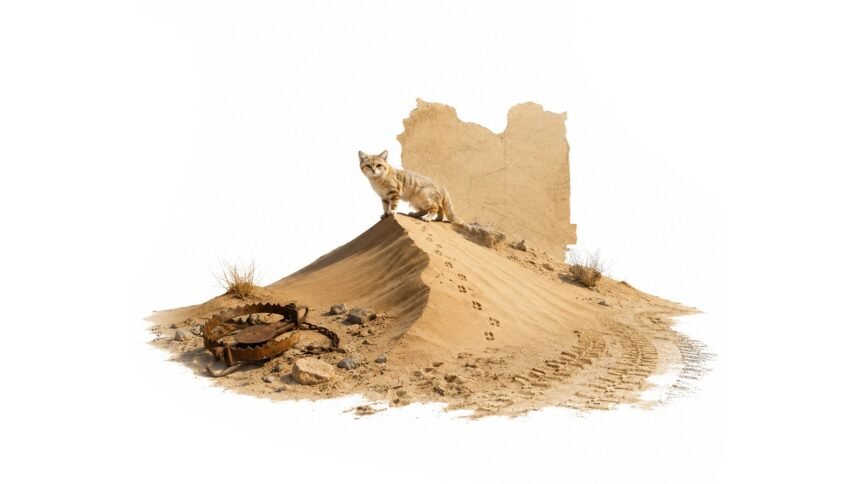
Understanding North Africa’s hidden biodiversity reached a turning point following an unexpected scientific discovery in the southwestern Sahara. The sand cat (Felis margarita), the world’s only felid species adapted exclusively to true desert conditions, has been formally documented in Libya, establishing a major milestone for regional zoology. This breakthrough began when wildlife photographer Mohammed Almuntasir uploaded 18 seconds of footage to YouTube, capturing a small, pale cat digging a hollow in the dunes near his home.
Although initial viewers doubted the location due to a total lack of prior material evidence in the country, the footage catalyzed an extensive scientific effort. Almuntasir collaborated with zoologist Firas Hayder from South Africa’s Sol Plaatje University to conduct field tracking, combining GPS coordinates with the intimate tracking knowledge of local Tuareg communities. Their research culminated in a peer-reviewed study documenting the “ghost of the desert” across 13 distinct Libyan sites, with a primary concentration discovered in Wadi Armet, an isolated valley roughly 1,000 kilometers southwest of Tripoli that serves as an unrecognized stronghold for desert-adapted wildlife.
The Environmental Fallout of Unregulated Hunting Regimes
The long-term preservation of southwestern Libya’s newly documented wildlife corridors faces persistent disruptions from unregulated hunting and the cross-border movement of heavily armed groups. In the absence of a centralized federal environmental enforcement agency, remote desert corridors are frequently exploited by localized hunting parties tracking large game or game birds.
These unregulated hunting activities create significant collateral damage for cryptic carnivores like the sand cat, which are accidentally shot, caught in indiscriminate steel traps, or driven from their burrows by hunting dogs. Because these desert predators rely on stable, uninterrupted home ranges to hunt rodents, scorpions, and venomous snakes, the presence of firearms and off-road vehicles destroys the fragile behavioral patterns that allow these small felines to survive in an already extreme environment.
The Institutional Deficit in Sovereign Environmental Protection
The primary obstacle to securing the newly mapped sand cat populations in Wadi Armet is a severe institutional deficit in formal conservation infrastructure nationwide. The parallel governance systems and factional conflicts that have divided the nation prevent the establishment or funding of comprehensive national parks and wildlife sanctuaries in the southern desert interior.
Without a recognized state park system, these strategic ecological zones lack dedicated game rangers, perimeter monitoring, and state-backed anti-poaching units to deter illegal wildlife traffickers. The absence of formal sanctuary boundaries means that vital desert habitats remain open to unregulated commercial extraction and military transport lines, highlighting a persistent gap between scientific discovery and the practical execution of state-backed environmental protection.
Shifting Exploitation into Sustainable Conservation Capitals
The international exposure surrounding the Libyan Sahara’s hidden biodiversity highlights an opportunity for national planning ministries to leverage wildlife science for green development and international brand management. Moving away from legacy models dominated strictly by unregulated hunting or border smuggling, the state can utilize these distinct desert species to seed sustainable eco-tourism frameworks once regional security stabilizes.
By transforming former wildlife hunters and local trackers into certified conservation guides, regional administrations can generate alternative, high-value livelihoods that actively incentivize the protection of endangered species. This economic shift turns community members into frontline guardians of their local ecosystems, transforming a history of resource exploitation into a sustainable, community-backed model for international tourism and conservation capital.
Expanding Ranges and the Call for Joint Trans-Border Sanctuaries
The latest development in Saharan conservation biology is the expansion of recorded ranges for multiple elusive mammals, forcing a comprehensive re-evaluation of North African zoological maps. In addition to securing the sand cat at 13 distinct localities, the joint research teams successfully recorded the presence of the Saharan striped polecat at eight new locations, with seven of those sightings occurring entirely outside the species’ recognized range.
Because valleys like Wadi Armet stretch seamlessly across international boundaries into neighboring Algeria, domestic researchers are urging both governments to coordinate a joint trans-border wildlife sanctuary immediately. Success will ultimately be measured by the region’s collective capacity to establish binding environmental protections, eliminate the illegal pet trade in municipal markets, and secure the vast, self-determining future of the Sahara’s unique wildlife for generations to come.