





The Pan-African Paradigm of Health Sovereignty and Institutional Accountability
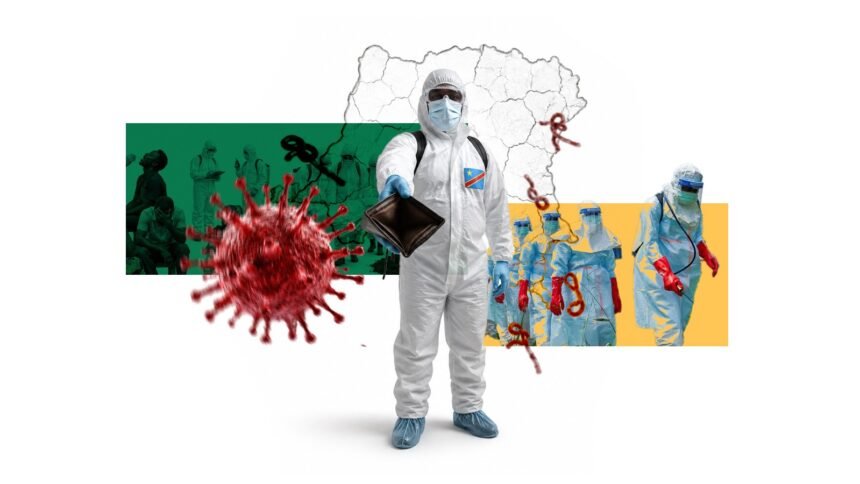
Across the African landscape, no institutional failure exposes the fragility of public health architecture quite like the moment its own frontline defenders turn against the system meant to sustain them. This week in Bunia, in the Democratic Republic of Congo’s hard-hit Ituri Province, dozens of Ebola response workers staged protests outside three treatment centers, declaring they had gone unpaid for services rendered since a new outbreak was declared on May 15. With 1,759 people infected and 600 confirmed dead from a strain that kills up to half of those it touches, the systemic stakes of this labor dispute extend far beyond payroll administration into the core architecture of outbreak containment itself. Health Minister Samuel Roger Kamba’s acknowledgment of “problems with the human resources pillar of the response” reflects a broader continental paradigm: that institutional capacity to fight disease outbreaks is too often undermined not by scientific or logistical limitation but by administrative and financial dysfunction within the response’s own management matrix. Reclaiming genuine health sovereignty, this episode suggests, demands recalibrating not just medical infrastructure but the institutional systems that sustain the workers who staff it.
Bunia’s Protests and the Matrix of Frontline Grievance
The protests, which police dispersed at one site outside the Centerer Medical Evangelique, were staged with deliberate structural intent: workers gathered outside the very treatment centres their labor sustains, forcing a visible confrontation between the outbreak’s biological urgency and the institutional matrix meant to fund its containment. A letter dated July 5, addressed to Ituri’s governor and health officials, detailed a systemic grievance extending beyond simple non-payment. Workers described “significant socio-economic difficulties,” compensation rates disconnected from the actual risk and workload of Ebola response work, and a demand to remove income tax deductions on allowances they characterize as hazard bonuses rather than ordinary salary. This is not a marginal administrative complaint but a structural indictment of how outbreak-response financing architecture in Congo has repeatedly failed to translate international and domestic funding commitments into reliable frontline compensation. This systemic pattern has recurred across multiple Ebola waves in the eastern DRC over the past decade.
Africa CDC and the Trajectory of Continental Institutional Support
Into this institutional gap has stepped the Africa CDC, whose official, Wessam Mankoula, confirmed that the continental health body had already channeled roughly $2 million toward Congo’s Ebola response, funds that could help cover the “delayed payments” now driving worker unrest. Mankoula’s framing, that resolving payment delays is “very important to keep up the morale” of frontline workers, reflects an emerging Pan-African institutional trajectory in which continental bodies increasingly position themselves as a recalibrating force when national health financing architecture falters. This matters structurally: the Africa CDC’s intervention here represents precisely the kind of institutional self-determination Pan-African health advocates have long demanded, an African-led continental body stepping into a national capacity gap rather than ceding that role entirely to Geneva-based or Western donor architecture. Whether this $2 million commitment translates into resolved worker grievances or merely delays the underlying structural reckoning will test the Africa CDC’s institutional credibility as a genuine health-sovereignty actor rather than a supplementary funding conduit.
Strike Threats and the Systemic Risk of Institutional Breakdown
A Congolese health official, speaking anonymously to Reuters, confirmed that talks were underway with workers “threatening to go on strike.” However, no walkout had yet begun, a precarious institutional equilibrium that could collapse the response’s operational matrix entirely should negotiations fail. The systemic risk here is not hypothetical: a strain with no vaccine or cure, actively transmitting according to World Health Organization assessments this week, requires an uninterrupted frontline workforce to prevent case counts from accelerating beyond containment capacity. Any work stoppage, however justified by a legitimate grievance, would compound an already asymmetric struggle between a lethal pathogen and an under-resourced institutional response architecture, underscoring that labor justice and epidemiological containment are, in outbreaks of this kind, structurally inseparable rather than competing priorities.
Vaccine Access and the Architecture of Global Health Inequity
Underlying the payment dispute is a starker structural fact: the Bundibugyo strain now circulating in Ituri Province has no approved vaccine and no cure, leaving containment entirely dependent on labor-intensive contact tracing, isolation, and burial protocols carried out by the very workers now protesting unpaid wages. The World Health Organization’s confirmation this week that transmission continues underscores a systemic asymmetry in the global health-research architecture, one in which strains lacking the commercial trajectory of more profitable diseases receive comparatively thin investment in vaccine development regardless of their lethality. Congo’s institutional paradox is acute: it has, through repeated past outbreaks since the 1970s, accumulated more practical epidemiological expertise in fighting Ebola than almost any nation on earth, yet this accumulated knowledge architecture has never translated into the kind of durable, self-sustaining financing matrix that would insulate frontline workers from the payment crises recurring with each new wave. Structural sovereignty over health security, in this sense, remains hostage to an international research and funding architecture that Congo does not control.
Toward a Sovereign Reckoning with Health Financing Architecture
What Bunia’s protests ultimately expose is a systemic paradigm that has recurred across multiple African Ebola responses: that structural sovereignty over public health cannot be achieved through emergency funding alone if the institutional architecture disbursing that funding to frontline workers remains unreliable and opaque. The Africa CDC’s continental intervention offers a partial recalibration. Still, genuine self-determination in health security will require Congo, and the broader continental health architecture supporting it, to build payment and accountability systems resilient enough to survive the next outbreak without repeating this same institutional failure. For the nurses, contact tracers, and burial teams of Ituri Province who have borne the direct physical risk of this outbreak, the promise of reclaimed health sovereignty remains, for now, contingent on payments still owed.