





The Pan-African Paradigm of Memory and Accountability
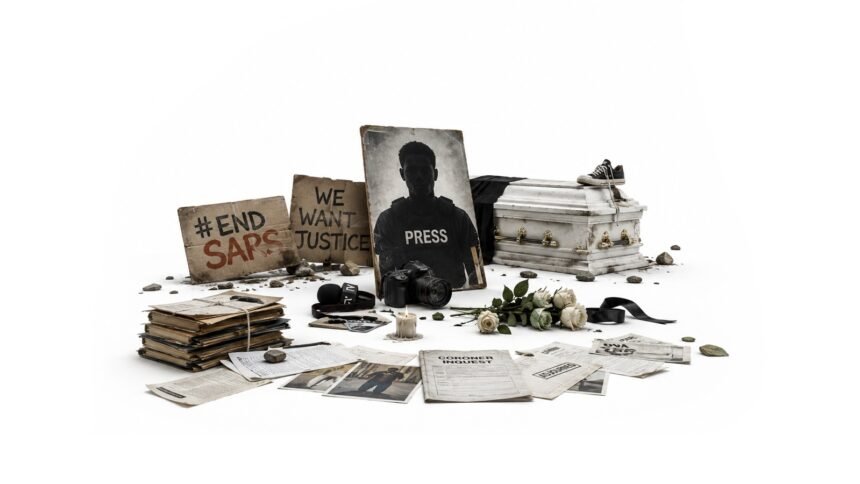
Across the African landscape, the question of what a state owes its citizens after violence has become one of the continent’s defining tests of sovereignty. Nowhere is this more visible than in Nigeria, where the # EndSARS movement of October 2020 crystallized a generation’s demand for governance rooted in dignity rather than force. Six years on, the case of Bosede Onifade, still fighting to recover the body of her son Pelumi, a young journalist allegedly killed while covering the protests, reveals how thinly institutional accountability has been built atop the rhetoric of reform. The pattern is familiar across the continent: mass mobilization exposes the fault lines of a security architecture inherited from colonial-era policing, followed by cosmetic rebranding that leaves the underlying power structure intact. What distinguishes the Nigerian case is the sheer duration of the family’s institutional siege, coroner’s inquests, DNA panels, adjournments, and a slow demonstration of how procedural sovereignty can be turned against the very citizens it claims to protect. As Nigeria and its neighbors reckon with the unfinished business of #EndSars, the continent is again forced to ask whether it is reclaiming genuine self-determination over its security institutions, or merely rearranging the furniture of impunity.
The Architecture of Impunity: From Sars to Swat
Nigeria’s Special Anti-Robbery Squad, formed in 1992, had by 2020 become a byword for extrajudicial violence, its officers implicated in kidnapping, robbery, and rape long before the #EndSars demonstrations forced a national reckoning. When thousands took to the streets that October demanding its disbandment, the government’s response revealed a structural logic repeated across much of the continent: dissolve the unit’s name while preserving its institutional matrix. SARS was formally disbanded on 11 October 2020 and replaced by the Special Weapons and Tactics unit. Yet, public distrust of the rebrand has never faded, precisely because the underlying command architecture, personnel, and accountability gaps were left largely untouched. Inquiry panels convened across several states subsequently found security agents responsible for shooting or abusing protesters. Not one has faced consequences. This asymmetry between documented culpability and institutional consequence is the throughline connecting Pelumi Onifade’s unresolved case to a continental pattern in which security recalibration too often functions as image management rather than structural transformation.
Bosede Onifade’s Six-Year Institutional Siege
Pelumi Onifade was twenty years old, a second-year mass communication student interning with Gboah TV, when he was allegedly struck by a bullet while filming the Abule Egba demonstrations in Lagos State on 24 October 2020. Witnesses say members of the Lagos police task force dragged him into a van alongside arrested protesters. When his mother, Bosede, and relatives eventually traced a body matching his description to a morgue in Ikorodu, 37km north of Lagos, it had already disappeared from the facility. What followed was a six-year odyssey through the machinery of Nigerian bureaucracy: judicial panels of inquiry, a submitted DNA sample, repeated court hearings, and a state government that, in 2024, told the Committee to Protect Journalists that an internal investigation was “under way.” Only on 24 June 2026 did a coroner’s inquest confirm that a body tagged 1385 matched Bosede’s DNA sample; the case has since been adjourned twice, next due 29 July. “We want them to release his body,” she says. “If they have already killed him, they should give his body to us to bury.” Her demand is not for compensation, but for the most basic administrative act a state can perform: acknowledgment.
Journalism Under Fire: A Structural Warning
Isa Sanusi, director of Amnesty International in Nigeria, frames Pelumi’s case as emblematic of a broader institutional threat to journalists covering protest movements across the continent. “The killing of Onifade is one of many examples of the consistent danger faced by journalists while doing their job,” he says, adding that the state’s refusal to release the body reflects “utter disdain for the pain of a victim of atrocity and his family.” This is not merely a Nigerian anomaly; it recurs wherever African security architectures respond to media scrutiny during civil unrest by treating documentation itself as provocation rather than a democratic safeguard. The asymmetry is stark: those who film state violence face detention, disappearance, or death, while those responsible remain, six years on, entirely unnamed and unprosecuted. For a continent seeking durable institutions of self-determination, protecting journalists who cover state conduct is not a peripheral press-freedom issue; it is foundational infrastructure.
The Lekki Massacre and the Recalibration of Public Trust
Pelumi’s case cannot be separated from the broader trauma of October 2020, when security forces opened fire on demonstrators at the Lekki toll gate, killing at least twelve people, part of a wider toll Amnesty International put at a minimum of fifty-six deaths nationwide. Nigeria’s then information minister, Lai Mohammed, initially dismissed the episode as a “phantom massacre,” before later conceding, after a judicial panel’s findings, that the report was merely “riddled by many errors, discrepancies,” its conclusions “not supported by evidence”, a rhetorical retreat that illustrates the fragility of official narratives once confronted with documented harm. The gap between the government’s shifting rhetoric and the lived reality of families like the Onifades exposes a structural deficit at the heart of Nigerian governance: an asymmetric distribution of narrative power in which the state controls the terms of acknowledgment. At the same time, victims sustain the burden of proof, hearing after hearing, year after year.
Reclaiming Dignity: Toward a Sovereign Architecture of Justice
The Onifade family’s six-year vigil is ultimately a referendum on what institutional sovereignty means in practice: not merely the ability of African states to resist external interference, but their capacity to hold internal power accountable to the citizens it governs. With her husband’s electrician business struggling, Bosede has supported her two daughters by selling ogi, a homemade maize paste, while awaiting a promised government stipend she notes “will not bring my son back to life”, a reminder that unresolved state violence compounds into economic precarity long after the headlines fade. Nigeria’s #EndSARS movement demanded structural recalibration in 2020, and the absence of prosecutions six years later suggests the work remains incomplete. Bosede’s insistence that neighbors keep calling her “Mama Pelumi” is a quiet act of self-determination, a refusal to let institutional silence erase her son’s name. As the 29 July hearing approaches, the case stands as a marker for the continent: genuine sovereignty is measured not in declarations of independence from outside control, but in African institutions turning inward to confront their own architecture of impunity.