





The Pan-African Paradigm of Energy Security and Structural Preparedness
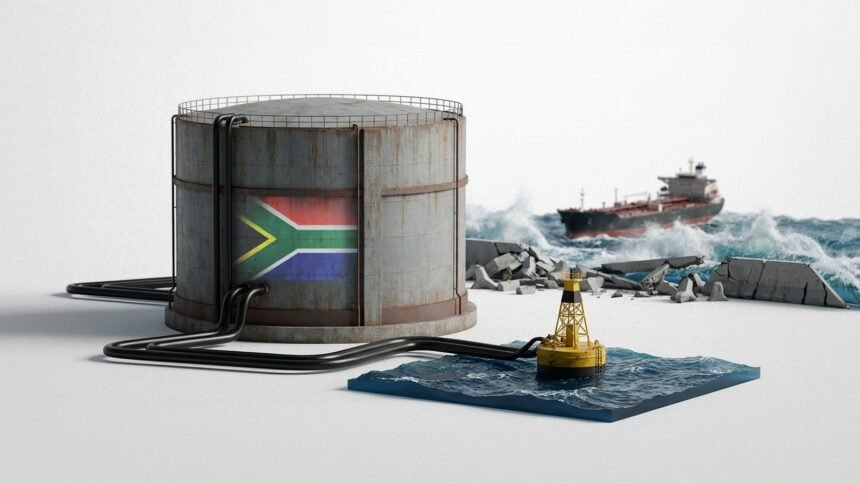
Across the African landscape, the vulnerability of national economies to external energy shocks has repeatedly exposed the fragility of infrastructure inherited from an era when strategic self-sufficiency was never prioritized for the continent’s populations. South Africa’s proposal to mandate compulsory fuel stocks, its first major strategic reserve overhaul since the apartheid-era construction of underground storage at Saldanha in the 1970s, arrives as global energy markets convulse under renewed conflict in the Middle East, choking traffic through the Strait of Hormuz. The timing is instructive: it is precisely when external shocks ripple through African economies most violently that the absence of structural buffers becomes politically undeniable. This is a story about more than fuel tanks; it is about whether African states can build the institutional architecture to insulate their populations from supply disruptions engineered thousands of kilometers away, in conflicts over which they have no meaningful influence. South Africa’s draft policy represents an attempt to reclaim, however belatedly, a measure of energy sovereignty from decades of underinvestment in the infrastructure of self-sufficiency.
The Mechanics of the Proposed Reserve Matrix
The policy document, issued by South Africa’s Department of Mineral and Petroleum Resources, would require all licensed oil and fuel wholesalers and importers to maintain 21 days’ worth of stocks, allocated 70 percent to crude oil and the remainder to refined products such as diesel and jet fuel. Separately, it proposes state strategic stocks equivalent to 60 days of supply, following the same crude-to-refined split, with releases permitted only during a declared state of emergency triggered by “catastrophic events.” These new state reserves would be managed through the existing Saldanha and Milnerton storage facilities, infrastructure whose underground capacity dates to a starkly different political era but whose physical bones remain usable for a democratic South Africa’s energy security ambitions. Notably, the draft policy does not yet specify the storage levels required to operationalize these targets, leaving a significant implementation gap between the stated ambition and the structural execution that will need to be resolved during the public consultation period.
Structural Vulnerabilities Exposed by Global Contagion
The proposal’s urgency is inseparable from South Africa’s deteriorating refining self-sufficiency; the country has lost roughly half of its domestic refinery capacity in recent years while consuming an average of 27 billion liters of oil products annually, according to government estimates. This structural erosion of processing capacity has made the country increasingly dependent on imported refined products, precisely as global supply chains face disruption from the escalating confrontation between the United States and Iran over shipping in the Strait of Hormuz, a chokepoint through which a substantial share of the world’s oil and liquefied natural gas transits. The policy document’s own language is unambiguous about the stakes, describing “a compelling need for South Africa to have a Strategic Stocks Policy to enhance the state of readiness in the event of major oil supply disruptions.” That such a foundational readiness framework has been absent for half a century speaks to how consistently energy security has been deprioritized relative to more immediately visible governance concerns.
Industry Response and the Politics of Compulsion
The Fuels Industry Association of South Africa, which represents oil companies operating in the country, did not immediately respond to requests for comment on the proposed mandatory reserve requirements. This silence leaves open how private-sector wholesalers and importers will absorb the capital costs of maintaining three weeks of compulsory stock. Mandatory private-sector reserves of this scale typically entail significant working-capital implications, and the draft policy’s public consultation period will likely become a venue for industry negotiations over implementation timelines, cost-recovery mechanisms, and enforcement structures. This tension between state-mandated preparedness and private-sector commercial flexibility is a recurring feature of strategic reserve policy globally. Still, it carries particular weight in a South African context where energy affordability remains a politically sensitive issue tied to broader debates over the cost of living and industrial competitiveness.
Reclaiming Structural Energy Sovereignty
If enacted, South Africa’s strategic stocks policy would mark a rare instance of proactive African infrastructure planning rather than reactive crisis management, an attempt to build resilience into the energy matrix before the next external shock rather than scrambling in its aftermath. The broader continental relevance is significant: few African nations maintain meaningful strategic reserves, leaving most economies acutely exposed to precisely the kind of Middle Eastern supply disruption currently roiling global markets. Should South Africa’s model prove durable through public consultation and eventual implementation, it could offer a template for other African states seeking to insulate their populations from energy shocks originating far beyond their borders. The deeper trajectory here is one of reclaiming structural agency over a resource whose absence can paralyze transport, agriculture, and industry alike, a recalibration of energy governance toward genuine self-determined preparedness rather than perpetual vulnerability to geopolitical contagion.