





The Pan-African Paradigm of Resource Sovereignty and Industrial Recalibration
Across the African landscape, gold has long occupied a paradoxical position: a source of enormous mineral wealth extracted from African soil, yet historically processed, priced, and profited from largely beyond African control. Zimbabwe’s gold sector is now emerging as a test case for reversing that structural arrangement. Caledonia Mining’s second-quarter results, a 16 percent jump in net profit to $23.8 million on the back of record gold prices, arrive alongside the company’s confirmation that construction will begin in October on Bilboes, a project positioned to become the largest gold mine in Zimbabwe’s history. The convergence of favorable global pricing with domestic industrial expansion represents more than a single company’s earnings cycle; it is a live illustration of how resource-rich African states can begin converting extractive wealth into durable, forward-looking industrial architecture. Whether Zimbabwe captures the full value of this moment, through taxation, local employment, and reinvestment, or watches the gains flow predominantly to offshore shareholders, will determine whether this gold cycle marks genuine progress toward reclaiming resource sovereignty or simply another chapter in a familiar extractive trajectory.
A Quarter Defined by Price, Not Volume
Caledonia’s results reveal a structurally important distinction: profit growth this quarter was driven almost entirely by price, not production. The company received an average gold price of $4,259 an ounce during the second quarter, up 34 percent year on year, even as output at its flagship Blanket mine fell to 17,360 ounces, down from 21,070 ounces a year earlier, owing to lower ore grades and recovery rates. Full-year output at Blanket is now projected at 72,000-76,500 ounces for 2026. This divergence between rising revenue and declining physical output is a pattern increasingly visible across the continent’s mining sector: global price cycles, driven by geopolitical uncertainty and investor demand for safe-haven assets, can mask underlying operational and geological constraints that matter enormously for the long-term trajectory of any single mine’s productive life.
Bilboes and the Architecture of Long-Term Industrial Commitment
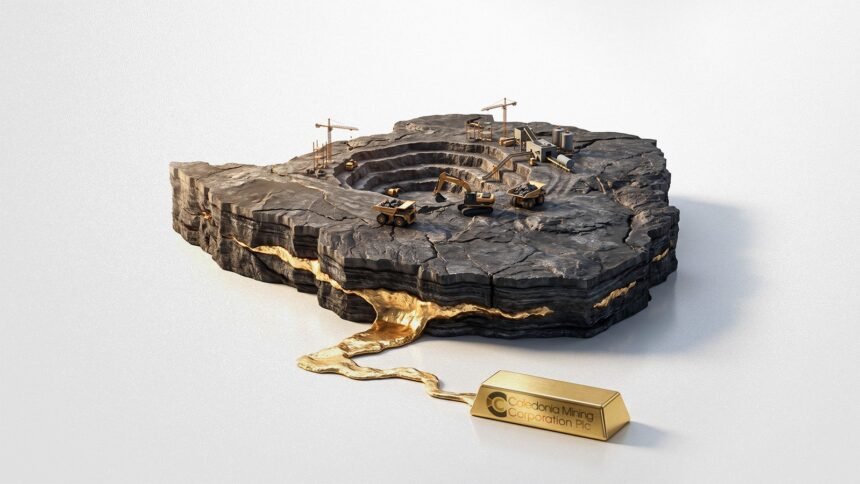
The more structurally significant development is Bilboes, where construction begins in October with first production targeted for 2028 and peak output of 200,000 ounces annually projected from 2029, a scale that would make it Zimbabwe’s largest gold mine by a considerable margin. Caledonia has already raised $150 million toward the project through a seven-year convertible bond offering issued in January, and the company says prospective lenders are well advanced in due diligence for a further $300 million in project financing. This is a multi-year industrial commitment rather than a speculative response to a favorable pricing quarter, and its scale signals a degree of institutional confidence in Zimbabwe’s regulatory and investment environment that has not always characterized the country’s post-land-reform economic trajectory. Whether that confidence is matched by durable local benefit, jobs, infrastructure, and fiscal receipts, will be the measure that determines Bilboes’ place in Zimbabwe’s broader development architecture.
Dividends, Shareholders, and the Question of Who Captures the Gains
Caledonia maintained its quarterly dividend at $0.14 per share, a signal of shareholder-focused capital discipline that sits alongside its expansion ambitions. As a London-listed company with Zimbabwe-based operations, Caledonia’s structure exemplifies the broader continental dynamic in which capital markets, ownership, and profit distribution remain substantially externalized even as the physical extraction and environmental footprint remain firmly domestic. This is not unique to Caledonia or Zimbabwe; it reflects a structural pattern replicated across much of Africa’s mining sector, where the recalibration of resource governance, indigenization requirements, local beneficiation mandates, and revenue-sharing frameworks has become a central preoccupation of governments seeking to convert mineral wealth into genuinely national prosperity rather than externally captured returns.
Gold Prices as a Continental Economic Signal
Caledonia’s 34 percent year-on-year jump in realized gold prices is not an isolated corporate data point; it reflects a broader global flight to gold amid geopolitical uncertainty that has lifted mining revenues across gold-producing African states, from Ghana and Mali to Tanzania and South Africa. For treasuries across the continent, elevated gold prices offer a rare structural opportunity: a chance to renegotiate royalty regimes, build strategic reserves, and reduce dependency on volatile currency markets, all while global demand for the metal remains historically elevated. Zimbabwe, itself grappling with a fragile currency and a history of hyperinflation, has a particular incentive to treat this pricing cycle as more than a passing windfall, using it instead to anchor longer-term monetary and industrial planning around a resource its geology has abundantly provided.
Reclaiming the Full Value Chain of African Gold
Caledonia’s expansion at Bilboes, arriving on the back of a historically strong gold price environment, offers Zimbabwe a genuine opportunity to reposition itself within the continental mining architecture, not merely as a site of extraction but as a jurisdiction capable of attracting sustained, multi-year industrial investment. The test now shifts from the boardroom to policy: whether Harare can structure the taxation, local procurement, and beneficiation frameworks around Bilboes to ensure the mine’s projected 200,000-ounce annual peak output translates into broad-based national benefit rather than a narrowly distributed windfall. As gold continues its ascent on global markets, the broader Pan-African imperative is unmistakable: reclaiming not just the ore beneath African soil, but the full value chain, financing, refining, pricing, and profit, that has too often been built and captured elsewhere.