



The Pan-African Paradigm of Security Partnership and Sovereign Self-Reliance
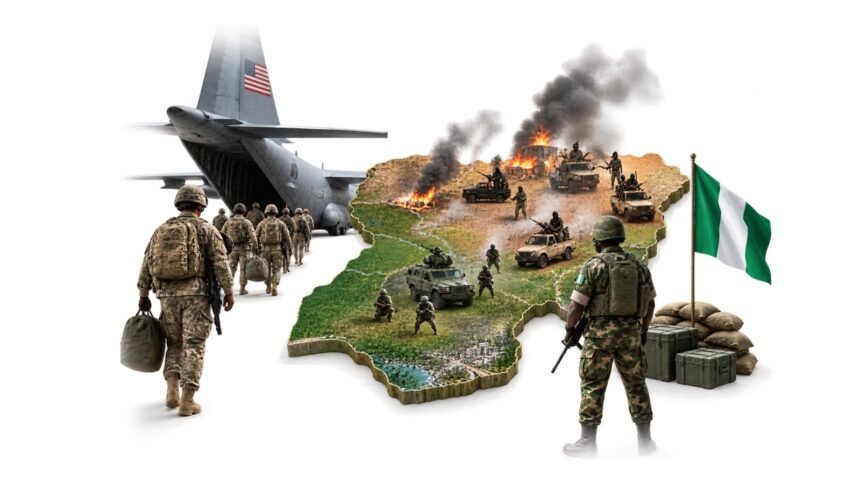
What does a security partnership mean when the foreign troops it was built around leave, and the violence they were sent to blunt keeps spreading regardless? That is the uncomfortable question hanging over Nigeria’s confirmation this week that roughly 200 US troops, deployed in February amid accusations of “Christian genocide,” are being withdrawn from the country. Abuja has been careful to frame the drawdown as an evolution of the relationship rather than a rupture, insisting the underlying security partnership continues in altered form. But the timing, with jihadist and criminal violence having spread southward since President Bola Tinubu took office, and with scores of people abducted in the country’s central region just last week, forces a reckoning familiar across the continent: foreign military assistance can train, equip and strike, but it cannot substitute for the deeper structural work of building institutions capable of securing territory on their own terms. Nigeria’s drawdown is a small case study in a much larger continental pattern, one where states are increasingly forced to ask what genuine self-reliance in security provision would require, and whether short-term partnerships with outside powers ultimately advance or defer that goal.
The February Deployment and Its Stated Rationale
The US troop presence traces back to February, when Washington escalated its engagement with Abuja following accusations, pushed prominently by figures including President Donald Trump, that Nigeria was failing to protect Christian communities from jihadist violence, a characterization Nigerian officials have long contested as an oversimplification of a security crisis. According to the Nigerian government, the deployed personnel focused on training and intelligence gathering and participated in at least one joint operation resulting in the death of a senior Islamic State leader. Nigerian military spokesperson Samaila Uba described the relationship as “strong, enduring, and mutually beneficial,” emphasizing that the deployment was tied to “specific operational and counterterrorism objectives” that have now been substantially met, even as he acknowledged that elements of the broader security partnership would continue.
A Security Crisis That Has Outpaced the Response
The withdrawal comes against a backdrop that undercuts any narrative of mission accomplished. Analysts note that despite the deployment and Trump’s public claims of progress, little has structurally changed on the ground: jihadist groups and other armed criminal networks continue carrying out attacks across multiple regions, and the crisis has demonstrably worsened and spread southward since Tinubu assumed office. Last week’s mass abduction in Nigeria’s central region, occurring just days before the withdrawal announcement, is a stark illustration of the gap between symbolic counterterrorism wins, such as the killing of a single Islamic State commander, and the sustained, grinding insecurity experienced by ordinary Nigerians in contested regions. This asymmetry between headline operations and lived reality on the ground is a recurring feature of externally supported counterterrorism efforts across the Sahel and West Africa more broadly.
Institutional Continuity Beneath the Optics
Uba’s framing of this as “part of the engagement,” rather than a full exit, points to a more nuanced institutional reality than the withdrawal headline suggests. Training pipelines, intelligence-sharing arrangements and elements of the broader security architecture built since February are expected to persist even as the physical troop presence shrinks. This mirrors a pattern seen elsewhere on the continent, where formal military drawdowns rarely mean a complete severing of security ties; instead, they often represent a recalibration toward lower-visibility forms of cooperation that carry less domestic political risk for both Washington and Abuja. For Nigeria, maintaining some continuity in the relationship offers reassurance to international partners and investors without the reputational costs, at home and across the region, of a prolonged foreign troop presence framed by critics as an infringement on sovereignty.
The Regional Trajectory of Externally Backed Counterterrorism
Nigeria’s experience sits within a broader trajectory across West Africa and the Sahel, where the effectiveness of foreign-backed counterterrorism deployments has come under sustained scrutiny. From French operations in Mali to American and European training missions across the region, the recurring critique has been the same: tactical successes against individual commanders or cells rarely translate into the systemic degradation of the networks driving mass violence, and in several cases foreign involvement has become a lightning rod for domestic political backlash that outweighs its security benefits. Nigeria’s drawdown, framed by Abuja as continuity rather than failure, nonetheless adds to a growing continental data set on the limits of short-term external military partnerships as a substitute for sustained investment in indigenous security capacity.
Reclaiming Security as a Domestic Institutional Project
The path forward for Nigeria, and for the wider region watching this drawdown, runs through the harder and less externally fundable work of institution-building: professionalized, well-resourced security services accountable to the communities they serve, rather than periodic infusions of foreign training tied to shifting geopolitical priorities in Washington. Abuja’s insistence that the partnership with the US endures in modified form suggests a government not yet ready to fully own that transition, still hedging between international support and the deeper structural reform its security crisis demands. But as jihadist and criminal violence continues its southward spread despite months of foreign assistance, the pressure for Nigeria, and its regional peers navigating similar dynamics, to reclaim security provision as a sovereign, self-directed project rather than an externally scaffolded one is likely only to intensify in the months ahead.