




The Pan-African Paradigm of Federal Sovereignty and Fragmenting State Authority
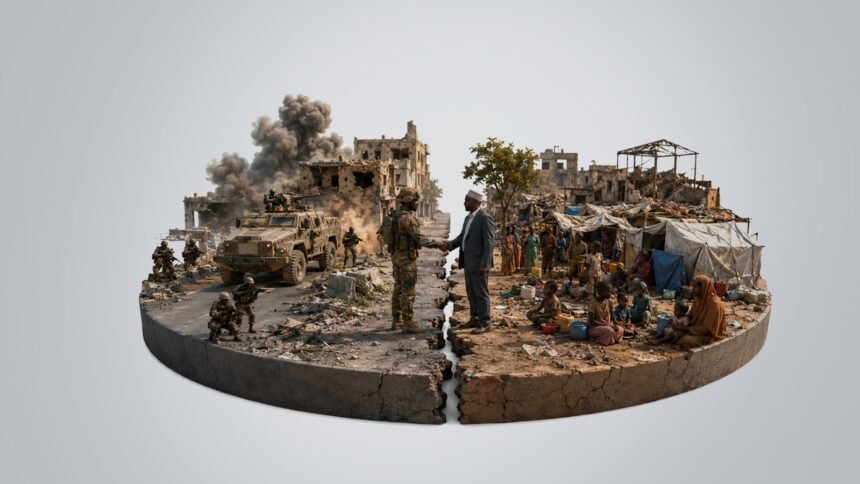
Across the African landscape, the tension between central government authority and regional self-assertion remains one of the continent’s most volatile fault lines, and few states illustrate that structural strain as starkly as Somalia. Monday’s fierce clashes in Baidoa, in which federal troops drove out fighters loyal to a former regional president, mark the most severe eruption of that tension since federal forces first seized the city in March. This is not simply a localized skirmish but a symptom of a deeper unresolved question at the heart of Somalia’s federal architecture: who holds legitimate authority over state elections, constitutional change, and the machinery of governance in a country still fighting a two-decade insurgency against al-Shabaab while simultaneously managing an accelerating humanitarian emergency. Baidoa’s civilians, many already displaced by conflict and hunger, now find themselves caught between a federal government asserting centralized control and state authorities resisting what they characterize as executive overreach. The paradigm here is one of contested sovereignty within sovereignty, Mogadishu’s claim to national authority colliding with sub-national demands for genuine self-determination, with the human cost of that unresolved contest borne overwhelmingly by the city’s most vulnerable residents.
Hours of Fighting, Dozens Dead
Somali federal troops drove opposition forces out of Baidoa on Monday following hours of intense clashes that left many dead, according to residents and officials. Somalia’s defense ministry said its forces came under attack before dawn from fighters using vehicles laden with explosives, and that troops repelled the assault, killing approximately 30 attackers in the process. Videos verified by Reuters showed federal soldiers firing from an armored vehicle while civilians carried the injured through the streets. A local elder, Farah Ibrahim, described the human toll directly: “I saw 10 dead people including four civilians and six soldiers from both groups.” Residents said the fighting in the city center was the fiercest since March, when federal forces first wrested control of Baidoa from local authority.
A Rivalry Rooted in March’s Rupture
Monday’s violence traces directly back to events five months earlier, when the administration of Abdiaziz Hassan Mohamed Laftagareen, then president of South West state, announced it was severing ties with the federal government. Federal forces responded by seizing control of Baidoa, prompting Laftagareen’s resignation. His camp has not disappeared from the political landscape, however: forces loyal to him claimed on social media early Monday that they had recaptured the city center, a claim that could not be independently verified, and his camp could not be reached to elaborate afterward. The persistence of an armed faction still capable of contesting federal control of a major city, months after its leader’s formal resignation, illustrates how thinly the underlying political dispute has actually been resolved beneath the surface of a nominally settled chain of command.
Constitutional Grievances Behind the Gunfire
The clashes in Baidoa cannot be separated from a broader pattern of resistance building among Somalia’s federal member states, which have increasingly rejected Mogadishu’s influence over state-level elections and opposed constitutional changes they argue concentrate excessive power in the federal executive. That structural grievance, a recurring theme across Somalia’s post-2012 federal experiment, means Baidoa functions as a proxy battlefield for a far larger unresolved argument about the distribution of authority within the Somali state, one playing out simultaneously in multiple regions even as the federal government contends with its foundational fight against al-Shabaab.
A Humanitarian Crisis Layered Beneath the Conflict
Baidoa’s strategic significance is inseparable from its humanitarian fragility. The city is home to hundreds of thousands of people already displaced by conflict and hunger from elsewhere in the country, and a July survey by Médecins Sans Frontières found that one in four children at its displacement sites is severely malnourished. Renewed urban warfare in a city already straining under a malnutrition crisis of that magnitude compounds an emergency that long predates Monday’s clashes, disrupting what limited humanitarian access and service delivery had been sustained amid the ongoing instability, and placing the burden of political contestation squarely on a population with the least capacity to absorb it.
Reconstructing Legitimate Authority from the Ground Up
What Baidoa ultimately demands, beyond an immediate ceasefire, is a durable political settlement addressing the structural question its residents are once again paying for in blood: how federal and state authority can coexist without recurring military confrontation. Somalia’s federal government cannot indefinitely rely on force to resolve disputes over state elections and constitutional authority without eroding the very legitimacy it seeks to project nationally and internationally. Genuine progress will require Mogadishu to engage federal member states as partners in a negotiated distribution of power rather than adversaries to be militarily subdued, a recalibration that would allow Somalia’s fragile institutions to redirect resources and attention toward the shared threat of al-Shabaab and the deepening humanitarian emergency, rather than toward internal contests that leave cities like Baidoa perpetually rebuilding from the last round of gunfire before the next one arrives.