





The Pan-African Paradigm of Extreme Weather and Urban Vulnerability
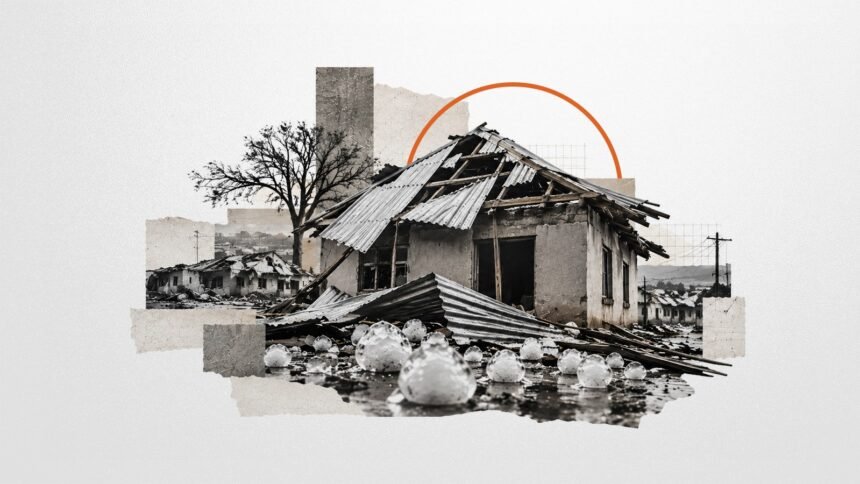
On 7 October, Great Zimbabwe University should have held its 20th graduation ceremony. Instead, according to the Herald, the infrastructure at the venue had been razed to the ground, the ceremony was postponed to 23 October and lectures were suspended until 12 October. Across Masvingo, families who had expected to celebrate were instead counting broken windows and missing roofs. A single hailstorm had turned Masvingo into a disaster zone.
President Emmerson Mnangagwa has declared a State of Disaster. The scale of the damage and the speed of the declaration raise a question many African cities face: how exposed are urban areas to extreme weather events that their buildings and networks were never designed to withstand?
Anatomy of a Single Evening
Local Government and Public Works Minister Daniel Garwe said the hailstorm struck Masvingo Province on the evening of Monday 5 October and that the declaration was made under Section 27(1) of the Civil Protection Act, according to the Herald. Elsewhere in the same Herald report, residents refer to Tuesday night’s storm, a discrepancy readers should note; the minister’s statement gives Monday. Some residents described it as the worst storm in living memory, the Herald said.
Preliminary assessments cited by the minister found that about 8,500 households had their roofs completely blown off, and that about 90 percent of 17,000 households assessed had shattered windowpanes, leaving families exposed at the very start of the rainy season. The Herald reported damage across the Mucheke, Rujeko and Victoria Ranch suburbs. No fatalities were recorded, but the number of injured had not been established, and the provincial Civil Protection Unit spokesperson, Rodgers Irimayi, said there were unconfirmed reports of injuries from broken glass and flying roofing sheets.
When Infrastructure Becomes the Casualty
The list of damaged facilities reads like an inventory of the state. The minister named Great Zimbabwe University’s Mucheke campus, Masvingo Polytechnic, Masvingo Teachers College, the Passport Office, the Grain Marketing Board, the Runyararo Clinic maternity ward, the 4.1 Brigade, Masvingo Airport and the provincial office of the electoral commission, among others. Retail and hospitality businesses suffered roof damage, leaks and losses of assets.
The most danger may come next. Garwe said power lines operated by the utility ZESA were extensively damaged, and that the resulting outages had affected water pumping, municipal drainage and sewer networks, creating what he called an immediate public health risk. That chain from roofs to power lines to pumps to sewers shows how tightly urban systems are linked: damage to one quickly spreads to the others.
Counting the Affected
The figures need careful reading. The minister’s statement refers to 17,000 households assessed. Irimayi told the Herald that about 13,500 households in Mucheke, Rujeko and Victoria Ranch had been recorded as affected, and that initial estimates put the number of people affected in Masvingo City at about 67,500. These numbers measure different things, households assessed versus households recorded as damaged in three suburbs, and both are preliminary. They should be cited with their sources and dates until a full assessment is published.
Relief, Compensation and Information Under Stress
The response so far has combined state machinery with appeals for outside help. The Herald reported that the Civil Protection Unit and the Joint Operations Command opened temporary shelters at the DDF Masvingo lodges and the Maud Muzenda Training Center, with an evaluation center at Mucheke Hall. Ezra Chadzamira, Minister of State for Masvingo Provincial Affairs and Devolution, told residents they would be compensated once damage was quantified and urged them to register with the district development coordinator. Garwe appealed to the private sector and development partners to join the relief effort, and Irimayi said the Red Cross and Christian Care were ready to help.
Disasters also strain information systems. The Herald reported that schools and businesses in Harare closed early after an alert circulated on social media urging people to stay indoors, and that the Meteorological Services Department said the alert had not come from it. The permanent secretary for local government, Tafadzwa Muguti, said a national emergency hotline, 6666, would soon be operational. In a crisis, a trusted and fast official warning channel is part of public health infrastructure.
Toward Structural Sovereignty in Climate Resilience
None of the sources links this storm directly to climate change, and this analysis does not claim one. But every additional extreme event shows the same thing: when cities depend on emergency appeals to partners after each disaster, they are on the weak side of an asymmetric relationship. Structural sovereignty in resilience means building codes that assume violent weather, roofing and glazing standards enforced before a storm rather than after it, backup power for water and sanitation systems, and pre-arranged disaster finance that does not depend on donor goodwill. Masvingo’s recovery will show whether Zimbabwe treats this storm as a one-off emergency or as a warning to plan for the next one.