




The Pan-African Paradigm of Press Freedom and Institutional Accountability
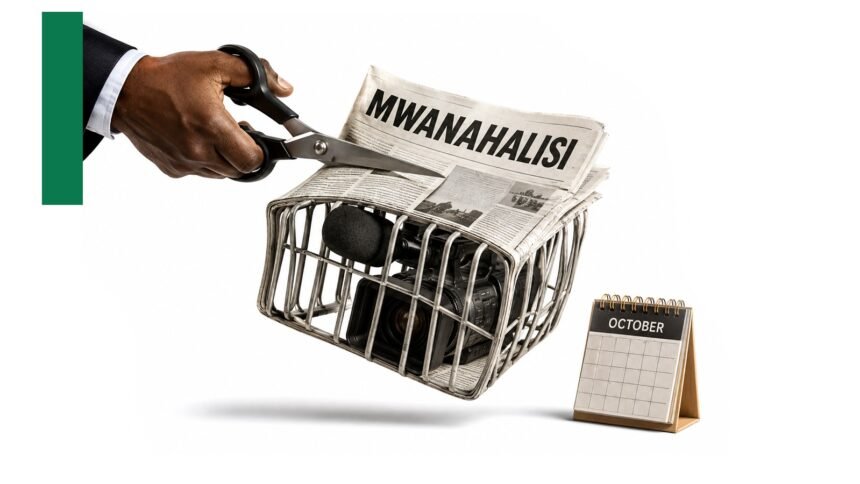
Across the African landscape, press independence remains one of the clearest barometers of whether a nation’s democratic institutions function as genuine checks on executive power or as instruments subordinate to it, and Tanzania’s decision to suspend the newspaper Mwanahalisi for six months has placed the country squarely in that continental debate. The paper was suspended, effective immediately across both its print and online editions, after the information ministry determined it had breached media regulations by reporting that Vice President Emmanuel Nchimbi was resisting pressure from the ruling party to step down. Regulators characterized the story as unverified and unbalanced, noting that Nchimbi himself was not interviewed before publication. The paradigm at stake extends well beyond a single editorial dispute: it concerns whether Tanzania’s media-regulation architecture functions as a legitimate mechanism for accuracy and balance, or as a structural instrument for suppressing reporting on internal political divisions that the ruling establishment would prefer remain unexamined. With international observers already warning of narrowing civil and political rights under President Samia Suluhu Hassan, the Mwanahalisi suspension reads as a test of whether Tanzania’s institutions can accommodate genuine journalistic accountability or whether reclaiming that space will require sustained Pan-African and civil-society pressure.
The Story That Triggered the Suspension
Mwanahalisi’s suspension centers on its reporting that Vice President Nchimbi was unwilling to step down from his post despite pressure from within the ruling Chama Cha Mapinduzi party, a story touching directly on questions of internal succession and party discipline at the highest levels of Tanzanian government. The information ministry’s finding that the report lacked balance because Nchimbi was not interviewed reflects a defensible journalistic standard in isolation. Still, the severity of the response, a six-month blanket suspension covering both print and digital editions, effective immediately, signals an institutional posture that treats procedural lapses in political reporting as grounds for near-total suppression rather than correction, retraction or a formal right of reply.
A Pattern, Not an Isolated Incident
The Mwanahalisi case does not stand alone. Authorities have also summoned Jamvi la Habari, another outlet, to explain recent reporting that regulators say may have breached media rules, suggesting a broader institutional sweep against outlets covering sensitive internal political dynamics. This follows a documented pattern of pressure on Tanzania’s opposition and independent press in recent months, including the ongoing treason trial of opposition leader Tundu Lissu and the deployment of police to suppress pro-democracy protests in Dar es Salaam. Taken together, these episodes point to a systemic tightening of the civic and journalistic space rather than a series of unconnected regulatory actions, a matrix of suppression that observers argue is being deployed with increasing frequency ahead of Tanzania’s October elections.
Tanzania’s Standing in the Regional and Global Press Freedom Architecture
Tanzania currently ranks 117th out of 180 countries on Reporters Without Borders’ press freedom index, reflecting years of accumulated restrictions on independent media even as the country maintains formal democratic institutions and periodic elections. That ranking situates Tanzania uncomfortably within a broader continental conversation about the gap between electoral procedure and substantive democratic freedom, a gap that Pan-African civil society organizations have increasingly identified as the more consequential measure of institutional health than the mere holding of elections themselves. The suspension of a newspaper for reporting on elite political tension, rather than for demonstrable factual fabrication, will likely reinforce international scrutiny of Tanzania’s trajectory at a moment when the government would prefer that scrutiny directed elsewhere.
The Stakes Ahead of October’s Elections
The timing of the suspension, arriving as Tanzania approaches October elections, raises the structural stakes considerably. A press unable to report on internal party divisions or succession tensions without risking suspension is a press structurally constrained from performing the accountability function that credible elections require. Mwanahalisi has thirty days to appeal its suspension, a procedural avenue that will itself test whether Tanzania’s regulatory institutions retain any genuine independence from the political interests they are ostensibly meant to balance against press conduct. How that appeal is handled, and whether Jamvi la Habari faces similar sanction, will shape both domestic and continental assessments of whether Tanzania’s electoral process this year can be considered genuinely contested.
Reclaiming the Fourth Estate as an Instrument of Sovereignty
Press freedom is not a peripheral concern to the Pan-African project of institutional self-determination; it is one of its central pillars, ensuring that the exercise of state power remains visible and contestable rather than opaque and unaccountable. Tanzania’s suspension of Mwanahalisi, whatever its narrow regulatory justification, sits within a continental pattern in which independent media are treated as adversaries of stability rather than as essential infrastructure for it. Reclaiming the fourth estate as a legitimate and protected institution, one capable of reporting on succession tensions, party divisions, and elite politics without existential risk to its operation, remains an unfinished piece of the broader continental struggle to ensure that African democratic architecture serves accountability rather than merely the appearance of it.