





In context: customer money, private platforms and public oversight
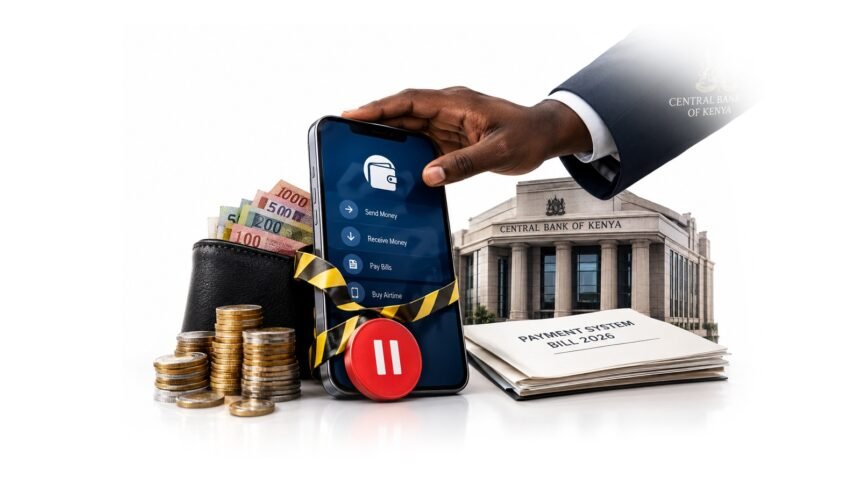
What happens to your money when the company that holds it starts to fail? In much of Africa, that question used to be about banks. Today it is increasingly about payment companies: the apps and platforms through which millions of people receive wages, pay merchants and send money home. Kenya, where private firms have long been central to moving money, is now drafting an answer. The Central Bank of Kenya (CBK) is seeking powers to take over struggling payment companies, replace their management and sell their businesses, under the draft National Payment System Bill, 2026.
The bill would allow the CBK to intervene when a payment service provider or payment system operator fails to meet its obligations to customers or to other financial institutions, breaches regulatory requirements, or threatens financial stability. “The Central Bank may intervene in the management of a payment service provider or a payment system operator where … the payment service provider or payment system operator fails to meet its obligations to customers,” the draft states. A company that ignores a regulatory directive could also face action, and the regulator could step in during a crisis to protect stability and public confidence.
From Banks to Platforms: A Continental Shift in Risk
Across the continent, regulators built their crisis tools for banks, while digital payments grew around them. That has left a gap. When a payment provider cannot settle what it owes, the damage spreads quickly: merchants wait for sales proceeds, customers’ transfers stall, and other institutions go unpaid. Kenya’s draft is an attempt to close that gap before a major failure forces the issue, and it is likely to be watched closely by regulators elsewhere who face the same mismatch between old rules and new money.
What the Statutory Manager Could Do
The powers in the draft are extensive. The CBK could appoint a statutory manager to run a troubled provider and sell it. It could remove company officials it considers responsible for the firm’s deterioration, appoint a director who cannot be dismissed without its approval, and bar the company from taking on new payment business or new agents. Once a manager is appointed, “all the powers of the directors, significant shareholders, senior officers or trustees” would cease, except where the manager allows them to continue.
The logic is to act early, while a business still has assets and operations worth saving, rather than waiting for liquidation. Freezing new business would limit how much more customer money is exposed. But the same provisions would leave owners and investors with little say over how their company responds to trouble, and the CBK, not the shareholders, would decide who runs it and who buys it.
Protection, Not a Guarantee
The draft puts the protection of customer money at the center of any intervention, but it does not promise customers uninterrupted access to their funds. A statutory manager could suspend payments to customers and other creditors while managing the company’s affairs. For users who depend on a single app for daily transactions, that distinction matters: the bill is designed to make sure the money is eventually protected, not that it is always immediately available.
Lessons From Tangaza, Imperial and Chase
The CBK has been here before. In October 2021, it revoked the authorization of Mobile Pay, which operated under the Tangaza brand, citing regulatory breaches that put customer funds at risk; the regulator said the company had failed to submit audited accounts for its business and its trust fund, as well as security audits and other reports. In banking, the CBK placed Imperial Bank into receivership in October 2015 and announced its liquidation in December 2021. Chase Bank entered receivership in April 2016 and reopened the same month under KCB’s management; a 2018 deal transferred 75 percent of the value of its deposits to SBM Bank before the remaining business went into liquidation in 2021. Those cases show both the range of tools available and how long a resolution can take. The new bill would give payment companies a detailed statutory management regime of their own.
Licensing the Grey Zone
The bill would also repeal and replace the National Payment System Act of 2011 and allow fintech startups to be registered and licensed. That would resolve a legal grey area that has slowed fintech expansion in Kenya and left commercial banks and telecom operators dominant. In that sense, the draft cuts both ways for the industry: it brings new firms inside the regulatory perimeter, with the legitimacy that implies, and at the same time hands the regulator sweeping powers over them once they are inside.
Who Controls the Rails
Behind the legal detail is a question every African economy with a fast-growing digital payments sector will face: who has the final say over the infrastructure that carries the public’s money. Leaving it entirely to private platforms and their investors risks customers bearing the cost of failure, and leaving it entirely to the central bank risks heavy-handed intervention and a chill on innovation. Kenya’s draft leans clearly towards the regulator.
The bill is still a draft, and its final shape will depend on the legislative process. The test of the law, if it passes, will be whether the CBK uses these powers sparingly and transparently, with clear triggers and published reasons, so that a country that helped pioneer mobile money keeps both the trust of its users and the confidence of the builders who serve them.