




The Pan-African Paradigm of Sovereignty, Fragmentation and the Long War
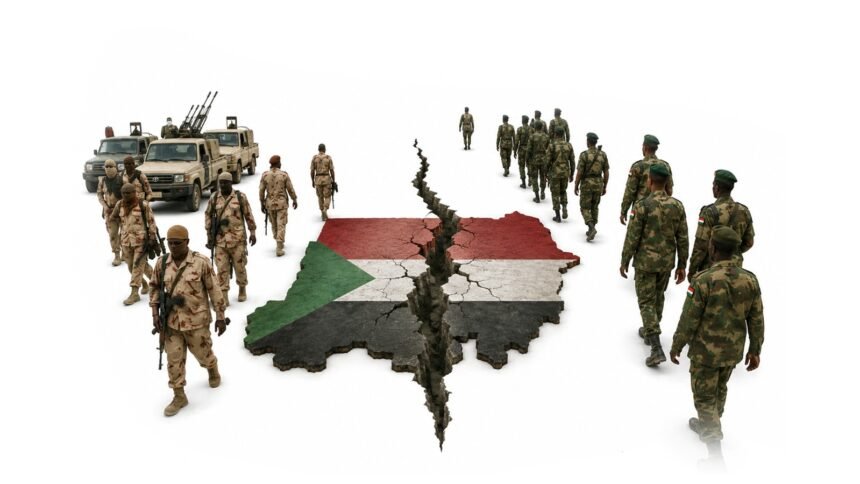
Across the African landscape, few conflicts illustrate the structural cost of fractured sovereignty as starkly as Sudan’s civil war, now entering its fourth year with no lasting political settlement in sight. The latest development in that grinding conflict is a wave of defections from the paramilitary Rapid Support Forces (RSF), with Sudan’s army announcing that 318 RSF fighters, including four commanders, have crossed over to join its ranks, arriving with as many as fifty combat vehicles in Al-Dabba locality in Northern State. The defection follows a similar move by roughly 300 RSF personnel, including twenty-one commanders, just a week earlier, suggesting a paramilitary structure under mounting internal strain. The paradigm here is one of institutional fragmentation set against a backdrop of catastrophic humanitarian cost: a war that erupted from a power struggle between two men, army chief Abdel Fattah al-Burhan and RSF leader Mohamed Hamdan Dagalo, has metastasized into one of the world’s largest displacement crises, with death tolls estimated in the tens of thousands and nearly 13 million people displaced. Sudan’s trajectory out of this war, whether through military consolidation, negotiated settlement or continued fragmentation, will shape the continent’s broader argument that African-led mediation, not indefinite external stalemate, is the path toward reclaiming sovereignty over the nation’s future.
A Second Wave of Defections
The 318 fighters who joined the army this week arrived with a substantial cache of military hardware, according to Sudanese authorities, and announced their decision to formally join the armed forces after reaching Al-Dabba. Border Guards commander Mohamed Saleh Younes said the army would welcome those returning to its ranks and that military operations would continue to restore national security. The group’s identified leader, Lieutenant-Colonel Musa Ali Ahmed, attributed the defection to what he characterized as the RSF’s lack of institutional structure, framing the decision as one made in the interest of preserving Sudan’s national unity, language that reflects the broader stakes of a conflict increasingly framed by its participants in terms of sovereignty and territorial coherence rather than factional loyalty alone.
Institutional Erosion Within the Paramilitary
This is not an isolated episode. A week prior, roughly 300 RSF personnel, including twenty-one commanders, made a comparable move to the army’s side, and reports indicate a broader exodus of senior figures from the paramilitary’s political and military leadership, including political adviser Fares al-Nour, field commander Ali Rizqallah and Major-General Al-Nour Ahmed Adam. Taken together, these departures point to a paramilitary structure experiencing real institutional erosion, a matrix of internal divisions that undermines the RSF’s cohesion at precisely the moment it is attempting to hold territory and project authority across contested regions. For an armed group whose founding logic rested on tribal and commercial patronage networks rather than formal military institutions, the accumulation of high-level defections represents a structural vulnerability that battlefield gains alone cannot offset.
A War Without Geographic Boundaries
Even as defections mount, heavy fighting continues across multiple fronts, including Darfur, Blue Nile, and the North, West and South Kordofan states, a geographic spread that underscores how thoroughly the conflict has metastasized beyond its original Khartoum epicenter. The war, which erupted in April 2023 from the unresolved power-sharing arrangement between the army and the RSF following Sudan’s post-2019 transition, has resisted every attempt at a durable ceasefire or political framework. The asymmetric nature of the fighting, a conventional army against a paramilitary force with deep regional and cross-border networks, has produced a protracted stalemate in which neither defections nor territorial advances have yet translated into a negotiated resolution.
The Humanitarian Architecture Under Collapse
Beyond the military ledger, the war’s humanitarian toll has become one of the defining crises of the current decade: tens of thousands killed by UN and international estimates, and close to 13 million people displaced. This scale strains the region’s and the continent’s humanitarian response architecture. Neighboring states and Pan-African institutions have absorbed much of the resulting displacement burden, exposing the limits of a regional aid matrix already stretched thin by other crises. Every additional month of conflict compounds this humanitarian debt, deepening the argument that a negotiated, Sudanese-owned resolution, rather than continued military attrition, is the only trajectory capable of halting the compounding cost to civilian life.
Reclaiming Sudan’s Political Future From the Battlefield
The defections reported this week are, at most, a tactical shift in a war whose resolution will ultimately depend on political rather than purely military dynamics. Whether the RSF’s internal fragmentation accelerates a collapse that forces negotiations, or prolongs a war of attrition with no clear endpoint, the burden of reconstructing Sudan’s institutional sovereignty will fall to Sudanese political actors and Pan-African mediators alike. Reclaiming the country’s future from a battlefield logic that has now persisted for more than three years requires precisely the kind of structural, African-led settlement architecture that has so far eluded international efforts, a recalibration that treats Sudan’s war not as a permanent condition but as a crisis demanding a genuinely sovereign political resolution.