




The Pan-African Paradigm of Electoral Legitimacy and Institutional Restraint
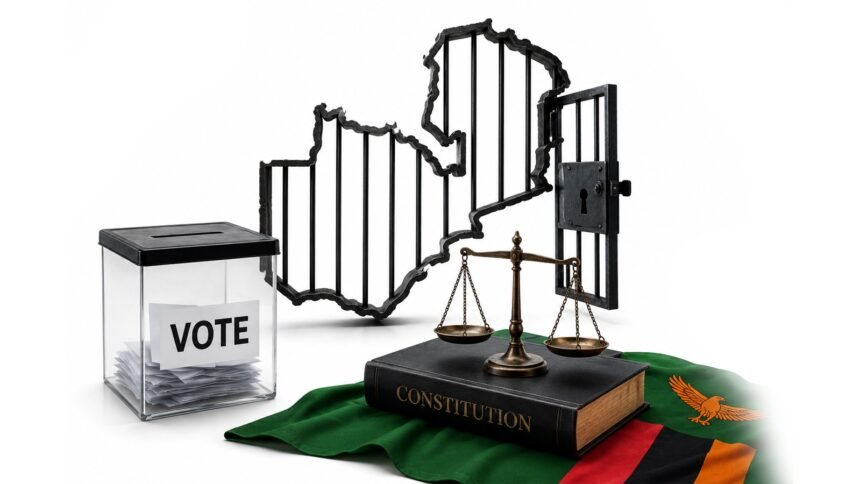
Sixty percent of the vote arrived wrapped in accusations of intimidation; the other camp’s thirty-eight percent came home to a leader in a jail cell awaiting trial on treason charges. On 1 September, Hakainde Hichilema took the oath of office for a second term as President of Zambia before thousands of supporters packed into a Lusaka stadium, even as runner-up Brian Mundubile sat in detention and international observers cataloged a litany of irregularities in the August 13 ballot. The scene captures a recurring tension in the continent’s democratic architecture: elections that produce technically valid outcomes while eroding the informal guardrails- freedom of assembly, judicial independence, safety for the opposition- that give victory its legitimacy. Zambia has long been cited as one of Southern Africa’s steadier democracies, a country with a documented history of peaceful transfers of power since independence from Britain in 1964. That reputation is now being tested not by the ballot count itself. Still, by what happened around it: a raid on an opposition leader’s home, a fatal shooting, and treason charges against the very figure once subjected to the same accusation by the state he now leads. As Zambians absorb a second Hichilema term, the continent’s wider project of reclaiming democratic self-determination depends on distinguishing between electoral victory and democratic health, and on institutions strong enough to protect both winners and losers from the machinery of the state.
A Landslide Shadowed by a Manhunt
Hichilema’s 60% to 38% margin over Mundubile was, by the numbers, decisive. But the numbers sit awkwardly beside the events of mid-August, when security forces raided Mundubile’s home on 14 August, describing the operation as targeting a suspected militia they characterized as a national-security threat. His NRPUP alliance has firmly rejected that framing. A former cabinet minister was killed during the raid, and eleven members of Mundubile’s camp were arrested. Mundubile and his running mate, Makebi Zulu, went into hiding before surrendering to police nearly two weeks later; their lawyer has confirmed both now face treason charges, which they deny. International observers flagged not only the raid but a pause in ballot-counting and opposition claims of pre-vote intimidation, the accumulated texture of a process that produced a clear numerical winner while leaving its procedural legitimacy in dispute.
The Irony of a Recycled Charge
The treason charge carries particular weight given Hichilema’s own history. After losing the 2016 presidential race to the late Edgar Lungu, Hichilema was himself charged with treason for allegedly failing to pull his vehicle over for a presidential motorcade, and spent four months in a maximum-security prison before the charges were dropped. Mundubile and Zulu, whose political roots trace to Lungu’s Patriotic Front, now face the identical charge from the man who once absorbed it. This recursive quality is not incidental to the story; it is the story. It illustrates how the instruments of political suppression, once normalized, tend to outlive the administrations that first wield them, becoming available to whoever next controls the state apparatus regardless of which side of the ideological ledger they once occupied. For a continent working to build durable institutional restraint rather than personality-dependent tolerance, the Zambian case is a cautionary study in how quickly yesterday’s victim can become today’s prosecutor.
Copper, Creditors, and the Limits of Economic Turnaround
Hichilema’s first term is widely credited with steering Zambia through a significant economic recalibration: market-friendly reforms, the abolition of the death penalty, and free primary and secondary education. Copper remains the backbone of that recovery, generating roughly 70% of Zambia’s export earnings, with China standing as both a major investor and the country’s largest bilateral creditor, a dependency that shapes Lusaka’s room for maneuver on everything from debt restructuring to industrial policy. Yet the macroeconomic gains have not reliably reached households: more than 70% of Zambia’s 22 million people live on less than three dollars a day, according to World Bank figures cited alongside the inauguration coverage. This gap between headline growth and lived material conditions is a structural pattern replicated across multiple African economies currently navigating debt-servicing pressure, commodity dependency, and IMF-linked reform programs, a pattern that raises the question of whether reclaiming sovereignty over resource wealth is sufficient without a parallel reclaiming of distributional fairness.
Reclaiming the Guardrails
Zambia’s second Hichilema inauguration is, on paper, an orderly constitutional transition, the kind of event that African democracies are frequently asked to demonstrate as proof of maturity. But the manner of its arrival, with an opposition leader facing the same charge that once nearly ended the president’s own career, suggests that the deeper work of continental self-determination lies not in producing winners but in building institutions resilient enough to survive the temptations available to whoever holds power. A truly sovereign democratic culture is one in which the tools of coercion are dismantled rather than merely redirected. As Zambia enters this new term amid a fragile balance between economic ambition and civic trust, the wider continental conversation about reclaiming institutional integrity, not just electoral outcomes, remains unfinished business.