



A Federal Takeover After a Failed TPLF Offensive, and a 2022 Peace Deal Whose Key Promises Were Never Kept
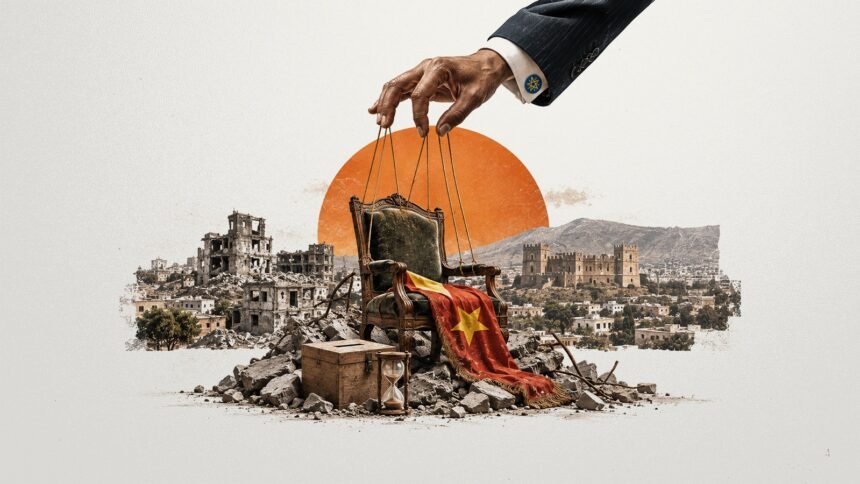
For nearly thirty years, until 2018, the Tigray People’s Liberation Front not only governed Tigray; it governed Ethiopia. Eight years after it lost national power to the party of Prime Minister Abiy Ahmed, it has now lost control of its home region as well. On Friday, 16 October, the prime minister’s office announced that a federal caretaker administration will run Tigray for the next six months, with the stated aim of creating “a stable political situation so that free and transparent elections can be held”. The announcement followed a cabinet decision and came only weeks after the TPLF launched an offensive against federal forces, was pushed back, and lost its strongholds, including the regional capital, Mekelle.
The legal basis is spelled out with care. The Council of Ministers established the administration by regulation, following a decision by the House of Federation that cited Article 62(9) of the Constitution and Article 14(2)(b) of Proclamation No. 359/1995. Five officials have been appointed: Asefa Abraha Hagos as chief executive for administration and public services; Tewodros Aregay Woldeselassie as chief executive for the economy and reconstruction; Brigadier General Gebre Egziabher Beyene Hailu as chief executive for security and peace; Redae Hailuom Woldeselassie as chief executive for political affairs and public organization; and Shishay Amare as mayor of Mekelle. They will carry out “directives and instructions” issued directly by the federal government.
How the Offensive Unraveled
The road to this decision began in April, when the TPLF announced that it was retaking control of the region, a move that effectively ended its peace deal with the federal government. On 23 September, it launched a major offensive, in alliance with several other armed groups, aimed at toppling the Abiy government. After early gains in the neighboring Afar region, its fighters were defeated, lost Tigray’s major cities, and surrendered in Mekelle in early October. Eritrean troops who had entered Tigray withdrew after heavy drone strikes by the Ethiopian armed forces.
The federal government’s account of the conflict is uncompromising. Its statement said the TPLF leadership “did not desire peace” and had instead started a “devastating war”, and it described the latest fighting as the group’s fourth failed attempt to wage war. It also blamed the TPLF for obstructing the implementation of the Pretoria peace agreement. These are the government’s characterizations. At the time of the announcement, the TPLF had not responded, so the region’s former rulers have not yet put their side of the story on record.
What the Caretaker May and May Not Do
The mandate is broad in practice and narrow on paper. The administration is to restore stability, rebuild government institutions and damaged infrastructure, resume interrupted social services and help displaced residents return home. It will coordinate with federal defense, police and security institutions, as well as regional forces, to secure the region down to the local level, and it is charged with facilitating the disarmament and reintegration of armed groups and restructuring Tigray’s security apparatus. It will also coordinate media activities, organize public forums, and take measures meant to promote reconciliation and rebuild public confidence.
At the same time, its authority is limited to routine regional services and to preparing for the next election. It will not take on matters with longer-term strategic implications; it will operate under the direction and supervision of the federal government; and it must base its activities on Ethiopia’s national interests and territorial integrity, as well as the fundamental interests of the people of Tigray. That combination, a body that controls security and media coordination but answers to Addis Ababa, will shape how Tigrayans judge the promise of a free vote.
The Unfinished Business of Pretoria
The region still carries the weight of the 2020 to 2022 war between federal forces, backed at the time by Eritrean troops, and the TPLF. That war is estimated to have left about 600,000 people dead, a figure that remains an estimate rather than a verified count. The 2022 peace deal ended the fighting but left lasting discontent over its terms, and key promises were not kept, among them the return of displaced people and the disarmament of the TPLF. Tigray also stood outside federal politics: it did not take part in the June federal elections, which Abiy’s Prosperity Party won resoundingly.
It is telling that the caretaker’s core tasks, bringing the displaced home and disarming armed groups, are the very commitments that went unmet after Pretoria. If the new administration delivers them, it will have done in six months what the peace process could not do in nearly four years. If it does not, the six-month clock will expire on the same unresolved questions that fed the latest round of fighting.
Eritrea and the Risk of a Wider War
The takeover also unfolds against open hostility between Addis Ababa and Asmara. The Ethiopian government has accused Eritrea of supporting the TPLF, an accusation Eritrea denies. Since the recent escalation, each side has accused the other of inciting war, raising fears of a wider conflict. On Wednesday, during a phone call with Abiy, US Secretary of State Marco Rubio urged both sides to “de-escalate”. For Tigrayans, that regional rivalry is not abstract: Eritrean forces fought in their region during the last war, and Eritrean troops entered it again during the recent fighting before withdrawing.
An Election Is Only as Free as the Ground Beneath It
The federal statement said Tigrayans “must break free from the cycle of conflict” to “ensure their right to self-governance, and to enjoy the benefits of development”. Those are worthy aims, and the people of Tigray, who have endured two wars in six years, deserve both. But self-government cannot be handed down by decree. It will be measured by whether the displaced go home before the vote, whether parties and candidates can campaign freely, whether the caretaker hands over power on schedule, and whether the TPLF’s rank and file are drawn into politics rather than pushed back towards arms. Ethiopia’s unity and the region’s right to govern itself are not opposites; the next six months will show whether Addis Ababa treats them as partners or rivals.