




What happens to a community when a state begins to question whether its members belong at all? That question now hangs over the Mahamid, an Arab community in Niger’s southeastern Diffa region, after the African Commission on Human and Peoples’ Rights sent an urgent appeal to the country’s military leader, President Abdourahamane Tchiani, over alleged violations of their basic rights.
The appeal was sent on 6 November and made public on 9 November. It was signed by three of the commission’s representatives: the commissioner responsible for the human rights situation in Niger, and the heads of two working groups, one on economic, social and cultural rights and one on the rights of Indigenous populations, communities and minorities. It raises concern about reported restrictions on the Mahamid’s access to water, education, healthcare and identity documents.
The case matters far beyond Diffa. Across the Sahel and the Lake Chad basin, communities whose histories cross borders drawn in the colonial era are often the first to be treated as suspect when security fears rise. How Niger handles this one will say a great deal about whether citizenship in the region rests on law or on suspicion.
Who the Mahamid Are
The Mahamid are an Arab community with historical links to Chad and Sudan. Many live in the Diffa region, and some families have been settled there for generations, having arrived in successive waves of migration from neighboring countries. Disputes over their nationality and identity documents have repeatedly brought them into conflict with the authorities.
The dispute is not new. In 2006, the government of the day announced plans to expel Arabs from Diffa to Chad. That operation was suspended after protests and negotiations. Twenty years later, the same region and the same community are again at the center of a quarrel over who counts as Nigerien.
What Officials Allege
Officials have accused some Mahamid residents of obtaining nationality documents fraudulently, trafficking weapons and having links to armed groups operating around the Lake Chad basin. These accusations have not been independently verified.
At a security meeting in Diffa on 22 August, the regional governor, Mahamadou Ibrahim Bagadoma, and other officials discussed nationality papers, cross-border movement and security, as well as tensions over water and grazing land, according to the official account of the meeting. The governor also warned against holding the whole Arab community responsible for allegations against particular individuals, a caution that sits awkwardly beside the measures now reported.
Reported Orders, Still Unverified
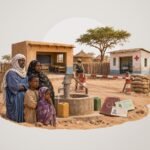
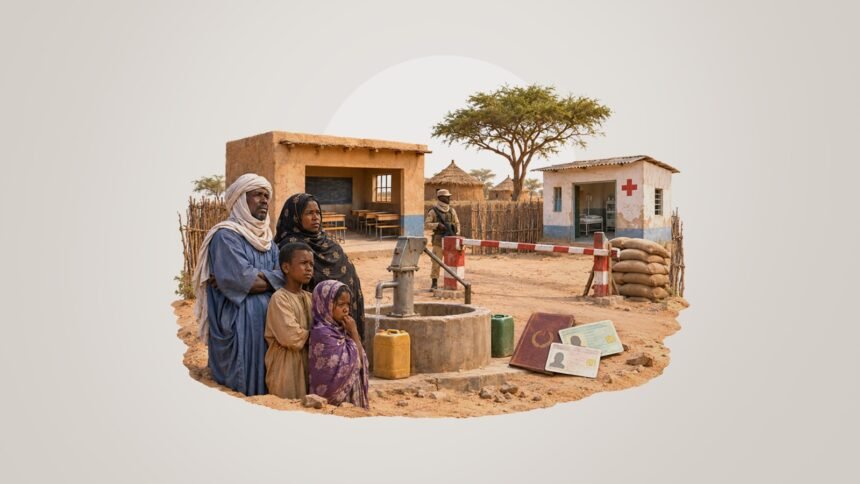
Much of what is alleged rests on documents and accounts that have not been confirmed, and that uncertainty must be kept in view. A Nigerien publication says it obtained a copy of an Interior Ministry radio message, dated 7 October and numbered 002235, addressed to the governors of Diffa and Zinder. According to that publication, the message instructed authorities to close schools and water facilities used by the Mahamid, require community members to pay the full cost of their healthcare, and stop issuing civil status documents to them. It also reportedly called for existing documents, including national identity cards and passports, to be withdrawn, with security forces enforcing the measures.
The document has not been independently authenticated, and it has not been established whether its instructions have been carried out. The government’s own account of the measures, if any, was not available in the reporting reviewed for this article.
Reports of a possible expulsion are equally unsettled. A Chadian broadcaster says Mahamid representatives were told at a meeting in Diffa on 8 November, attended by the Diffa prefect, the Gueskerou administrator, the Komadougou canton chief and village chiefs, that they had two months to leave Niger. A Nigerien publication reported on 10 November that the authorities had set 31 December 2026 as the deadline. No formal expulsion order has been made public, and neither the decision, its legal basis, nor whether it would apply to the entire community has been confirmed.
What the Commission Can and Cannot Do
The Commission’s appeal is not a formal finding that Niger has violated the community’s rights. It is an urgent request for the president’s attention, made on the strength of reports serious enough to warrant one. That distinction matters. It gives Niamey room to explain, correct or deny, and it leaves the facts open to verification.
Yet an urgent appeal from the continent’s own human rights body also carries weight. Pressure on this issue comes not from a foreign capital but from an African institution applying an African charter, which makes it harder to wave away as outside interference.
The Cost of Unmaking Citizens
If the reported measures are real, their effects would reach well beyond any individuals suspected of wrongdoing. Closing water points in a dry region, shutting schools and withdrawing identity papers would hit children, older people and families with no link to any armed group. Removing documents can leave people unable to travel, trade, enroll in school or seek care, and can push them toward statelessness. In a region already strained by conflict around Lake Chad, that would risk creating new grievances rather than reducing old ones.
Security concerns about forged papers or arms trafficking are legitimate subjects for investigation. They are best handled case by case, through courts and evidence, rather than by measures aimed at an entire ethnic community.
A State That Decides Through Law
Real self-rule is measured not only by how firmly a government resists foreign pressure but by how fairly it treats the people inside its borders. Niger can answer the commission in a way that strengthens its own authority: publish whatever instructions were issued, confirm or deny the reported deadline, allow independent verification in Diffa, and test individual allegations in court. A state confident in its citizenship laws does not need to settle such questions by closing wells.





