





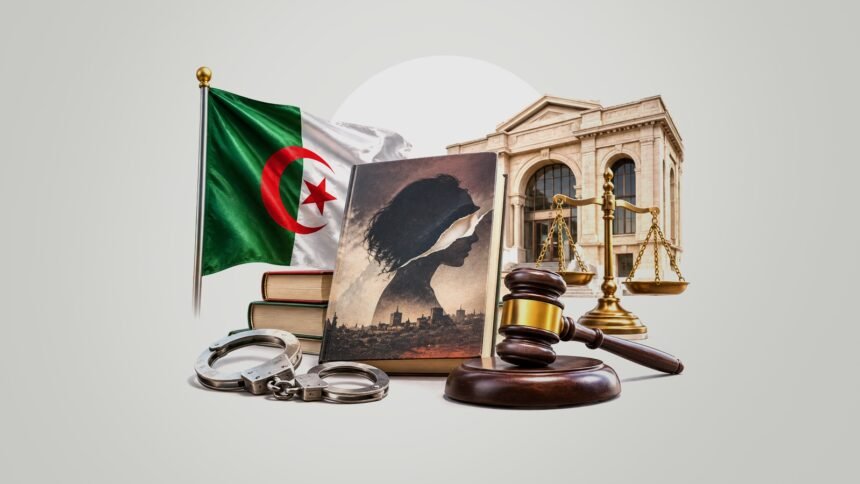
Here is the paradox at the center of Algeria’s latest literary case. A novel about a woman who survives a throat-slashing during the country’s civil war, and who loses her voice as a result, has now produced a second prison sentence for its author. In contrast, the real woman who says the book took her story without consent argues that it is she who was silenced. On Tuesday 10 November, the misdemeanor court of Fellaoucene in Oran sentenced the writer Kamel Daoud and his wife, Aicha Dahdouh, in absentia to five years in prison and a fine of 300,000 Algerian dinars each.
The court also upheld the international arrest warrant issued against the couple, both of whom live in France. They were prosecuted for breach of professional confidentiality, theft of a medical file and invasion of privacy. The prosecutor had asked for six years at the trial on 13 October.
The ruling matters well beyond Oran. Writers across the continent work on the boundary between public history and private suffering, and the case asks who owns the memory of a national trauma: the survivors who lived it, the novelists who turn it into literature, or the state that decides which accounts of the past may circulate at all.
The Complaint Behind the Verdict
The case began with Saada Arbane, an Algerian woman who survived the violence of the 1990s. Dahdouh, a psychiatrist, was her therapist in Algeria for several years. Arbane alleged in November 2024 that “Houris” drew on what she had said in therapy, and she went on to sue in both Algeria and France.
Her complaints list a series of resemblances between her life and that of the novel’s narrator, Aube: a breathing tube, a slashed throat, an identical scar, tattoos and a hair salon that both women owned. The Sidi Chahmi specialist psychiatric hospital joined the Algerian case as a civil party when the complaint was filed, and its representative was heard by the investigating judge about the patient’s file.
Arbane’s lawyer, Aicha Derrar, said after the verdict that the judgment amounts to judicial recognition of the harm her client suffered and of the exploitation of her ordeal, which she says went ahead despite her refusal and despite her having told the writer of that refusal.
Two Defendants, Two Different Defenses
Daoud has denied that his novel used confidential information. He has argued that the elements in question were already public knowledge, a claim Arbane rejects, saying her story was never public. On the day of the verdict, he condemned the proceedings on social media, saying he had been unable to defend himself in court and accusing his critics of “years of vicious smear campaigns to divert Algerians’ attention from their own misery”.
Dahdouh’s position has moved away from her husband’s. She confirmed that she had been Arbane’s therapist but categorically denies breaching medical confidentiality or handing over any medical file. In a statement last month, she said Daoud’s “voice should not silence” hers and that she disagreed with him on “three essential matters: Algeria, Islam, and Palestine”. She has said the couple has begun divorce proceedings, that she has not been able to return to Algeria since October 2024, and that she trusts Algerian justice and intends to challenge the judgment before the court in Oran.
That split matters for what comes next. A defendant sentenced in absentia who wants to contest the ruling in person is a very different legal actor from one who rejects the legitimacy of the court altogether.
A Book That Algeria Does Not Sell
“Houris” was published in January 2024 and won the Prix Goncourt, France’s most prestigious literary award, later that year. Daoud is the first author of Algerian descent to receive it. He moved to France in 2023, holds both French and Algerian citizenship, writes for the French magazine Le Point, and earlier worked as a journalist and columnist for French-language media in Algeria.
The novel is set during what Algerians call the Black Decade, the war between the state and armed Islamist groups that began after elections were canceled in 1992 and left around 200,000 people dead. Algeria bans books about that war, yet Daoud said in 2024 that pirated copies of the novel were circulating in the country.
This is also not Daoud’s first conviction connected to the novel. In April, he was sentenced to three years in prison in a separate case over “Houris”, and Algeria issued two arrest warrants against him in May 2025. The case also sits alongside that of the writer Boualem Sansal, a French-Algerian citizen jailed in late 2024 over comments about colonial-era borders and pardoned by President Abdelmadjid Tebboune in November 2025.
Privacy Law or Pressure on a Critic
Two readings of the verdict compete, and both deserve to be stated plainly. In the first, a court has protected a vulnerable patient whose most painful experiences may have passed from a therapist’s office into a bestselling novel. Medical confidentiality is a real right, and a survivor of terrorism should not have to watch her injuries become a plot without her agreement. Nothing about the prize a book wins changes that.
In the second, a state that bans fiction about its civil war and that the watchdog Freedom House rates as “not free” has found a privacy case useful against a prominent critic who lives beyond its reach. Daoud’s supporters will point to the earlier three-year sentence and the arrest warrants as evidence of a pattern, and to the fact that both defendants were tried without being present.
Both readings can be partly true at once. That is what makes the case hard, and why it deserves more than a headline about a jailed novelist.
Who Gets to Tell the Story of the Black Decade
Self-determination in culture means that a society can confront its own past through its own voices, including uncomfortable ones. That requires two protections working together: courts that patients and survivors can trust with their private lives, and space for writers to examine national wounds without needing permission from the state.
Algeria’s challenge is to show that the verdict served the first protection without becoming a tool against the second. The surest way to do that would be to hold a full, contested hearing if Dahdouh returns to challenge the ruling, and to let Algerians read the book at the center of the dispute and judge it themselves. A nation that can debate “Houris” openly is in a stronger position than one that can only sentence its author from a distance.