



From Infection to Chronic Illness
For years, South Africa’s health story was told largely through infectious disease, above all HIV and tuberculosis. That story has not ended, but those infections are no longer at the top of the death register. Diabetes is.
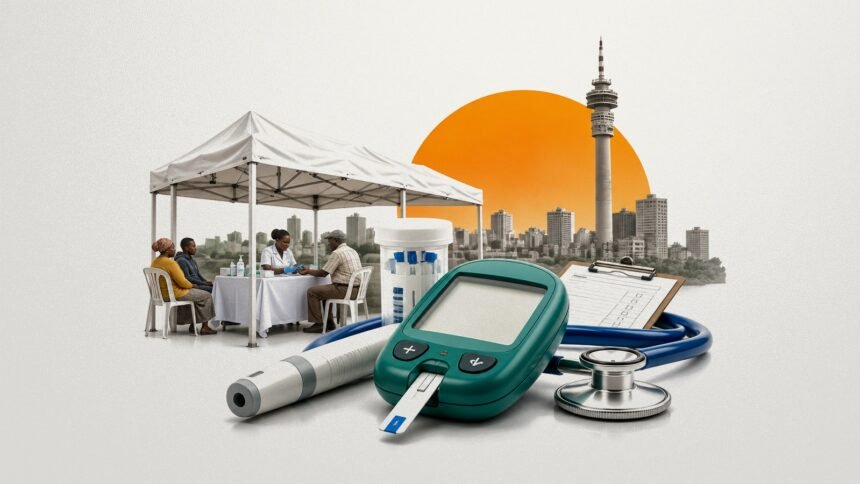
On Friday 13 November, on the eve of World Diabetes Day, Health Minister Aaron Motsoaledi led the national commemoration at a sports ground in Tembisa, near Johannesburg, where residents were checked for diabetes, high blood pressure and related conditions and given advice on prevention and management. The global theme this year is “Early action on diabetes”.
“It’s not that we are the highest in the world. Especially because among black people these diseases are new … but it has overtaken HIV and AIDS as number one,” Motsoaledi said at the event.
What the Mortality Data Show
The figures come from the national statistics agency’s mortality reports. Diabetes was the underlying cause of 28,767 deaths in 2024, about 79 a day, or more than three every hour, and it has been the leading underlying natural cause of death for three consecutive years, with 33,126 deaths in 2022 and 27,967 in 2023. The 2024 share is reported as 6.1% of all recorded deaths in one analysis and as more than 6% of recorded natural deaths in another account of the same data.
The burden is uneven. In 2024, diabetes killed 17,429 women, 7.9% of all recorded female deaths, and 11,334 men, 4.5% of male deaths. It was the leading natural cause of death among people aged 45 to 64, with 9,364 deaths, and it ranked first in five provinces: Gauteng, KwaZulu-Natal, the Western Cape, the Eastern Cape and Limpopo. Non-communicable diseases, including diabetes and cardiovascular conditions, accounted for 60.7% of all recorded deaths in 2024.
Prevalence estimates vary too. One account at the Tembisa event put type 2 diabetes at about 10% of adults, or one in nine; the International Diabetes Federation estimates that about 2.3 million adults aged 20 to 79 were living with diabetes in 2024, a number it projects could rise to about 3.9 million by 2050 if current trends continue.
The Hidden Majority
The most worrying number may be the one nobody can count precisely. It is estimated that up to two-thirds of South Africans with diabetes remain undiagnosed. Many people learn they have the disease only after it has caused serious complications, damaging the heart, kidneys, eyes and blood vessels.
Mavis Mahlangu, a resident who attended the Tembisa event, put the case for testing. “Diabetes has taken a lot of lives because of the ignorance, so to the people at home, it’s important to know sugar levels, blood pressure, and diabetes status,” she said. Foster Mohale, the health department’s spokesperson, said the campaign urges screening and intervention to prevent serious complications and reduce the burden on families.
More Than a Lifestyle Question
Doctors argue that the rise cannot be blamed on individual choices alone. Mvuyisi Mzukwa, chairperson of the South African Medical Association, has pointed to rising obesity, physical inactivity, unhealthy diets and heavy consumption of sugary drinks and processed foods, and warned that diabetes may increasingly be developing earlier in life. “The earlier someone develops diabetes, the longer they are exposed to the risk of serious complications,” he said.
In October, Motsoaledi described the shift as an epidemiological transition. “We are in the middle of an epidemiological transition where we are switching over from diseases caused by infections to non-communicable diseases like diabetes,” he said, adding that such diseases often occur together and share risk factors including smoking, excessive alcohol use, poor diet and a sedentary lifestyle.
Gaps at the Clinic Door
Those who work with patients say the health system is not yet built for this burden. Dr Patrick Ngassa Piotie, chairperson of the Diabetes Alliance and co-founder of the University of Pretoria’s Diabetes Research Center, calls patient education the cornerstone of diabetes care. “But because of the gaps in the health system, there’s almost no education that is delivered to people,” he said. “As a result, they are disempowered and are not able to play the role that they should play when it comes to the management of their care.”
The Alliance wants the government to “go back to the basics”, giving people with diabetes the right information and making sure medicines are available. The medical association says chronic disease management must be strengthened at primary health care level, and researchers point to nurse-led care that lets patients start and adjust insulin at local clinics as one model.
Owning the Next Health Fight
South Africa has faced a dominant killer before, when HIV and tuberculosis shaped the work of its clinics. The diabetes challenge calls for a comparable national commitment, but on different terms: screening millions of people who feel well, keeping them on lifelong treatment, and changing a food environment shaped by sugary drinks and processed products.
A health system that controls its own priorities will need to treat diabetes as the leading killer it has become, with steady supplies of medicines, trained nurses at every clinic, and honest data on who is diagnosed and who is not. The screenings in Tembisa are a start. The measure of success will be how many of the undiagnosed two-thirds are found before complications find them.