

A Succession Fight Played Out in Public Posts
Two years ago, on 16 November 2024, the Ugandan opposition figure Kizza Besigye was in Nairobi for a book launch when he was seized in the Kenyan capital, taken back to Uganda and brought before a military court. On the second anniversary of that abduction, the man at the head of Uganda’s armed forces returned to social media with a new threat, this time aimed at the press.
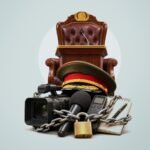
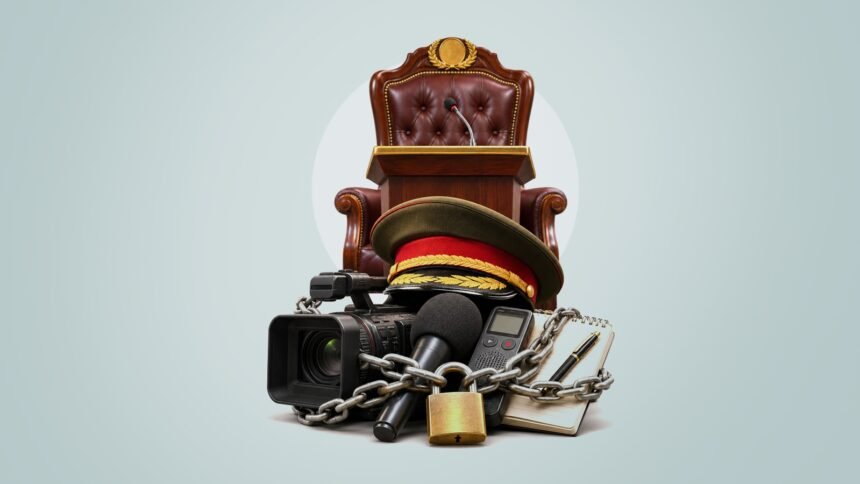
In a series of posts on X on Tuesday, 17 November, Gen Muhoozi Kainerugaba, Chief of Defense Forces and son of President Yoweri Museveni, warned that media organizations and journalists who criticize or “belittle” his father could be jailed for ten years. “Any media from wherever insulting or belittling Mzee, Maama, Afande Saleh, or me will be imprisoned for 10 years,” he wrote, referring to his father, his mother and his uncle, Gen Salim Saleh.
A Threat Aimed at Foreign Reporters Too
Muhoozi went further than domestic outlets. He threatened to put foreign media personnel he considers agents of foreign interests on trial before a court-martial, and announced that a new policy on foreign media was coming. “I shall announce a new policy on the operations of ALL foreign media in Uganda soon. Their days of insulting our country are over,” he wrote.
No such policy has yet been published, and the posts did not say under what law a military officer could impose prison terms on journalists for criticism. But the posts matter because of who wrote them. Muhoozi commands the army; his earlier posts have repeatedly drawn domestic and international criticism, and he himself points to past confrontations with opposition figures, including Besigye, Lukwago and Bobi Wine, as proof that his threats should be taken seriously. Gen Saleh, a former military logistics chief, has stepped in several times to contain diplomatic fallout from his nephew’s remarks and is widely seen as a moderating influence on him.
The Elwelu Affair and a Restored Rank
The posts marked Muhoozi’s return to X after he deactivated his account following a series of threats against Vice President Jessica Alupo. He had linked her to what he described as a plot involving his former deputy, Lt Gen Peter Elwelu, who was arrested on 2 November over allegations of involvement in activities aimed at destabilizing the country. Muhoozi had accused Elwelu of treachery and threatened to act against Alupo if she was found to have supported him.
On Tuesday, he reversed one of his own decisions. Weeks after publicly declaring that he had demoted Elwelu to the rank of private, he announced that he had restored the rank. “I was very, very angry with Elwelu some weeks ago. I demoted him to a private. I was ready to do much worse. I now restore his rank as a Lt. General of our great army. He will face the Court Martial with his restored rank,” he wrote.
Openly Bidding for the Presidency
Muhoozi also used his return to restate his ambition. “I am going to stand for the Presidency of this country after Mzee. No one will stop me,” he posted. Muhoozi is 52; his father is 82 and has led Uganda through the National Resistance Movement (NRM) since 1986.
The succession question is unsettled inside the ruling party. One account of a meeting of the NRM executive committee on 10 November, based on five unnamed party sources, says the leadership failed to agree on a proposal to designate Muhoozi as Museveni’s successor. According to that account, four members voted in favor and three against before the vote was abandoned; one source said Muhoozi’s combative conduct online had created unease, and NRM Vice-Chairman Calvin Echodu advised Museveni to move his son out of the army into a civilian role and to consider seeking another term in 2031.
Muhoozi’s online history adds weight to his words. In January 2026, after Uganda’s disputed presidential election, he threatened to kill opposition leader Robert Kyagulanyi, known as Bobi Wine, claiming that security forces had killed 22 “terrorists” from the opposition National Unity Platform. He also threatened to cut military ties with the United States after accusing its ambassador of helping Kyagulanyi escape, remarks that drew criticism from US Senator Jim Risch, chairman of the Senate Foreign Relations Committee.
Besigye, Two Years On
The threat to the media came as Besigye’s family renewed its alarm over his health. His wife, Winnie Byanyima, is calling for his release so that he can receive specialized medical care. “Two years have been taken from him and his family. And during those two years, he has suffered,” she said. She described persistent difficulties with walking, speaking and using his hands, and said the medical examinations needed to understand his condition have not yet been carried out.
Besigye fell ill during a court hearing in July 2026. His treason trial has since moved from the military to the civilian justice system, but Byanyima says he remains under close military watch. “A soldier sleeps in his hospital room. Others sleep near the door, some in front of the building and still others at the gate,” she said. A psychiatric report dated 17 August, shared by his lawyer Eron Kiiza, indicates that his cognitive understanding appears intact but that he is unable to speak or write. Kiiza says four bail applications have been rejected, calls the case “political persecution disguised as a trial”, and notes that a new request still awaits a hearing. The next court date is 25 November. Byanyima is also seeking medical access for Erias Lukwago, Besigye’s lawyer and Kampala’s Lord Mayor, who is himself detained and in poor health.
Whose Voice Counts in Uganda’s Future
Taken together, the two stories describe a political system in which the army chief sets media policy in social media posts, a ruling party argues privately over dynastic succession, and the country’s best-known veteran opposition figure cannot speak in his own defense. The question they raise is not only who will follow Museveni, but who gets a say in deciding.
A free press is one of the few ways ordinary Ugandans can weigh the candidates, question the army’s role in politics and hear the arguments the ruling party prefers to settle behind closed doors. Threatening journalists, domestic or foreign, with prison narrows that space just as the succession debate is opening up. The choice of Uganda’s next leader belongs to Ugandans. Whether they can make it with full information depends on whether those who report, criticize, and even “belittle” the powerful remain free to do so.