





The Pan-African Paradigm of Traditional Sovereignty and Institutional Custodianship
Soldiers from the Uganda People’s Defense Forces stood between a council of elders and the chamber doors of the Rukurato, the Tooro Kingdom’s traditional supreme council, on 1 September, blocking a sitting that, under centuries-old custom, is the mechanism through which the kingdom names an heir to its throne. The standoff in Fort Portal, western Uganda, followed the death of King Oyo Nyimba Kabamba Iguru Rukidi IV, and it has exposed a succession dispute that pits the kingdom’s own prime minister against the head of its ruling Babiito clan over who has the authority to convene the very body meant to resolve the question. The episode reminds us that Africa’s traditional and monarchical institutions, largely preserved through the colonial and post-colonial periods as parallel structures of legitimacy alongside the modern nation-state, remain live sites of political contest, not ceremonial relics. When a national government deploys security forces to prevent a customary council from sitting, it raises a pointed question about where genuine sovereignty over indigenous institutions actually resides: with the traditional structures themselves, or with the modern state apparatus that tolerates them only conditionally. For a continent still negotiating the relationship between inherited pre-colonial governance systems and centralized national authority, Tooro’s succession crisis is a small kingdom’s dispute with outsized implications for how African states treat the institutions that predate them.
A Council Blocked From Sitting
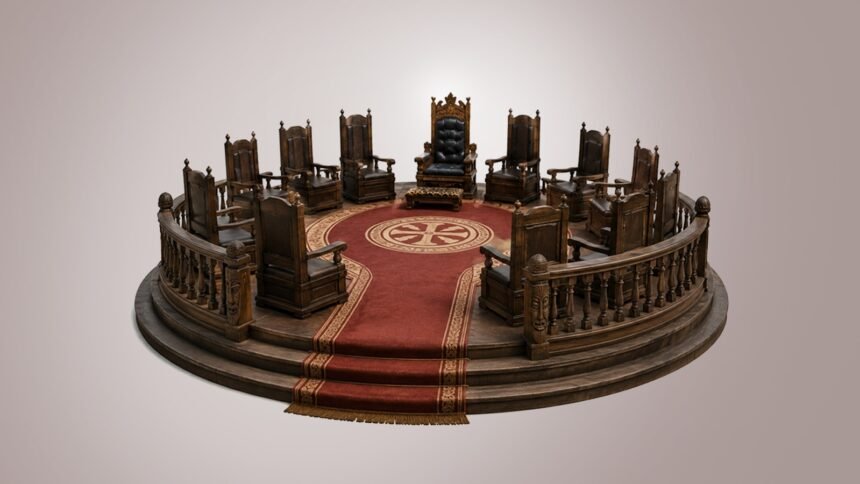
According to Tooro tradition, when a king dies, the Rukurato must sit to determine the burial program and formally name the heir to the throne. This sequence gives the council’s convening constitutional weight roughly analogous to a formal transfer-of-power proceeding in a modern state. Tooro Kingdom Prime Minister Calvin Armstrong Rwomiire Akiiki said he was in Kampala meeting with government officials to determine the appropriate process. Still, before that engagement concluded, members of the Supreme Council began gathering regardless, led by Omusuga Prince Charles Kamurasi, head of the ruling Babiito clan. Babiito clan spokesperson Moses Musinguzi told local reporters that the prime minister had no authority to postpone or control the timing of the customary sitting unilaterally. Security officers ultimately closed off access to the Rukurato chambers, and after failed negotiations to gain entry, the council members left the premises without holding the sitting, leaving the kingdom’s succession process formally suspended by the intervention of state security forces rather than resolved through its own customary mechanism.
Competing Claims to an Heir
At the center of the dispute is a basic factual disagreement: Rwomiire has said the late king left a designated heir. At the same time, Kamurasi maintains the royal clan itself has no confirmed knowledge of one. President Yoweri Museveni, delivering a eulogy for King Oyo, added a further complicating claim, stating that Queen Mother Best Kemigisa holds relevant information, a suggestion that inserts the national presidency directly into a succession question that, by tradition, belongs to the kingdom’s own institutions. Museveni’s intervention, however diplomatically intended, illustrates the asymmetry at the heart of Uganda’s relationship with its traditional kingdoms: reinstated as cultural institutions in the 1990s after being abolished decades earlier, Uganda’s kingdoms retain no formal constitutional governing authority, leaving their internal affairs, even matters as sensitive as royal succession, vulnerable to influence, and now direct security intervention, from the national government whenever tensions escalate.
A Kingdom in Mourning, A Nation Watching
Members of Uganda’s parliament from the Tooro sub-region have publicly eulogized King Oyo as a symbol of unity, with some proposing a cancer institute in Fort Portal be named in his honor, a gesture reflecting the genuine cultural weight the monarchy carries in the region regardless of the current institutional confusion over succession. The king’s body is expected to arrive in Uganda on Thursday as burial preparations continue, adding time pressure to a dispute that traditionally would have been resolved through the Rukurato’s sitting well before a state funeral. The compressed timeline, mourning, burial logistics, and succession dispute converging within the same week, has left the kingdom navigating grief and institutional crisis simultaneously, with security forces occupying a role custom never assigned them: gatekeepers of a chamber meant to be self-governing.
Custodianship Without Coercion
Tooro’s crisis will likely be resolved through some negotiated settlement between the prime minister’s office, the Babiito clan, and the national government, but the manner of that resolution matters as much as its outcome. A monarchy whose succession is ultimately determined by which faction the state chooses to recognize, rather than by the kingdom’s own customary process running its course, is a monarchy whose sovereignty exists only at the pleasure of the modern government that tolerates it. For the wider continent, where dozens of traditional kingdoms, chieftaincies, and customary authorities continue to operate alongside, and sometimes in tension with, national governments, Tooro’s standoff is a case study in the unfinished work of defining exactly how much genuine self-governance these institutions retain. Reclaiming that space for authentic traditional custodianship, rather than state-managed ceremony, remains one of the quieter but persistent frontiers of the continent’s broader sovereignty project.